
News
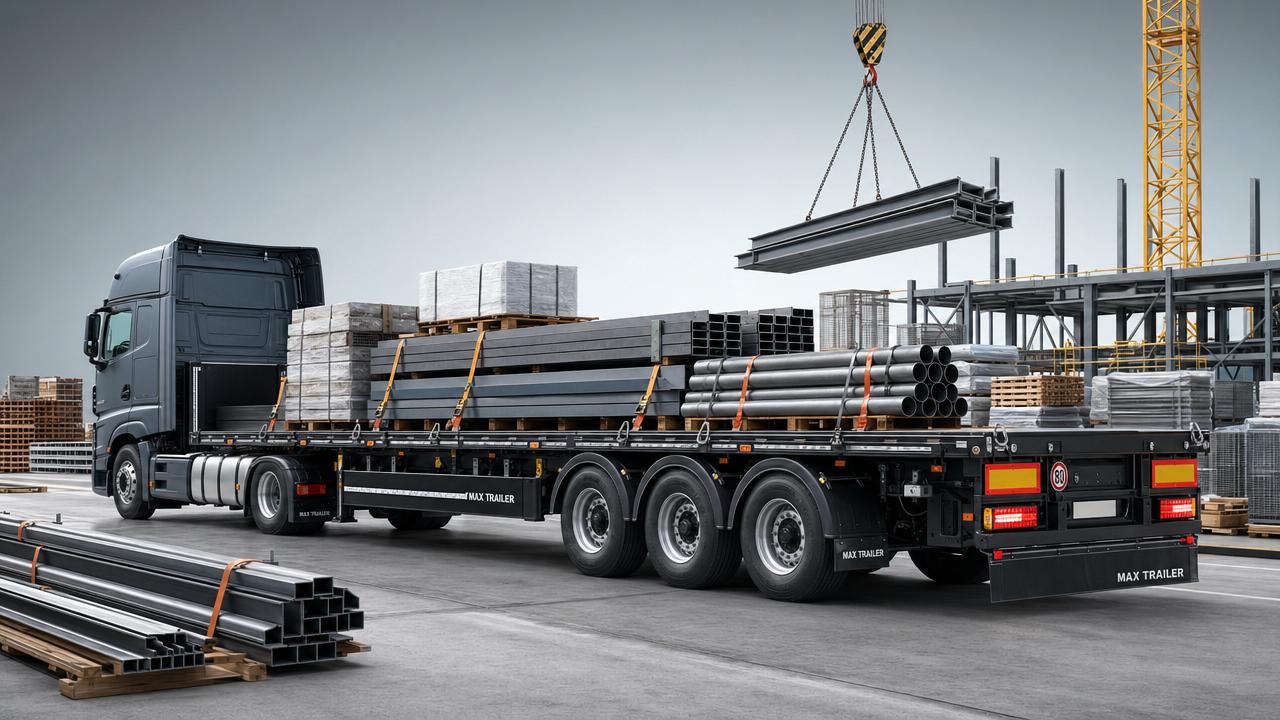
On a busy construction site, even short loading delays can disrupt schedules, raise costs, and slow the entire project. This case shows how the right Flatbed Semi-Trailer setup helped improve loading efficiency, reduce downtime, and support smoother material transport. For project managers and site leaders, it offers practical insight into choosing equipment that keeps operations moving reliably under demanding working conditions.
Why a checklist-based approach matters before choosing a Flatbed Semi-Trailer
For project managers, loading delay is rarely caused by one obvious failure. More often, it comes from several small mismatches: deck height that does not suit site equipment, axle layout that limits turning space, poor lashing points, weak coordination between loading crews and transport teams, or a trailer configuration that looks acceptable on paper but performs poorly in mud, uneven ground, or high-frequency material movement.
That is why a checklist works better than a general product comparison. A practical checklist helps decision-makers confirm the real operating conditions first, then match the Flatbed Semi-Trailer to loading equipment, cargo profile, route condition, and daily throughput targets. It also helps avoid a common procurement mistake in engineering vehicle operations: selecting only by purchase price while ignoring handling speed, cycle time, maintenance access, and site compatibility.
In one construction project case, loading delays were reduced not because the site added more manpower, but because the trailer setup was adjusted around the loading process itself. The result was shorter queue time, smoother equipment access, fewer cargo repositioning steps, and more predictable dispatch planning.
First checks: what to confirm before you compare trailer models
Before evaluating any Flatbed Semi-Trailer, site leaders should confirm the operating facts that directly affect loading efficiency. These are the first items worth documenting internally:
- What materials or machines are moved most frequently: steel sections, precast elements, formwork systems, rebar bundles, containers, pipes, or compact construction equipment.
- Average load dimensions and weight, including whether cargo is uniform or mixed.
- Loading method used on site: crane, forklift, wheel loader, excavator support, or manual fastening after machine placement.
- Ground condition at loading points, especially whether access lanes are paved, soft, sloped, or congested.
- Expected daily trip frequency and whether the trailer must support high-turnover shuttle movement.
- Site restrictions such as turning radius, temporary road width, bridge load limits, or municipal transport rules.
- How often cargo damage, unstable loading, or waiting time currently occurs.
Once these points are clear, the discussion shifts from “Which trailer is cheaper?” to “Which setup reduces total loading friction?” That is the question that matters most in engineering vehicle deployment.
The core Flatbed Semi-Trailer setup checklist that reduced loading delays
The project team in this case improved loading flow by reviewing the Flatbed Semi-Trailer as a process tool rather than only a transport platform. The following checklist reflects the key setup choices that made the difference.
1. Match deck structure to the real cargo mix
A flat deck works well only when the cargo profile is properly understood. On the site in question, repeated delays happened because loads varied between long steel members and palletized components, forcing crews to spend extra time repositioning each shipment. The revised Flatbed Semi-Trailer setup used a deck layout and lashing arrangement better suited to mixed loads, which reduced adjustment time during every loading cycle.
For project managers, the decision standard is simple: if your cargo frequently changes shape, securing flexibility is just as important as nominal payload.
2. Check deck height against loading equipment
One overlooked cause of delay is poor alignment between trailer deck height and the site’s forklift or crane loading angle. If the deck is too high, forklift placement becomes slower and less stable. If the loading angle is awkward, crane operators may need multiple corrections before final positioning. In this case, selecting a Flatbed Semi-Trailer configuration that better matched site handling equipment shortened each placement step and reduced idle time for both machines and labor.
3. Prioritize axle and suspension suitability for site roads
Construction sites rarely offer ideal road surfaces. Mud, rutting, temporary gravel lanes, and uneven approach roads can all slow trailer movement before loading even begins. A suitable axle arrangement and suspension setup helps maintain stability when approaching cranes, loading bays, or stockpiles. In the case reviewed, better site-road compatibility reduced repositioning attempts and helped the Flatbed Semi-Trailer enter and exit loading zones more consistently.
4. Increase usable securing points, not just load area
A large deck alone does not guarantee fast loading. If tie-down points are poorly placed, workers spend extra time finding secure angles for chains or straps. The more variable the cargo, the more important this becomes. In the improved setup, practical securing access reduced rework after initial placement and allowed crews to finish fastening faster without compromising transport safety.
5. Reduce unnecessary handling steps around the trailer
The winning change was not only the trailer itself but the total loading sequence around it. Material staging was reorganized so the Flatbed Semi-Trailer could be loaded in a more direct order. This lowered waiting time for forklifts and reduced the need to move cargo twice. For site leaders, this is a strong reminder that trailer selection and loading layout must be reviewed together.
Quick evaluation table for project managers
The table below can be used as a fast internal review tool when comparing a Flatbed Semi-Trailer for construction material transport.
Different site scenarios require different Flatbed Semi-Trailer priorities
Not every project should evaluate a Flatbed Semi-Trailer in the same way. The checklist changes by site type, cargo pattern, and transport rhythm.
High-rise or urban construction sites
Space constraints usually matter more than maximum deck area. Prioritize maneuverability, predictable loading alignment, and fast entry-exit cycles. Delays often come from waiting for a loading window, so efficient trailer positioning is critical.
Infrastructure and road projects
Long materials, heavy sections, and rough temporary roads make structural durability and road adaptation more important. A Flatbed Semi-Trailer for this scenario should be checked for suspension reliability, frame strength, and stable loading on uneven surfaces.
Remote industrial or mining-related projects
Supply continuity becomes a top concern. Here, the best setup is one that balances payload, serviceability, and parts support. Even a strong trailer can become a delay source if maintenance planning is weak or spare parts are difficult to access.
Commonly overlooked issues that keep causing loading delays
- Ignoring cargo securing time during equipment selection. A trailer may carry the load, but still waste minutes on every trip if lashing access is poor.
- Assessing trailer capacity without checking loading-point congestion. Queue time can exceed transport time on busy sites.
- Choosing a Flatbed Semi-Trailer based only on highway transport assumptions rather than combined on-site and off-site use.
- Underestimating the effect of weather and ground condition on approach stability and placement precision.
- Failing to involve operators, loading crews, and dispatch staff in the evaluation process. They often identify the real bottlenecks faster than procurement documents do.
Practical execution steps if you want similar results
- Track one week of actual loading cycle time, including waiting, placement, securing, and departure time.
- Identify where time is lost: trailer approach, cargo arrangement, fastening, or dispatch release.
- List the top three cargo categories moved most often and evaluate whether the current Flatbed Semi-Trailer setup fits them efficiently.
- Review loading equipment compatibility, especially deck height and side access conditions.
- Request supplier recommendations based on route condition, payload needs, and expected duty cycle, not only trailer dimensions.
- Check after-sales support, spare parts access, and delivery lead time before finalizing procurement.
Why supplier capability matters as much as trailer specification
A good Flatbed Semi-Trailer solution depends not only on the unit itself but also on how accurately the supplier understands your project needs. For engineering vehicle buyers, stable supply, configuration support, export documentation, and responsive service are all part of reducing operational risk.
Shandong Livol Truck International Trade Co., Ltd., based in Shandong, China, supports global customers with commercial vehicle selection, customization, documentation, customs clearance, and logistics coordination. As an official authorized domestic and overseas dealer for FOTON, SHACMAN, and SINOTRUK, and with a network of authorized 4S stores and sufficient inventory, the company is positioned to help project-focused buyers evaluate not only product availability but also suitability, delivery timing, and long-term operating support.
FAQ: key questions before ordering a Flatbed Semi-Trailer for a construction project
How do I know whether loading delay is really a trailer issue?
Check the full cycle. If delays often happen during approach, positioning, cargo placement, or securing, the trailer setup may be a major factor. If delays happen before materials arrive at the loading point, the root cause may be internal site coordination instead.
What matters more: capacity or loading speed?
For high-frequency construction transport, loading speed and turnaround efficiency often create more value than raw capacity alone. The best Flatbed Semi-Trailer is the one that supports reliable daily flow, not only the highest payload on paper.
What information should I prepare before discussing options with a supplier?
Prepare cargo dimensions, weight range, loading method, route condition, expected trip frequency, local compliance requirements, and the main problems you want to solve. This allows the supplier to recommend a more accurate Flatbed Semi-Trailer configuration.
Final decision guide for project leaders
If your site is losing time during material movement, start by reviewing the loading process with a checklist, not by comparing trailer prices alone. The right Flatbed Semi-Trailer setup can reduce idle equipment time, improve crew coordination, and support more predictable project execution. Focus first on deck compatibility, securing efficiency, axle suitability, site access, and actual cargo behavior. Those are the factors most likely to reduce loading delays in real construction conditions.
If you want to move from evaluation to action, the next step is to prepare your key operating data and discuss configuration, adaptation, delivery cycle, maintenance support, and budget priorities with a reliable commercial vehicle export partner. That makes it easier to confirm whether a specific Flatbed Semi-Trailer solution will truly fit your project timeline and field conditions.
Search Starts Here