
News
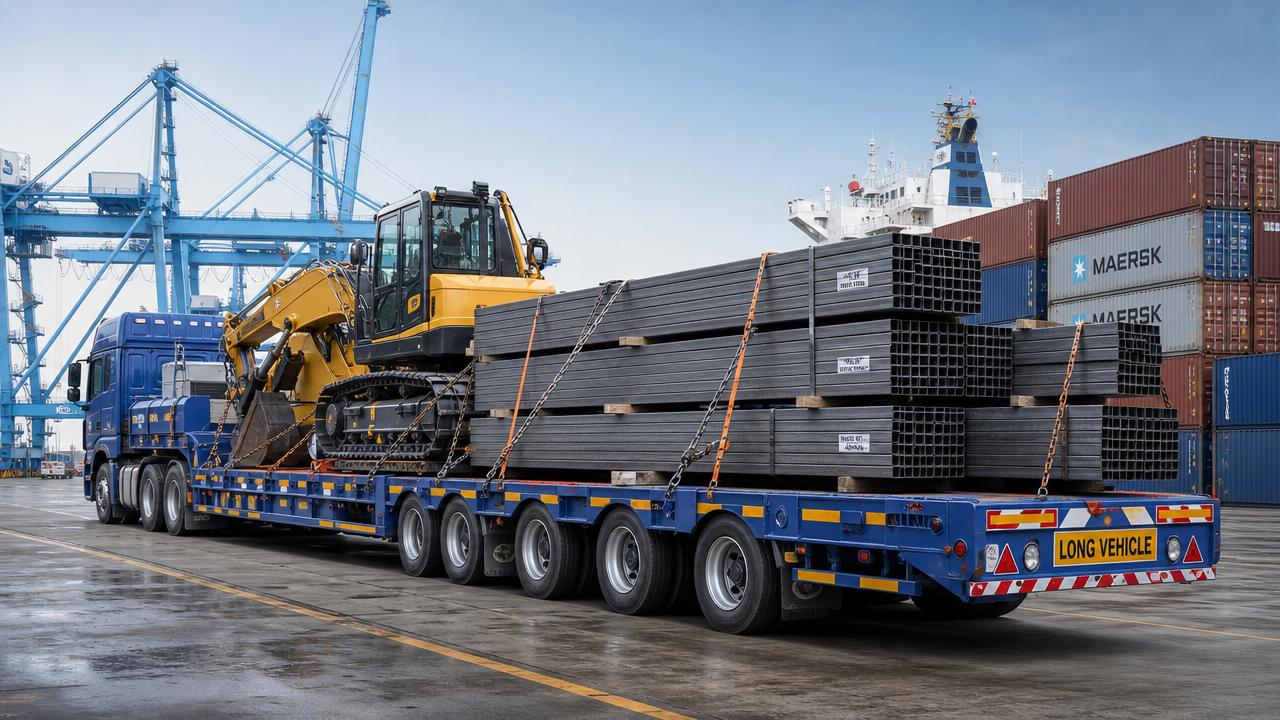
For project managers handling steel and machinery transport, choosing the right Flatbed Semi-Trailer can directly impact delivery efficiency, cargo safety, and overall project costs. This case highlights how a reliable transport solution, backed by professional export support and stable vehicle supply, helps meet demanding engineering logistics needs while ensuring smooth cross-border delivery and dependable performance in real-world operations.
Why project teams should use a checklist before selecting a Flatbed Semi-Trailer
In engineering logistics, delays rarely come from one big mistake. They usually come from small decisions that were not checked early enough: deck size does not match the machinery footprint, axle load distribution is underestimated, lashing points are too limited for steel bundles, or delivery documents are incomplete for export clearance. For project managers, a checklist-based approach is more practical than a general product overview because transport decisions must connect directly to schedule control, site readiness, cargo protection, and cost predictability.
A Flatbed Semi-Trailer is often selected for heavy, oversized, or irregular cargo because it offers open loading space, easy side access, and strong compatibility with cranes and forklifts. However, not every flatbed configuration is suitable for every steel shipment or machine movement. The right choice depends on load type, route conditions, border procedures, loading equipment, and unloading constraints at the project site. This is why a structured review is essential before purchase or export arrangement.
First-check list: the key items to confirm before making a decision
Before comparing price or delivery time, project managers should confirm whether the Flatbed Semi-Trailer can actually support the operational reality of steel and machinery transport. The following checklist helps identify the most important selection points first.
- Confirm cargo dimensions and weight distribution. Steel coils, long structural sections, fabricated components, and construction machinery all create different pressure points on the trailer deck and suspension system.
- Check legal road limits in the destination country. Overall length, axle capacity, gross vehicle weight, and overhang rules can affect whether the trailer is usable without special permits.
- Verify deck length, deck height, and usable loading area. A trailer that looks sufficient on paper may still create loading inefficiency if cargo arrangement is not optimized.
- Review the number and strength of lashing points. Steel and machinery loads require reliable securing options to reduce movement risk during braking, cornering, and rough road travel.
- Assess suspension, axle brand, tires, and landing gear based on route quality. A Flatbed Semi-Trailer used in mining, infrastructure, or remote project zones faces different stress compared with highway-only transport.
- Confirm compatibility with available tractors. Fifth wheel height, braking system, and electrical connections must match the towing unit used by the fleet or local partner.
- Check export documents and lead time. Stable supply, proper customs paperwork, and shipping coordination are just as important as the trailer specification itself.
Case guide: how a Flatbed Semi-Trailer supported steel and machinery transport needs
In a typical engineering vehicle export case, the customer needed a transport solution for mixed cargo: steel structures for project installation and medium-sized machinery for on-site operations. The project timeline was tight, and the logistics chain included domestic dispatch, port handling, ocean shipping, customs clearance, and final inland delivery. The central issue was not only buying a trailer, but making sure the selected Flatbed Semi-Trailer could operate reliably across every link.
The solution process began with cargo mapping. Instead of using a generic standard configuration, the team reviewed steel lengths, machinery base dimensions, lifting points, and expected loading methods. This reduced the risk of underestimating the required deck space. The next step was to confirm chassis strength, axle arrangement, and tie-down flexibility so that both steel bundles and machine units could be secured without frequent field modifications.
Equally important was delivery assurance. Because engineering projects cannot easily absorb transport uncertainty, the customer needed a supplier that could provide inventory access, coordinated documentation, and fast communication. Shandong Livol Truck International Trade Co., Ltd., based in Shandong, China, supports this kind of requirement through authorized commercial vehicle resources, sufficient stock, and a professional export team familiar with vehicle selection, customization, customs documents, and logistics execution. For project managers, this means fewer handoff gaps between procurement and actual deployment.
Core evaluation standards for steel transport on a Flatbed Semi-Trailer
Steel cargo may appear simple, but it creates several transport challenges: concentrated weight, long load profiles, edge contact risks, and shifting potential if bundling is not managed correctly. When evaluating a Flatbed Semi-Trailer for steel transport, use these standards as a practical reference.
- Load-bearing reliability: The trailer frame must support repeated heavy loading without deformation, especially if the project involves frequent trips with beams, plates, or prefabricated sections.
- Securing flexibility: Adequate lashing points and compatible securing methods are essential for different steel shapes. Uniform cargo still requires anti-slip planning and tension control.
- Loading efficiency: Open side access helps crane operations and reduces loading time at fabrication yards or storage areas.
- Road adaptability: If the route includes uneven roads, axle and suspension durability become major decision factors.
- Corrosion and long-term maintenance: Surface treatment, welding quality, and component durability affect lifecycle cost, especially in coastal or humid markets.
What to check differently when transporting machinery
Machinery transport places different demands on a Flatbed Semi-Trailer than steel transport. Project managers should not assume one standard specification covers both equally well. Machinery often introduces higher center-of-gravity concerns, irregular contact points, and stricter requirements for loading method planning.
Start with machine footprint and loading angle. Even when equipment dimensions fit the deck, axle positioning and loading sequence still affect transport stability. Machines with tracks, wheels, counterweights, or protruding attachments require a clear securing plan. It is also necessary to verify whether the receiving site has a crane, ramp, or forklift system capable of unloading safely. If site infrastructure is limited, the trailer configuration should be selected to simplify the unloading process rather than only optimize purchase cost.
Another overlooked factor is protective packaging versus direct transport. Some machinery can travel with minimal preparation, while other units need blocking, anti-vibration support, or partial disassembly. A suitable Flatbed Semi-Trailer should support these practical field conditions without forcing improvised solutions that increase project risk.
Quick comparison table: decision points that matter most
The table below summarizes the decision logic project managers can use when reviewing a Flatbed Semi-Trailer for engineering cargo.
Common oversights that increase cost and delay
Many procurement issues do not appear during quotation review. They surface later during loading, customs inspection, or field deployment. These are the most common oversights to avoid when ordering a Flatbed Semi-Trailer for engineering use.
- Choosing based only on nominal tonnage while ignoring real cargo distribution.
- Failing to check whether trailer height affects route access, especially under bridges or at port facilities.
- Underestimating the importance of spare parts support in overseas markets.
- Not aligning trailer specification with available tractors in the destination fleet.
- Ignoring port and customs timing, which can delay project mobilization even when the product is ready.
- Assuming all Flatbed Semi-Trailer models offer the same durability, weld quality, and long-term service performance.
Execution advice: what project managers should prepare before inquiry
To get a useful recommendation instead of a generic quote, prepare a short but complete project brief before contacting a supplier. This improves specification accuracy and helps avoid multiple revision cycles.
At minimum, collect the following information: cargo type, maximum single-piece weight, typical cargo dimensions, route quality, local regulation limits, destination country, target delivery window, tractor compatibility requirements, and unloading conditions at the project site. If the shipment includes both steel and machinery, note the loading ratio and whether the trailer will mainly serve one category after project startup.
For cross-border orders, it is also wise to ask about available stock, customization scope, document support, shipping schedule, and after-sales communication process. Shandong Livol Truck International Trade Co., Ltd. works with major Chinese commercial vehicle resources including FOTON, SHACMAN, and SINOTRUK, and supports customers with full-process export coordination. For engineering buyers, this integrated approach can reduce procurement fragmentation and improve schedule confidence.
FAQ: practical questions about choosing a Flatbed Semi-Trailer
Is a Flatbed Semi-Trailer always the best option for steel and machinery?
Not always, but it is often the most versatile choice for open-access loading and mixed engineering cargo. The final decision should depend on cargo shape, weight, loading method, and route restrictions.
What matters more: lower purchase price or stronger configuration?
For project operations, total cost matters more than entry price. A low-cost trailer that causes delays, maintenance issues, or cargo risk can create much higher overall expense.
How important is supplier export capability?
It is critical. A qualified Flatbed Semi-Trailer supplier should support specification confirmation, documents, customs clearance coordination, shipping follow-up, and after-sales communication, especially for overseas engineering projects.
Next-step guide for buyers evaluating a Flatbed Semi-Trailer solution
If your team is comparing options for steel and machinery transport, the fastest path is to begin with a disciplined checklist: confirm cargo reality, verify route limits, match tractor compatibility, review securing requirements, and evaluate export execution strength. A Flatbed Semi-Trailer should not be judged only as a product unit, but as part of a complete engineering logistics solution.
To move forward efficiently, prepare your cargo list, destination market requirements, expected schedule, and any customization needs. Then discuss specification, supply stability, lead time, shipping method, and after-sales support with a professional exporter. For project managers, these early clarifications are the best way to reduce uncertainty, protect cargo, and keep engineering timelines under control.
Search Starts Here