
News
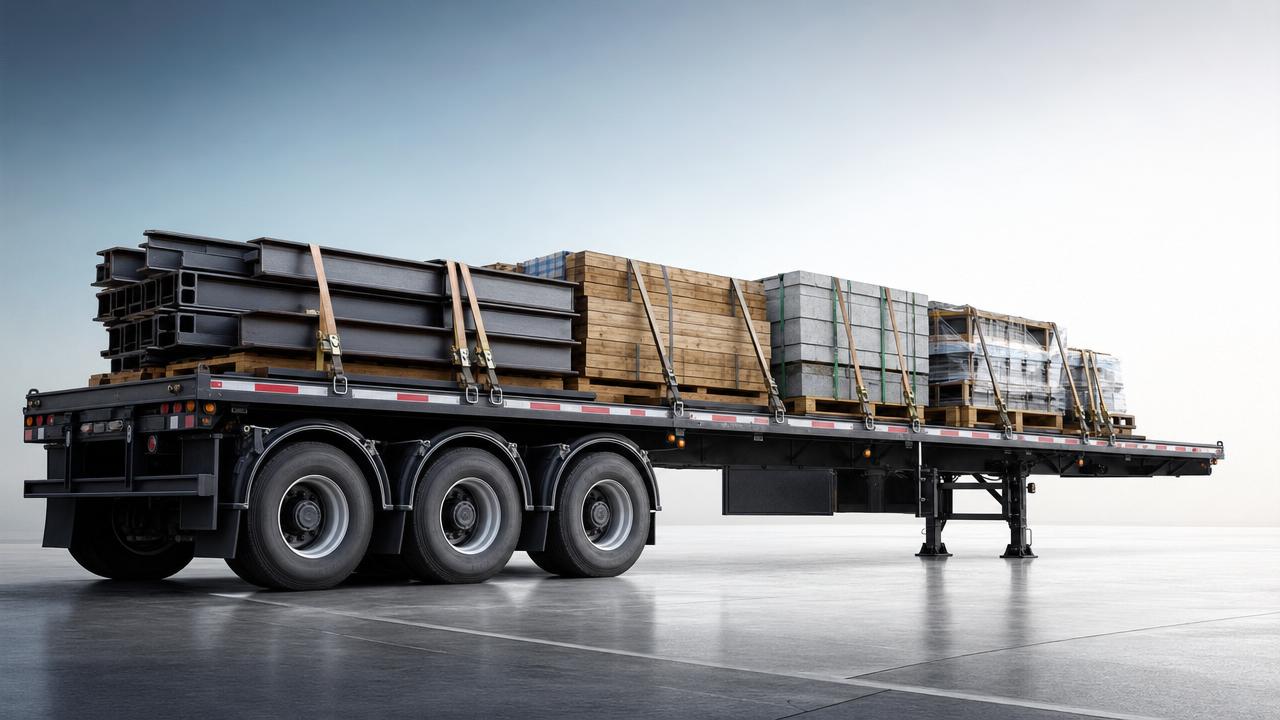
When construction crews need to move steel, timber, and site materials efficiently, a Flatbed Semi-Trailer often becomes the most practical choice. Its open platform, easy loading access, and strong carrying capacity make it ideal for demanding jobsite transport. This case highlights how the right trailer solution can improve loading efficiency, reduce delivery delays, and support safer daily operations for operators and fleet users.
For operators and transport users, the real question is not simply whether a flatbed can carry the load. The more important issue is whether the trailer can handle mixed materials safely, load quickly with available site equipment, and keep working reliably across changing road and jobsite conditions. In most construction and material delivery tasks, a well-matched Flatbed Semi-Trailer is one of the most flexible and cost-effective solutions.
In this article, we look at a practical case for moving steel, timber, and general site materials, and explain what operators should pay attention to when choosing and using this trailer type. The goal is to help readers understand where a flatbed performs best, what problems it solves, and how to judge whether it is the right tool for daily transport work.
Why a Flatbed Semi-Trailer Fits Construction Material Transport So Well
A Flatbed Semi-Trailer is widely used in engineering vehicle operations because it can carry many types of cargo without the height and side-wall limits found on van or box trailers. Steel beams, timber packs, pallets of bagged materials, pipes, formwork, scaffolding, and equipment can all be loaded from the side, rear, or top. This flexibility matters when jobsite conditions are busy and loading equipment availability changes from one stop to another.
For operators, the biggest practical advantage is loading convenience. Forklifts can approach from both sides, cranes can lower cargo directly onto the deck, and long materials can extend across the platform more naturally than they could in enclosed transport equipment. This reduces handling time and makes the loading sequence easier to control.
Another reason flatbeds work well is their adaptability to mixed loads. A single day’s delivery may include long steel sections, timber bundles, pallets of cement products, or temporary site materials. Instead of arranging separate trailer types for each category, fleets often use one Flatbed Semi-Trailer configuration to cover multiple delivery tasks, improving asset utilization and reducing idle time.
From a planning perspective, this also helps dispatchers and operators respond faster. If a jobsite changes the unloading order or adds extra materials, a flatbed usually gives more room to adjust. That operating flexibility is one of the main reasons it remains a common choice in construction logistics.
What Operators Usually Care About Most in Daily Use
Users and operators generally focus less on marketing descriptions and more on day-to-day workability. They want to know whether the trailer is easy to load, whether cargo can be secured properly, whether the deck is strong enough for concentrated weight, and whether the trailer stays stable under real road conditions.
One key concern is cargo security. Steel and timber behave differently during transport. Steel is dense, heavy, and can create concentrated load pressure. Timber is lighter but can shift if not tightly strapped. Site materials may come in pallets, bundles, irregular packages, or mixed lengths. Operators need enough lashing points, a strong deck structure, and a layout that allows practical tie-down angles.
Another concern is efficiency at loading and unloading points. Construction schedules are often tight. Delays at the yard or site can affect crane booking, labor timing, and project flow. A Flatbed Semi-Trailer supports faster handling because there are fewer structural barriers around the cargo area. For operators, that can translate directly into more trips completed or less wasted waiting time.
Road adaptability is also important. Construction transport does not happen only on smooth highways. Vehicles may enter temporary access roads, uneven yard surfaces, or muddy work areas. Operators need a trailer chassis and suspension setup that can handle variable surfaces while maintaining load stability and reducing wear.
Finally, safety is always central. Users want confidence that the trailer can manage braking loads, cornering forces, and uneven cargo distribution without creating unnecessary risk. In practical operations, safety depends not only on the trailer design but also on how well that design matches the actual cargo profile.
A Practical Case: Moving Steel, Timber, and Site Materials on One Trailer Platform
Consider a construction supply route serving several active building sites. The delivery plan includes steel bars and sections for structural work, bundled timber for formwork and framing, and general site materials such as pallets of boards, wrapped products, or tools packed in crates. The sites have different unloading conditions: one has a tower crane, another uses a forklift, and a third depends mainly on manual coordination and a small loader.
In this type of scenario, a Flatbed Semi-Trailer offers a clear operational advantage. Steel can be positioned first according to weight distribution, usually lower and centered over the main load-bearing area. Timber bundles can then be stacked in a way that keeps unloading order practical, while palletized materials can be arranged for side access where forklifts are available.
The open deck allows the loading team to build the load according to both route order and cargo type. That is important because not every stop has the same unloading tools. If materials must be removed from the side at one location and lifted from above at another, a flatbed provides the required access without repeated re-handling.
In this case, the transport team benefits in three ways. First, loading time is reduced because long steel and timber do not need special enclosed-space maneuvering. Second, dispatch efficiency improves because one trailer can carry different material categories in a single trip. Third, unloading delays are reduced because site crews can access the load more directly with their available equipment.
This case also shows that the trailer is not valuable only because of payload. Its real value is operational compatibility. A trailer that fits site realities can reduce friction across the entire delivery chain, from warehouse preparation to final unloading.
How the Right Trailer Improves Loading Efficiency
Loading efficiency is one of the strongest reasons fleets choose a Flatbed Semi-Trailer for construction materials. On a practical level, efficiency comes from open access, deck usability, and simpler cargo arrangement. Operators do not lose time working around fixed walls or roof constraints, and loading equipment can approach from better angles.
For steel transport, cranes can place beams, bars, or sections directly onto the deck in the desired orientation. For timber, forklifts can place bundles from either side without complex turning movements. For palletized site materials, the loading crew can position goods according to stop sequence, reducing unnecessary movement at the destination.
Another important factor is compatibility with different cargo lengths. Long items often create problems in enclosed transport formats, but on a flatbed they can be arranged more naturally and secured with appropriate supports and straps. This makes the trailer useful not just for one standard cargo size, but for a wide range of construction supply dimensions.
Operators also gain from easier visual inspection. Before departure, the team can quickly check tie-down condition, edge protection, spacing, and deck contact points. Problems are easier to spot and correct when the cargo is fully visible. That supports both safety and departure speed.
Over time, these small time savings add up. Faster loading and fewer rework steps can improve daily vehicle utilization and reduce pressure on labor teams. For busy contractors and material suppliers, that makes a direct difference in transport productivity.
What Makes Cargo Safer on a Flatbed in Real Operations
Some people assume an open trailer is automatically less secure than an enclosed one, but in construction material transport, safety depends more on proper load planning and securement than on enclosure alone. A Flatbed Semi-Trailer can be very safe when its deck strength, lashing arrangement, and operating process match the cargo being carried.
For steel loads, the first requirement is proper weight placement. Heavy cargo should be distributed to avoid axle overload and maintain stable center balance. Operators should use blocking, anti-slip material where needed, and sufficient tie-down force to prevent forward, rearward, or lateral movement during braking and turning.
Timber requires a different approach. Because timber bundles may compress or settle during transit, operators should recheck strap tension after the first stage of travel. Edge protectors are helpful because they reduce strap wear and maintain better securement pressure over the bundle.
For mixed site materials, safety depends on separating cargo types logically. Dense steel should not be allowed to shift against lighter packaged goods. Palletized products should be placed on stable deck areas and secured according to weight and packaging strength. If unloading order is not considered in advance, operators may be forced to loosen restraints too early on site, which increases risk.
Trailer condition also matters. Worn flooring, damaged lashing points, poor suspension condition, and uneven tire wear can all reduce transport safety. A good trailer is only as safe as its working condition. For daily users, regular inspection before loading is just as important as the trailer’s rated specification.
How to Judge Whether a Flatbed Semi-Trailer Is the Right Choice for Your Work
If your transport tasks mainly involve long, heavy, bulky, or irregular construction materials, a Flatbed Semi-Trailer is often a strong fit. It is especially suitable when cargo must be loaded by crane or forklift, when materials differ from trip to trip, or when unloading conditions vary by site.
However, the right choice depends on several practical questions. What is the typical cargo mix? Are the loads mostly steel, timber, pallets, machinery, or all of them? What are the common dimensions and weights? Do you need side loading regularly? Are your routes mostly highway, or do they include rough construction access roads?
Users should also consider deck length and axle configuration. Longer decks support long cargo but may be less convenient in tight maneuvering areas. Higher payload requirements may call for stronger chassis design and axle capacity. Suspension type should match road conditions and maintenance priorities.
Another important point is how often the trailer will carry mixed loads. If your operations regularly combine steel, timber, and site materials, then securement flexibility becomes a key selection factor. Look for a design with practical tie-down points, durable flooring, and a structure built for repeated heavy-duty use.
It is also wise to think about service support. A trailer used in engineering vehicle operations needs dependable parts supply, maintenance guidance, and professional technical communication. This becomes especially important in export business, where documentation, configuration accuracy, and after-sales coordination affect the user experience as much as the product itself.
Common Mistakes That Reduce Performance and Create Delays
One common mistake is choosing a trailer based only on maximum payload. Payload matters, but cargo type, deck usability, and securement layout are equally important. A trailer that looks strong on paper may still slow down operations if it is inconvenient to load or unsuitable for the material mix.
Another mistake is poor load sequencing. If the cargo for the last stop is trapped beneath the first stop’s materials, unloading becomes slow and risky. Operators may have to loosen too many restraints or reposition loads on site, increasing labor time and accident potential.
Some users also underestimate the impact of rough site conditions. If the trailer frequently enters uneven ground, a configuration designed only for ideal road conditions may experience faster wear, instability, or damage. Matching the trailer to the actual route environment is essential.
Inadequate tie-down planning is another issue. Using too few straps, poor strap angles, or weak contact protection can lead to cargo movement, product damage, and safety incidents. Operators should treat securement as a technical process, not just a final step before departure.
Finally, maintenance neglect can quickly reduce reliability. Flatbeds in construction transport face hard use. Daily checks on tires, brakes, lights, deck condition, fasteners, and lashing points help prevent downtime and keep deliveries on schedule.
Why Supplier Strength and Export Support Matter for International Buyers
For overseas customers, the product itself is only part of the decision. Reliable supply, correct configuration, documentation handling, and after-sales response are also critical. A Flatbed Semi-Trailer used in engineering transport must arrive with the right specifications for local operating needs, not just a generic setup.
Shandong Livol Truck International Trade Co., Ltd., based in Shandong, China, brings strong commercial vehicle industry resources and export experience to this process. As the official authorized domestic and overseas dealer for FOTON, SHACMAN and SINOTRUK, the company works with solid manufacturer support and a wide service foundation.
With authorized 4S store resources across China and sufficient inventory, Livol supports stable supply and efficient delivery. For customers, this helps reduce uncertainty in procurement timing. A professional export team can also assist with model selection, customization, documentation, customs procedures, and logistics coordination.
For operators and fleet users, that means the trailer solution can be matched more closely to actual use conditions. Instead of buying only by brochure description, buyers can work through cargo requirements, route conditions, and usage goals to get a more suitable transport setup. That kind of process support often makes a major difference in long-term satisfaction.
Conclusion: A Practical Trailer Choice for Demanding Material Transport
A Flatbed Semi-Trailer is not just a simple platform trailer. In construction and engineering vehicle operations, it is a highly practical solution for moving steel, timber, and site materials with greater loading flexibility, faster handling, and strong day-to-day adaptability.
For operators, the main value lies in real work performance: easier access for loading equipment, better compatibility with mixed cargo, more efficient unloading at different sites, and safer securement when the trailer is properly matched and used. These are the factors that reduce delays and support smoother jobsite logistics.
If your work involves frequent transport of long, heavy, or irregular construction materials, a well-configured Flatbed Semi-Trailer is often the right choice. The best results come from selecting a trailer based on actual cargo patterns, road conditions, and operating methods rather than on specification numbers alone.
With the right product and the right export partner, users can gain not only transport capacity, but also a more reliable and efficient material delivery process. That is what makes a flatbed such a valuable tool in modern construction transport.
Search Starts Here