
News
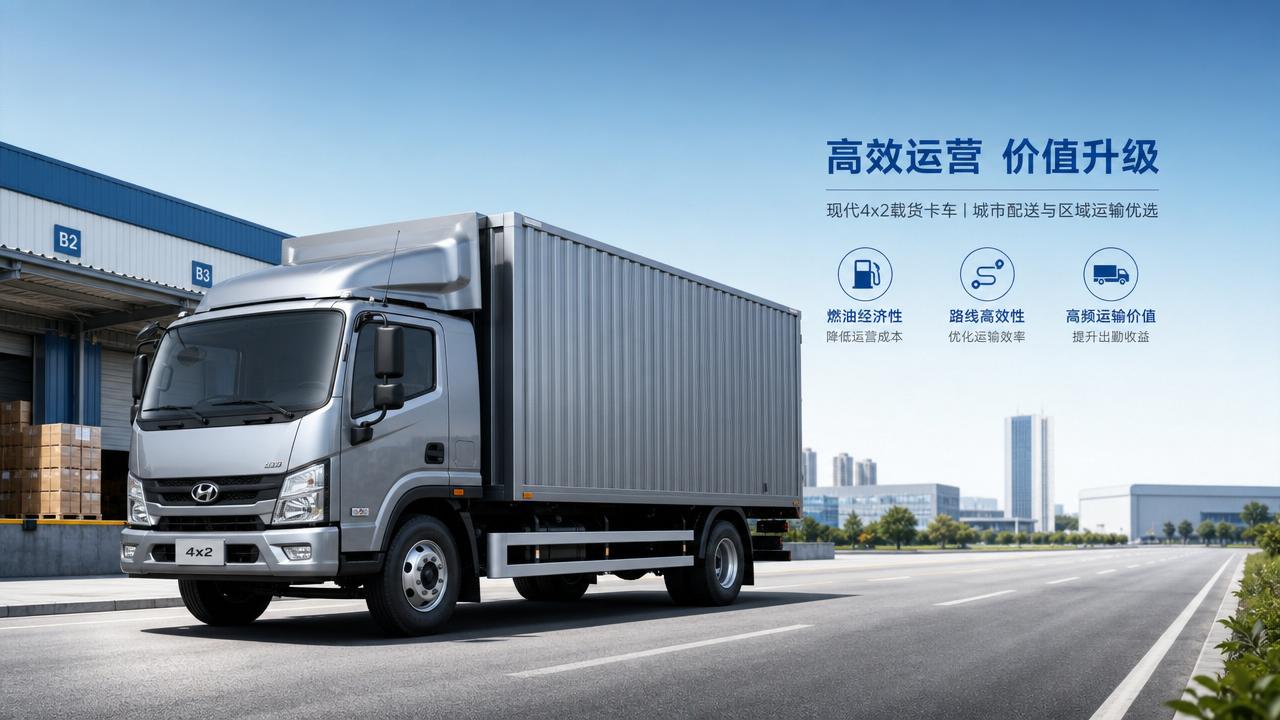
For financial decision-makers, the real value of a 4x2 Cargo Truck is not defined by purchase price alone. Fuel use, route efficiency, payload discipline, uptime, and after-sales support determine whether the truck becomes a cost saver or a margin drain over its service life.
This article explains how to evaluate fuel cost and route efficiency in practical financial terms. It is designed to help buyers, approvers, and fleet planners judge total operating value, control risk, and compare vehicle options with greater confidence.
What Financial Buyers Really Need to Know Before Approving a 4x2 Cargo Truck
The core search intent behind “4x2 Cargo Truck fuel cost and route efficiency” is commercial evaluation. Readers are not only asking how much fuel a truck uses. They want to know whether this vehicle type delivers acceptable operating cost per kilometer, per trip, and per ton of cargo moved.
For financial approvers, the main concern is simple: will this truck improve transport economics in the intended use case. That means looking at real-world fuel cost, route suitability, maintenance exposure, loading efficiency, resale outlook, and the reliability of supply and support.
The most useful way to assess a 4_2 Cargo Truck is through total operating performance rather than brochure numbers. A truck with a slightly higher purchase price can still be the better investment if it lowers fuel waste, reduces downtime, and keeps delivery schedules stable.
In most regional and urban freight operations, a well-matched 4x2 truck can be one of the most efficient commercial vehicle formats. It offers a practical balance between payload capacity, maneuverability, acquisition cost, and daily operating economy.
Why the 4x2 Cargo Truck Is Often Chosen for Cost-Sensitive Freight Operations
A 4x2 Cargo Truck is widely used for medium-duty cargo transport, city distribution, intercity delivery, construction material movement, and agricultural logistics. For many businesses, it fits the operational “middle zone” where a light truck is too limited but a heavier platform is unnecessarily expensive.
Its cost advantage usually starts with lower initial investment compared with larger multi-axle trucks. Beyond acquisition, it often brings lower fuel consumption, simpler maintenance, and easier route access in areas with tight urban roads, weight restrictions, and frequent stop-and-go conditions.
From a finance perspective, this matters because efficiency is not only about liters per 100 kilometers. It is also about how much revenue-bearing cargo can be moved with minimum idle time, lower driver fatigue, and fewer route limitations.
When matched correctly to delivery radius, road condition, and load profile, a 4x2 layout can create a strong operating model. It supports high trip frequency while avoiding the unnecessary fixed and variable costs associated with oversized vehicle selection.
How to Calculate the Real Fuel Cost of a 4x2 Cargo Truck
Fuel cost should be analyzed as a transport cost metric, not just a consumption figure. The basic formula is straightforward: fuel cost per trip equals total fuel used multiplied by local fuel price. But good financial analysis goes deeper than that.
A better model includes fuel cost per kilometer, fuel cost per ton delivered, and fuel cost per revenue trip. This reveals whether the truck remains economical under your actual route structure rather than only under ideal test conditions.
For example, a truck consuming 16 liters per 100 kilometers may look efficient on paper. However, if poor route planning leads to low backhaul utilization or excessive idling, actual cost per delivered ton may be worse than a truck with slightly higher nominal consumption.
Financial reviewers should request operating scenarios instead of relying only on sales specifications. Compare urban delivery, mixed road transport, regional haulage, and full-load operation separately. Fuel efficiency changes significantly depending on terrain, congestion, payload, and driving behavior.
Another key point is seasonality. Air conditioning demand, road quality during rainy periods, and cold-start conditions can all affect fuel use. Budget forecasts should therefore include a realistic operating range rather than one fixed fuel assumption.
What Route Efficiency Really Means in Financial Terms
Route efficiency is the relationship between distance traveled, time spent, fuel consumed, and cargo delivered. For decision-makers, it translates into a more important business question: how much productive transport output is generated from every unit of operating cost.
A route may appear short on a map yet still be inefficient because of traffic congestion, poor loading access, steep grades, or long waiting times at warehouses. In these cases, the truck burns fuel without producing enough billable movement.
This is why route efficiency should be measured using indicators such as average speed under load, loaded-versus-empty distance, stop frequency, idle ratio, and turnaround time at pickup and unloading points. These reveal where margin is being lost.
For a 4_2 Cargo Truck, route efficiency is often strongest in structured regional distribution where roads are accessible, daily mileage is predictable, and deliveries are frequent enough to keep the truck moving without excessive waiting or detours.
If your business depends on dense urban distribution, route efficiency may depend more on body dimensions, turning radius, and loading convenience than on engine output alone. A truck that moves easily through restricted streets may deliver better economics than a larger unit with higher theoretical capacity.
Which Factors Most Affect Fuel Consumption in Daily Operation
Payload management is one of the biggest drivers of fuel cost. Overloading increases fuel burn, accelerates tire wear, and raises mechanical stress. Underloading, on the other hand, reduces transport efficiency because more trips are required to move the same cargo volume.
Engine and transmission matching also matter. A powertrain configured appropriately for the common route profile can reduce unnecessary fuel use. Trucks operating on flatter regional roads may prioritize economy gearing, while routes with frequent gradients may require a different balance.
Driving behavior has a measurable financial impact. Harsh acceleration, unnecessary braking, long idle periods, and poor gear discipline all push up fuel cost. Even a well-specified vehicle can become inefficient when driver practice is not controlled.
Body type and aerodynamics also influence consumption. Cargo boxes, side panels, tarpaulin configurations, and load height can change drag and vehicle weight. For fleets with regular higher-speed intercity routes, these factors should not be treated as minor details.
Maintenance discipline is another major factor. Dirty filters, poor tire pressure, injector issues, and delayed servicing gradually increase fuel use. From a financial standpoint, preventive maintenance is usually cheaper than paying for hidden fuel inefficiency over time.
How Finance Teams Should Compare Competing Truck Options
When comparing different 4x2 truck models, the cheapest unit price is rarely the best indicator of value. A more effective method is to compare total cost of ownership across a planned service period, such as three to five years.
This analysis should include purchase price, expected fuel cost, routine maintenance, tire expense, likely downtime, residual value, financing cost, and support availability. The objective is to estimate cash impact across the full operating cycle, not just the first invoice.
Ask suppliers for route-based operating assumptions. What is the expected fuel range under typical payload conditions. What service intervals apply. How available are spare parts. What is the lead time for repair support. These questions often matter more than nominal specification differences.
It is also important to compare inventory stability and delivery reliability. Delayed truck supply can disrupt project timing, contract execution, and revenue planning. A supplier with strong stock capacity and efficient export handling can reduce hidden procurement risk.
For international buyers, documentation quality, customs coordination, and shipping execution should also be part of the commercial evaluation. A lower-price truck becomes less attractive if delivery uncertainty or incomplete paperwork creates delays and extra cost.
Why After-Sales Support Directly Affects Fuel Cost and Route Performance
After-sales support is often treated as a maintenance issue, but it is actually an efficiency issue. When service response is slow or parts are difficult to obtain, vehicles stay off the road longer, planned routes are interrupted, and replacement transport cost rises.
Good support improves route efficiency by keeping trucks available and mechanically consistent. A vehicle in proper operating condition maintains more stable fuel consumption, safer performance, and more predictable scheduling over time.
For financial approvers, this means supplier capability deserves close attention. A partner with authorized networks, sufficient inventory, and professional export coordination can reduce operational disruption long after the purchase is completed.
Shandong Livol Truck International Trade Co., Ltd. offers value in this area through its role as an authorized dealer for FOTON, SHACMAN and SINOTRUK, its broad 4S store presence in China, and its ability to support vehicle selection, customization, logistics, and after-sales needs.
That combination matters because commercial vehicle profitability depends on continuity. Cost control is not achieved only by buying the truck at the right price, but by keeping it productive, compliant, and serviceable throughout its working life.
When a 4x2 Cargo Truck Makes the Most Financial Sense
A 4x2 Cargo Truck usually makes strong financial sense when the operation involves medium payloads, repeated regional routes, urban or peri-urban access constraints, and a need for balanced capital and operating cost. It is especially practical where delivery frequency matters more than maximum heavy-haul capacity.
Typical suitable scenarios include retail distribution, packaged goods delivery, building material transport, agricultural product movement, municipal supply work, and medium-distance industrial logistics. In these cases, the truck often delivers solid utilization without excessive fuel burden.
It may be less suitable when cargo density is consistently high, route terrain is severe, or operational conditions demand higher axle capacity and larger gross weight handling. In those situations, selecting a heavier platform may reduce cost per ton despite higher ownership expense.
This is why the approval process should start with route and cargo reality, not habit. Matching vehicle format to actual transport structure is one of the most effective ways to improve return on commercial vehicle investment.
A Practical Approval Checklist for Financial Decision-Makers
Before approving a truck purchase, review five core points. First, confirm the expected fuel cost under real route conditions rather than brochure estimates. Second, verify whether the payload profile fits the truck’s efficient operating range.
Third, assess route efficiency using loaded kilometers, idle time, stop frequency, and turnaround performance. Fourth, compare total cost of ownership over the planned service period. Fifth, evaluate supplier strength in inventory, export process, service support, and parts continuity.
If these five areas are clear, the investment decision becomes far more reliable. Instead of focusing narrowly on purchase price, you can assess whether the truck will support predictable transport cost, cash flow discipline, and long-term operational stability.
Conclusion
For finance teams, the right question is not simply whether a 4x2 Cargo Truck is affordable. The better question is whether it can deliver low fuel cost, strong route efficiency, dependable uptime, and sustainable operating value in your actual business model.
In many freight applications, the answer is yes. A properly selected 4_2 Cargo Truck can offer an excellent balance of purchase cost, daily fuel economy, route flexibility, and revenue productivity. That makes it a practical asset for companies seeking efficient transport without overspending on unnecessary capacity.
When evaluating suppliers, prioritize not only vehicle specification but also supply stability, customization capability, documentation quality, and after-sales support. These factors directly influence the true economics of ownership.
With a structured cost review and a reliable export partner, buyers can make more confident truck investment decisions and build transport operations that are both efficient and financially resilient.
Search Starts Here