
News
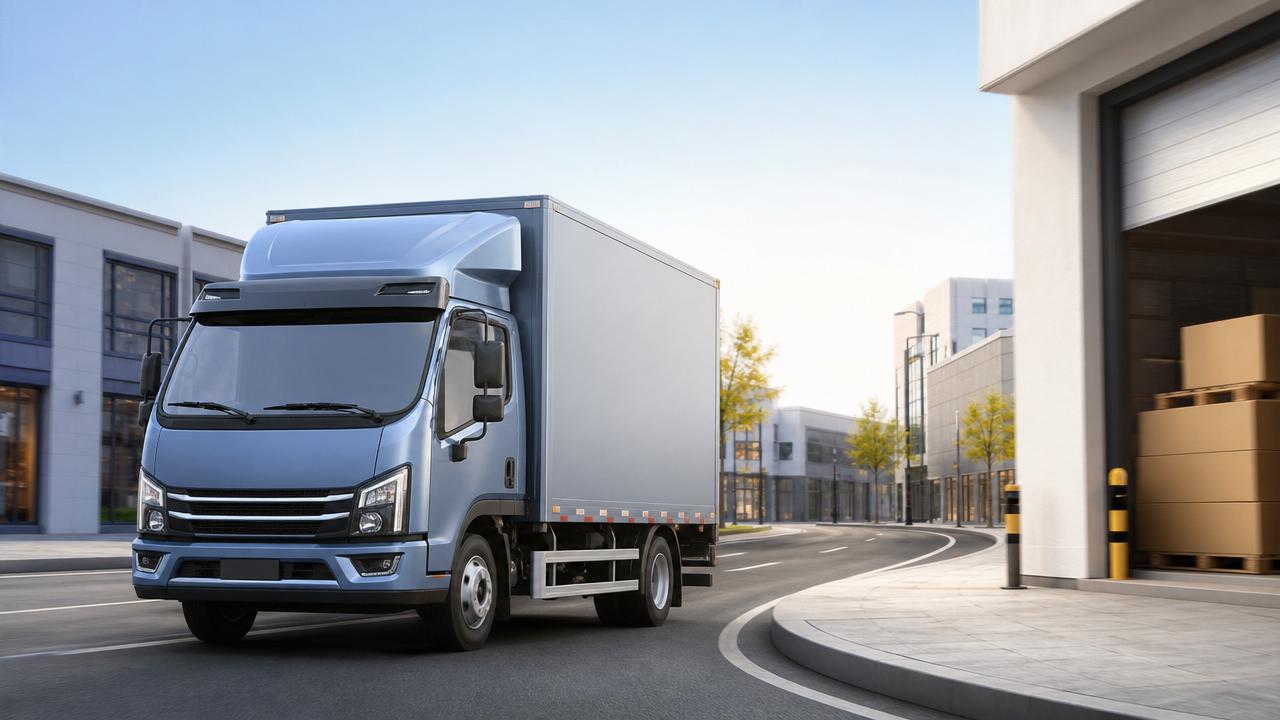
For urban operators facing tight schedules, narrow streets and rising delivery demands, the 4_2 Cargo Truck has become a practical solution for improving transport efficiency. With strong loading capacity, flexible maneuverability and lower operating costs, it helps businesses complete more deliveries in less time. This article explores how a 4_2 Cargo Truck supports reliable urban logistics and why it is increasingly valued in modern distribution work.
What makes a 4_2 Cargo Truck suitable for urban delivery?
A 4_2 Cargo Truck is designed with one front axle and one rear drive axle, creating a layout that balances payload, road handling and operating simplicity. In urban logistics, this structure is especially valuable because it offers enough cargo volume for daily distribution while remaining easier to control than larger multi-axle trucks. For routes that involve repeated stops, frequent lane changes and access to dense commercial areas, the vehicle’s compact dimensions become a direct productivity advantage.
Compared with heavier transport units, a 4_2 Cargo Truck can move through city streets with less restriction and lower fuel consumption. It is often used for retail replenishment, parcel distribution, food delivery, building material transport and inter-district cargo transfer. The combination of maneuverability and usable load capacity allows urban fleets to increase trip frequency without sacrificing reliability.
Another reason the 4_2 Cargo Truck fits city operations is driver convenience. Better visibility, more stable low-speed performance and easier parking reduce time losses during loading, unloading and route transitions. When delivery windows are short, small gains at each stop create a meaningful increase in total route efficiency by the end of the day.
How does a 4_2 Cargo Truck improve delivery efficiency in real operations?
The main value of a 4_2 Cargo Truck is not just moving goods, but moving them more efficiently across complicated urban environments. Efficiency improves in several connected ways: faster route completion, reduced idle time, better fuel economy and improved loading flexibility. In practical distribution work, these factors influence both service quality and overall operating cost.
First, a 4_2 Cargo Truck supports more precise route planning. Because it can access roads that may be inconvenient for larger commercial vehicles, dispatchers can choose shorter routes and reduce detours. This is important in older urban districts, wholesale markets and mixed residential-commercial streets where road width and turning space are limited.
Second, loading and unloading cycles are often quicker. A properly matched 4_2 Cargo Truck can carry enough goods for a full urban route without becoming too large for curbside operations. This lowers the chance of delays caused by difficult parking or excessive walking distance between truck and drop-off point.
Third, the operating cost per trip can stay competitive. Fuel use, tire wear and maintenance demands are generally lower than those of larger heavy-duty alternatives. For city-based delivery work with moderate payload needs, that cost structure makes the 4_2 Cargo Truck a practical long-term asset rather than simply a transport tool.
- Better access to narrow urban roads and loading zones
- Lower turnaround time between deliveries
- Balanced payload for high-frequency city routes
- Reduced operating cost compared with oversized vehicles
- Improved schedule consistency during peak traffic periods
Which urban logistics scenarios benefit most from a 4_2 Cargo Truck?
Not every delivery task requires the same vehicle type, but many city transport scenarios match the strengths of a 4_2 Cargo Truck very well. One of the most common uses is last-mile and mid-mile distribution between warehouses, urban hubs and retail locations. In these applications, operators need enough capacity to reduce the number of trips, yet enough flexibility to enter crowded delivery areas without delay.
E-commerce distribution is another strong fit. Parcel volumes can be high, but individual shipments are usually lighter and time-sensitive. A 4_2 Cargo Truck provides the cargo box size needed for route consolidation while maintaining practical movement in city traffic. Cold chain transport, depending on body configuration, also benefits when goods must be delivered quickly to supermarkets, restaurants or pharmacies.
Construction-related urban supply also falls within the useful range of a 4_2 Cargo Truck. Tools, light materials, maintenance equipment and project supplies can be moved efficiently to work zones where larger engineering vehicles may struggle with access. In this sense, the vehicle supports not only logistics businesses but also engineering-related transport tasks connected to urban infrastructure and service operations.
How should a 4_2 Cargo Truck be selected for cost-effective performance?
Choosing the right 4_2 Cargo Truck requires more than looking at price or appearance. Urban efficiency depends on matching the truck to route distance, payload pattern, cargo body type, engine performance and service support. A truck that is too small can force extra trips, while one that is too large can increase operating cost and reduce maneuverability.
Start with cargo reality rather than theoretical maximums. Consider average daily volume, peak load conditions, road restrictions and the number of delivery stops. Box body, stake body and refrigerated body options should be selected based on actual goods handled. Engine output should support stop-and-go city movement without unnecessary fuel waste. Brake responsiveness, cabin ergonomics and turning radius also deserve close attention because they directly affect urban use.
After-sales support is equally important. Spare parts access, technical guidance and document handling can influence total ownership experience, especially for international buyers. Shandong Livol Truck International Trade Co., Ltd. provides integrated export support built around authorized cooperation with FOTON, SHACMAN and SINOTRUK. With strong inventory resources, professional vehicle selection advice, customization capability, documentation support, customs coordination and logistics services, the company helps buyers obtain a suitable 4_2 Cargo Truck with lower transaction complexity and more stable delivery planning.
- Confirm legal payload and cargo body requirements
- Review turning radius and urban road compatibility
- Compare engine efficiency for stop-and-go operation
- Check service network and spare parts availability
- Evaluate exporter reliability and supply stability
What are the common mistakes when using a 4_2 Cargo Truck in city logistics?
A 4_2 Cargo Truck can improve performance significantly, but only when it is used with realistic planning. One common mistake is overloading. Even if a truck can physically carry more goods, exceeding compliant load limits affects safety, braking and tire life, while also increasing maintenance cost. Urban routes with frequent stops put extra stress on overloaded vehicles.
Another mistake is ignoring body configuration. A general cargo box may not suit fragile goods, temperature-sensitive cargo or construction tools that require secure loading methods. Mismatched body design often results in damaged cargo, slower handling and avoidable operating disruption.
Some operators also underestimate route-specific maintenance. City delivery creates repeated clutch use, brake wear and engine idle time. Without preventive inspection, the efficiency advantage of a 4_2 Cargo Truck can decline quickly. Regular service intervals, driver checks and tire monitoring are essential to maintain uptime.
A final risk is selecting purely on the lowest purchase price. Low upfront cost may hide weak parts support, poor export coordination or limited technical backup. In international trade, the best-value 4_2 Cargo Truck is usually the one backed by dependable supply, consistent quality control and responsive after-sales assistance.
What questions should be checked before buying a 4_2 Cargo Truck?
Before making a final decision, it helps to organize the most common questions into a quick evaluation guide. This avoids focusing on only one factor and supports a more practical purchase decision.
A well-chosen 4_2 Cargo Truck can become one of the most efficient assets in urban transport. It combines practical payload, flexible movement and manageable operating cost in a format that suits modern city distribution. Whether the task involves retail delivery, parcel movement, cold chain service or urban engineering supply, the right truck configuration can improve route reliability and reduce daily inefficiency.
For buyers seeking dependable Chinese commercial vehicles, Shandong Livol Truck International Trade Co., Ltd. offers a strong export foundation, authorized brand resources and full-process support from selection to delivery. If the goal is to improve city logistics with a reliable 4_2 Cargo Truck, the next practical step is to define route needs, compare configurations and work with an experienced export partner to secure a solution that fits both operational demands and long-term value.
Search Starts Here