
News
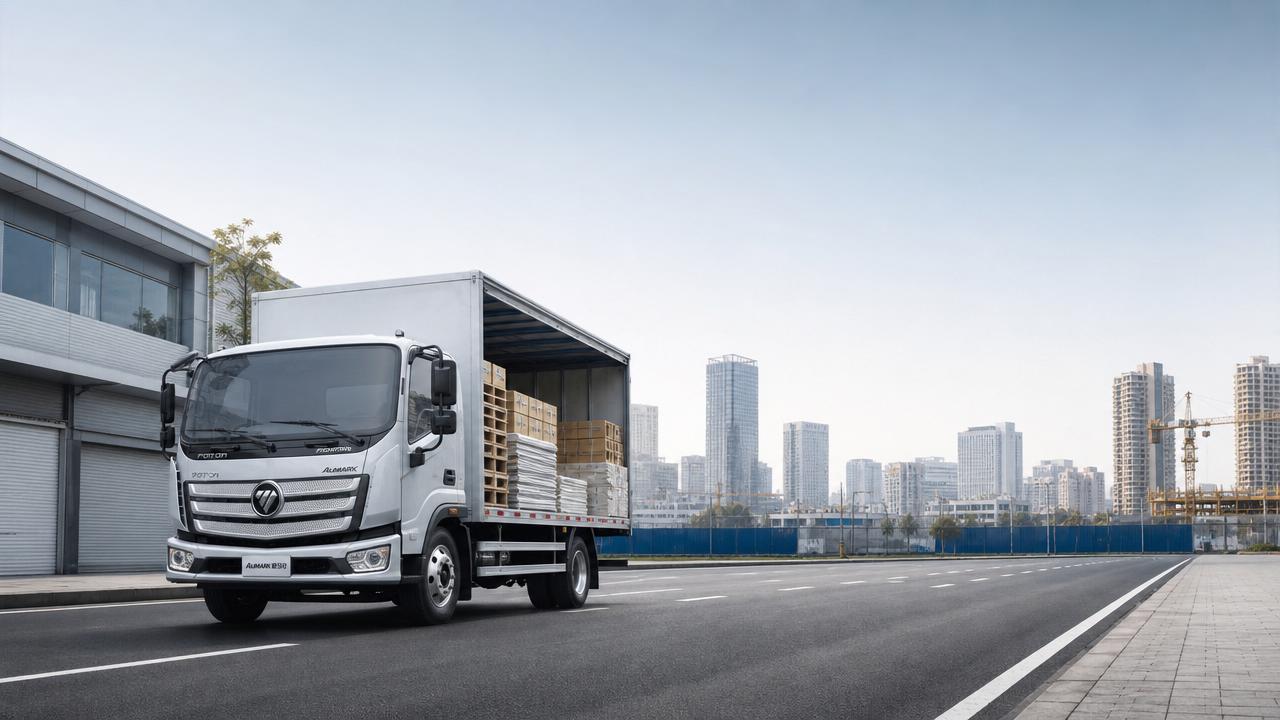
Choosing the right urban delivery vehicle directly affects delivery efficiency, operating cost, and site responsiveness.
A 4_2 Cargo Truck balances payload capacity, maneuverability, and fuel economy for city distribution, construction support, and short-distance transport.
Its value is clear, but its limits also matter. Load volume, road access, duty cycle, and route distance must be reviewed carefully.
What Is a 4_2 Cargo Truck in Urban Delivery?
A 4_2 Cargo Truck has two axles, with one driving axle. It is common in medium-duty commercial transport.
The layout supports a practical cargo body while keeping the turning radius suitable for dense city roads.
In engineering vehicle operations, the 4_2 Cargo Truck often handles tools, packaged materials, spare parts, and site supplies.
Compared with light vans, it carries more weight and volume. Compared with heavy trucks, it is easier to dispatch downtown.
This makes the 4_2 Cargo Truck useful for routes where access, loading speed, and delivery frequency are more important than maximum tonnage.
Key features to understand
- Medium payload range for daily distribution and engineering support.
- Better maneuverability than many three-axle or heavy-duty trucks.
- Lower operating cost on short and medium city routes.
- Flexible body options, including box, stake, dropside, and refrigerated designs.
The best specification depends on route density, cargo type, road restrictions, and unloading conditions.
Where Does a 4_2 Cargo Truck Perform Best?
A 4_2 Cargo Truck performs best when deliveries are frequent, predictable, and located inside or near urban areas.
It fits routes with multiple stops, moderate cargo weight, and limited space around warehouses, stores, or construction sites.
For construction material transfer, it can move cement bags, fittings, panels, pipes, scaffolding parts, and packaged hardware.
For municipal and infrastructure projects, it can support maintenance crews with tools, parts, and emergency replacement materials.
For commercial logistics, the 4_2 Cargo Truck is suitable for regional distribution centers, retail replenishment, and industrial park transport.
Common urban use cases
- Building material delivery to inner-city project locations.
- Short-haul transfer between warehouses and job sites.
- Spare parts distribution for equipment service networks.
- Retail, furniture, appliance, and packaged goods delivery.
- Cold-chain delivery when fitted with a refrigerated cargo body.
The 4_2 Cargo Truck is especially effective when payload utilization stays high without exceeding legal axle or gross vehicle limits.
How Should Payload, Body Type, and Route Be Matched?
Matching the truck to the route is more important than selecting the largest available cargo body.
A 4_2 Cargo Truck should be configured around real cargo weight, loading method, distance, road access, and unloading frequency.
Heavy but compact materials need stronger chassis capacity. Bulky but light goods require body volume and secure cargo protection.
For engineering supplies, dropside or stake bodies improve loading by forklift, crane, or manual handling.
For packaged products, a box body protects goods from weather, dust, and theft during multi-stop routes.
For food, medicine, or temperature-sensitive products, a refrigerated 4_2 Cargo Truck needs insulation, cooling capacity, and power reliability.
Selection checklist
A well-matched 4_2 Cargo Truck improves delivery reliability without unnecessary fuel use or maintenance burden.
When Is a 4_2 Cargo Truck Not the Best Choice?
A 4_2 Cargo Truck is not ideal for every transport requirement. Some projects need heavier chassis or specialized equipment.
If cargo regularly exceeds legal payload, a larger truck should be considered. Overloading increases tire, brake, and suspension wear.
Long-distance highway transport may also reduce its advantage. Larger tractors or heavy trucks may offer better cost per ton-kilometer.
Rough construction roads can be another limitation. A standard 4_2 Cargo Truck is designed mainly for paved or improved roads.
For mud, quarry access, steep grades, or off-road duty, all-wheel drive or heavy-duty configurations may be safer.
Typical limits to evaluate
- Limited payload compared with larger multi-axle cargo trucks.
- Cargo volume may be insufficient for oversized materials.
- Urban access is useful, but low bridges and restricted zones still matter.
- Heavy stop-start operation can increase clutch, brake, and tire wear.
- Long-haul efficiency may be weaker than larger fleet combinations.
The best decision is not always smaller or larger. It is the closest match between transport task and vehicle capability.
How Does a 4_2 Cargo Truck Compare with Other Commercial Vehicles?
A 4_2 Cargo Truck sits between light delivery vehicles and heavier cargo trucks in capacity and operating cost.
Light trucks are easier to park, but they may require more trips for engineering materials or bulkier loads.
Larger 6_4 or 8_4 trucks carry more, but they may face access limits, higher fuel use, and slower downtown movement.
A 4_2 Cargo Truck often delivers the best balance when routes mix city streets, industrial roads, and short intercity links.
This comparison helps avoid under-specification and over-investment. Both mistakes can raise total operating cost.
What Costs and Operating Factors Should Be Considered?
The purchase price is only one part of the 4_2 Cargo Truck decision.
Fuel consumption, maintenance intervals, tire life, driver comfort, parts availability, and resale value affect long-term economics.
Urban delivery creates frequent braking, gear shifting, turning, and idling. These conditions should influence engine and transmission choices.
If the truck runs daily, a reliable chassis and efficient service supply become more valuable than a low initial price.
For export buyers, documentation, customs clearance, shipping, and local compliance also affect project timing.
Cost factors beyond purchase price
- Expected fuel use on loaded city routes.
- Maintenance support for engine, brakes, tires, and suspension.
- Body customization cost and production lead time.
- Export documents, inspection, port handling, and logistics.
- Local registration, emission rules, and road regulation compliance.
A 4_2 Cargo Truck should be evaluated through total cost of ownership, not only quotation comparison.
FAQ: Practical Questions About the 4_2 Cargo Truck
These answers show why the 4_2 Cargo Truck is a practical vehicle, but not a universal solution.
How Can Shandong Livol Truck Support the Right Selection?
Shandong Livol Truck International Trade Co., Ltd. is based in Shandong, China.
The company exports commercial vehicles with strong industry resources and extensive global trade experience.
It is an officially authorized domestic and overseas dealer for FOTON, SHACMAN, and SINOTRUK.
Authorized 4S stores across China and sufficient inventory help support stable supply and faster delivery.
The export team assists with vehicle selection, customization, documentation, customs clearance, logistics, and after-sales support.
For a 4_2 Cargo Truck, this service approach helps align chassis, body, brand, and export process with real operating needs.
Conclusion: When Does a 4_2 Cargo Truck Make Sense?
A 4_2 Cargo Truck makes sense when urban access, moderate payload, delivery frequency, and operating economy must work together.
It is a strong choice for city distribution, engineering material transfer, municipal support, and short-distance project logistics.
It is less suitable for extreme payloads, rough off-road sites, oversized cargo, or heavy long-haul freight.
Before purchase, confirm payload, cargo body, route restrictions, maintenance support, compliance, and delivery schedule.
For dependable sourcing, compare available FOTON, SHACMAN, and SINOTRUK configurations with a clear duty-cycle plan.
Contact Shandong Livol Truck to discuss a suitable 4_2 Cargo Truck specification and complete export solution.
Search Starts Here