
News
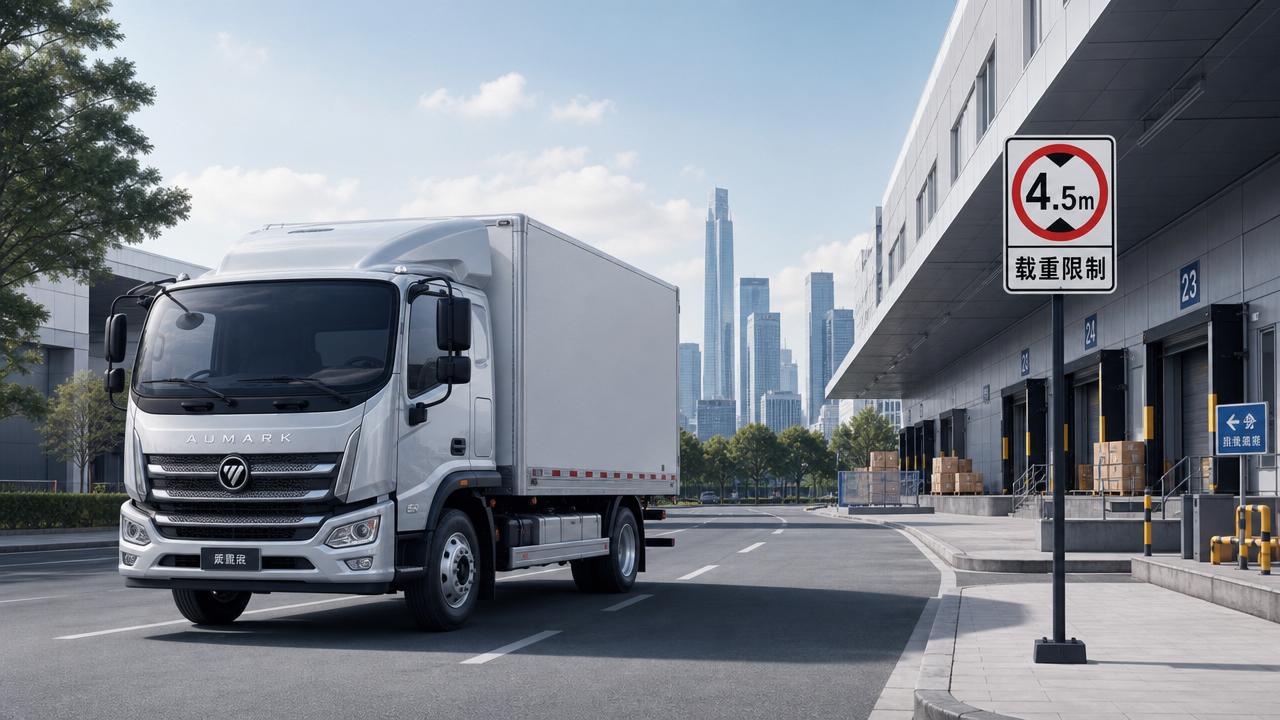
For urban delivery operators, understanding 4_2 Cargo Truck payload limits is essential to balancing legal compliance, vehicle performance and daily route efficiency. The right truck setup can reduce overload risks, improve fuel economy and help drivers complete more stops on tight city schedules. This guide explores how payload capacity directly affects route planning, operating costs and reliable last-mile delivery.
In dense city networks, a 4_2 Cargo Truck often works under tighter constraints than highway trucks. Operators must manage axle load, body volume, unloading frequency, traffic restrictions and delivery windows that may be as short as 15 to 30 minutes per stop.
For fleet users and drivers, payload planning is not only a compliance issue. It also affects braking distance, tire wear, turning stability, fuel use and how many delivery cycles can be completed in a single 8 to 10 hour shift.
When sourcing vehicles for urban distribution, buyers also need a dependable export and service partner. Shandong Livol Truck International Trade Co., Ltd. supports global customers with vehicle selection, customization, documentation, customs clearance and logistics for commercial vehicle projects based on practical operating requirements.
Why Payload Limits Matter in Urban 4_2 Cargo Truck Operations
A 4_2 Cargo Truck is widely used for city freight because it balances maneuverability and carrying capacity. In typical urban applications, gross vehicle weight and legal axle limits determine how much cargo can be loaded without exposing the operator to fines, safety risks or premature component failure.
Payload is different from cargo body size. A truck may have enough cubic volume for parcels, beverage crates or retail goods, but still exceed legal weight when the load density rises above the planned level. This mismatch is common in mixed-route delivery.
Key operating consequences of overload
- Longer braking distance, especially in wet urban roads and downhill ramps
- Higher fuel consumption, often increasing by 5% to 15% when trucks run consistently above target payload
- Faster wear on tires, leaf springs, bushings and brake linings
- Reduced route flexibility in low-speed city zones and restricted access roads
- Higher risk of delivery delays caused by roadside inspection or unexpected maintenance
Urban delivery conditions that amplify payload issues
City routes usually involve 20 to 60 stops per day, repeated acceleration and braking, and more idling than intercity transport. Under these conditions, even a 300 to 500 kg overload can have a larger effect on efficiency than on long, steady highway routes.
A well-matched 4_2 Cargo Truck should therefore be chosen according to actual cargo density, route radius, unloading method and access restrictions such as underground loading bays, narrow lanes or daytime entry bans.
The table below shows how common urban cargo types can affect payload planning for a 4_2 Cargo Truck, even when trucks have similar body dimensions.
The main takeaway is that body length alone does not define suitability. A 4_2 Cargo Truck moving dense cargo should be assessed with a stronger focus on legal payload margin and axle distribution than a truck used for lightweight parcel work.
How Payload Capacity Shapes Route Efficiency
Route efficiency is often measured by stops completed, kilometers per day, fuel consumed per ton delivered and on-time arrival rate. Payload capacity influences all four metrics because it determines how much freight can be moved in one trip without compromising speed, stability or compliance.
Trip frequency versus legal loading
If payload is too low for the application, drivers may need 2 trips instead of 1 for the same delivery zone. If payload is too high and loading discipline is poor, the truck may lose time at checkpoints, during loading adjustments or in unplanned workshop visits.
The practical goal is not to maximize weight on every trip. The goal is to maintain a repeatable loading range, often around 85% to 95% of the planned operational payload, so the truck can move efficiently across daily route variations.
Effects on fuel and delivery rhythm
In start-stop urban service, excessive weight increases fuel use faster than many operators expect. A route with 35 stops, traffic lights every 400 to 700 meters and repeated curbside departures places high load on the powertrain. Even small overloads can reduce average route speed by 5% to 10%.
That reduction matters when delivery windows are strict. Missing only 3 to 4 customer time slots in a day can create return freight, overtime costs or the need for a backup vehicle on the next shift.
Four route efficiency indicators operators should track
- Average load ratio by trip and by route zone
- Fuel consumption per 100 km and per delivered ton
- Number of stops completed within the planned time window
- Unscheduled maintenance events linked to suspension, brakes or tires
The following comparison helps operators see how different payload strategies can affect route output for a 4_2 Cargo Truck in urban delivery.
For most operators, balanced loading delivers the best result. It protects the truck while preserving route productivity, especially where the same 4_2 Cargo Truck must cover both retail streets and logistics parks within one daily schedule.
Choosing the Right 4_2 Cargo Truck for City Delivery
Selecting the right truck requires more than comparing engine power or cargo box length. Operators should assess at least 5 dimensions: legal payload requirement, cargo density, route distance, unloading method and local road restrictions.
Core specification points to review
- Chassis rating and axle load margin for the target cargo type
- Wheelbase and turning radius for narrow urban roads
- Engine and transmission match for start-stop efficiency
- Suspension configuration based on ride stability and load frequency
- Cargo body design, such as van box, stake body or side opening structure
- Driver visibility, step height and cabin ergonomics for repeated delivery stops
Why brand support and supply stability matter
Urban fleets often expand in batches of 3, 5 or 10 units, and downtime in even 1 vehicle can disrupt route planning. That is why stable inventory, technical coordination and spare parts access are important when purchasing a 4_2 Cargo Truck for commercial use.
Shandong Livol Truck International Trade Co., Ltd. is the authorized domestic and overseas dealer for FOTON, SHACMAN and SINOTRUK, with a broad 4S store network in China and sufficient stock for stable supply. This structure helps buyers shorten procurement lead time and better align vehicle configuration with operating needs.
Typical buyer checklist before order confirmation
- Confirm average and peak payload by route, not by warehouse estimate alone
- Define body type and internal dimensions around actual cargo units
- Review local road rules, emission rules and delivery time restrictions
- Plan maintenance intervals based on stop frequency and annual mileage
- Check export documentation, shipping schedule and after-sales communication process
The table below summarizes practical selection factors for different urban delivery profiles.
This comparison shows that the best 4_2 Cargo Truck is the one matched to a route profile, not simply the one with the largest body or highest listed capacity.
Practical Loading, Maintenance and Risk Control
Daily management has a direct effect on whether payload capacity translates into real route efficiency. Even a correctly specified 4_2 Cargo Truck can perform poorly if loading discipline, maintenance timing or driver feedback is weak.
Loading practices that improve safety and efficiency
Heavy cargo should be distributed to maintain axle balance and stable center of gravity. For mixed urban loads, operators should separate dense items from light parcels and place the heaviest units in positions that reduce rear bias and cargo movement during braking.
A simple 3-step loading check often prevents route issues: verify total shipment weight, confirm axle balance based on loading map, and inspect cargo restraint before departure. This can be completed in 5 to 10 minutes but helps avoid much larger delays later.
Maintenance points linked to payload stress
- Check tire condition and pressure more frequently on stop-start city routes
- Inspect brake wear at shorter intervals when operating near upper payload range
- Review spring packs, shock absorbers and mounting points for fatigue signs
- Monitor body fasteners and cargo door hardware in high-cycle unloading service
For vehicles covering 150 to 250 km per day in urban logistics, preventive inspections should be tied to route intensity as well as mileage. High-stop operations may justify earlier checks than lower-stop routes with similar distance totals.
Export support and implementation value
For overseas buyers, vehicle performance is only one part of the project. Delivery success also depends on documentation accuracy, shipping coordination, specification confirmation and after-sales response. These steps are especially important when a fleet order includes body customization or market-specific compliance requests.
With its professional export team and full-process service, Shandong Livol Truck International Trade Co., Ltd. helps customers manage selection, customization, customs clearance and logistics in a structured way. This reduces communication gaps and supports smoother deployment after arrival.
Common mistakes operators should avoid
- Choosing body volume without calculating cargo density
- Using average load only and ignoring peak-season weight spikes
- Assuming all city routes need the same wheelbase and turning behavior
- Delaying brake and tire inspection on heavily utilized urban trucks
- Purchasing without clarifying service process and spare parts planning
A well-managed 4_2 Cargo Truck can become one of the most efficient assets in urban distribution. The key is to treat payload planning, route design and maintenance control as one connected operating system rather than three separate tasks.
For operators, the best results come from matching legal payload limits to real cargo density, route stop frequency and unloading conditions. For buyers, the right supplier should offer stable vehicle availability, configuration support and export coordination that reduce procurement risk from the start.
Shandong Livol Truck International Trade Co., Ltd. provides commercial vehicle solutions built around practical transport needs, supported by authorized brand resources, available inventory and professional export service. If you are planning to source a 4_2 Cargo Truck for urban delivery, contact us now to get a tailored recommendation, discuss configuration details and explore more efficient fleet solutions.
Search Starts Here