
News
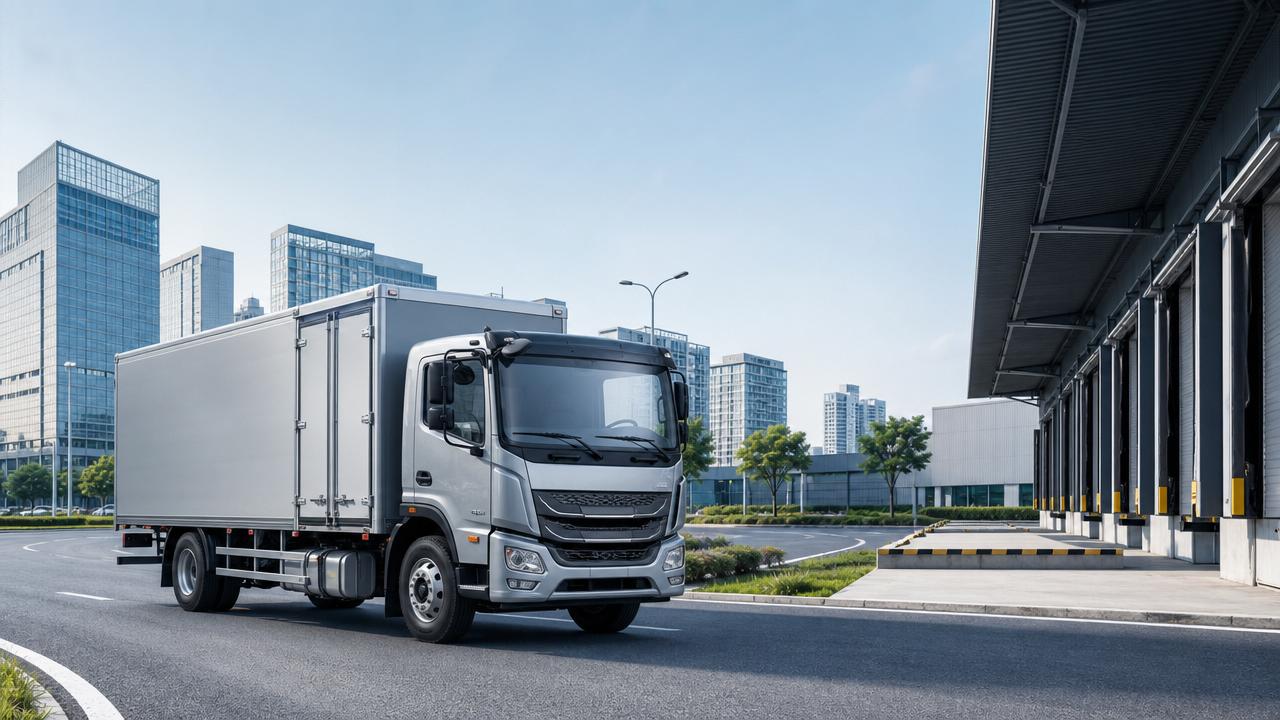
For drivers and fleet operators handling city routes, a 4_2 Cargo Truck can make urban delivery faster, safer, and more cost-effective when used correctly. From route planning and load distribution to fuel-saving driving habits and tight-space maneuvering, mastering the right operating tips helps improve daily efficiency and reduce downtime. This guide shares practical advice to help users get the best performance from a 4_2 Cargo Truck in demanding urban delivery conditions.
Why does a 4_2 Cargo Truck fit urban delivery so well?
In dense city logistics, the main challenge is balance. Operators need enough payload for profitable trips, but also compact dimensions for narrow streets, loading bays, and frequent stops. A 4_2 Cargo Truck often meets this balance better than larger rigid trucks.
The 4x2 axle layout is widely used in urban and regional transport because it supports practical body configurations, moderate turning behavior, and efficient operation on paved roads. For last-mile and mid-mile city distribution, it is a common choice across food supply, retail replenishment, industrial parts transport, and municipal support work.
- Better maneuverability than heavier multi-axle trucks in tight intersections and crowded delivery zones.
- Useful cargo capacity for daily route consolidation without excessive vehicle size.
- Lower fuel use and easier driver adaptation compared with larger urban distribution platforms.
- Flexible body options such as box van, stake body, refrigerated body, or light engineering cargo setup.
For users in the engineering vehicle field, this flexibility matters. Many urban jobs require movement of tools, packaged materials, spare parts, site equipment, or maintenance supplies. A properly configured 4_2 Cargo Truck can support these mixed tasks without the operating burden of a larger platform.
Which urban delivery scenarios benefit most from a 4_2 Cargo Truck?
Before improving efficiency, operators should match the vehicle to the route profile. The same truck may perform very differently in retail distribution, construction support, or cold-chain delivery. The table below helps users judge where a 4_2 Cargo Truck delivers the strongest operating advantage.
The key lesson is simple: route density, stop frequency, cargo type, and access limits should shape how you use a 4_2 Cargo Truck. Efficiency comes not only from the vehicle itself, but from how closely the truck matches daily urban operating conditions.
Signs your route is suitable
- Your truck enters city centers, industrial parks, or mixed commercial streets several times per day.
- Loading and unloading happens at docks with limited turning space or roadside access constraints.
- Cargo volume changes by route, requiring flexible loading rather than a consistently full heavy truck.
- Delivery timing matters more than maximum tonnage on a single trip.
How can drivers improve daily 4_2 Cargo Truck efficiency?
Urban efficiency is built before the engine starts. Many delays come from route confusion, poor load planning, incomplete checks, and bad stop discipline rather than vehicle limitations. Drivers and dispatchers should work as one operating unit.
Start with route planning
- Group stops by district and access window instead of straight-line distance only. A shorter route on a map may be slower during restricted urban hours.
- Avoid repeat entry into congested zones. One well-ordered loop usually outperforms multiple return trips.
- Confirm road restrictions in advance, including bridge limits, low-clearance points, delivery curfews, and loading time rules.
Reduce stop-time losses
- Load cargo in reverse delivery order so the first stop is nearest the door.
- Use clear pallet labels and route sheets to prevent cargo searching at each stop.
- Check liftgates, doors, locks, and restraints before departure to avoid unloading delays on site.
If a 4_2 Cargo Truck is used for engineering supply or maintenance support, it is especially important to separate urgent tools, routine parts, and return items. Fast access inside the body can save more time than a small gain in road speed.
Why does load distribution matter more than many operators think?
Incorrect loading reduces safety, braking stability, tire life, and fuel economy. In urban delivery, where a 4_2 Cargo Truck stops, turns, and accelerates constantly, poor weight distribution causes faster wear and harder vehicle control.
Even when total payload stays within legal limits, a badly balanced cargo body can overload one axle, reduce steering precision, or increase body sway. This is a practical issue for drivers, not just a compliance issue.
Basic loading rules
- Place heavier cargo low and close to the center of the cargo floor.
- Distribute weight evenly from left to right to avoid lean during cornering.
- Secure partial loads carefully. Half-filled bodies often create more movement risk than fully packed ones.
- Protect front bulkheads and rear door areas from concentrated point loads.
For operators handling mixed urban loads, the loading plan should be part of dispatch preparation. A few extra minutes in the yard can prevent brake stress, unstable lane changes, and damaged cargo during city operation.
What driving habits reduce fuel use and wear in a 4_2 Cargo Truck?
A 4_2 Cargo Truck running in urban conditions rarely operates at ideal steady speed. That means driver habits have a direct effect on cost per kilometer. Fuel, brake components, clutch life, and tire wear are all influenced by technique.
The most efficient city drivers are not the fastest drivers. They are the smoothest. They look ahead, preserve momentum, and avoid unnecessary hard braking and rapid re-acceleration.
The table below summarizes practical habits that help a 4_2 Cargo Truck perform better on urban routes while reducing avoidable operating cost.
These habits are easy to train and measure. Fleet supervisors can review route fuel use, brake replacement intervals, and idle trends to identify whether a 4_2 Cargo Truck is being operated efficiently or being pushed in a costly way.
How should operators handle tight urban spaces safely?
Urban delivery rarely fails on open roads. Problems usually happen during reversing, curbside stopping, side access, underground entry points, and loading dock alignment. A 4_2 Cargo Truck may be easier than a larger vehicle, but it still requires strict low-speed discipline.
Best practices for maneuvering
- Approach narrow turns wide and slow, checking rear swing and inner wheel path before committing.
- Use mirrors continuously and stop early if pedestrians, motorcycles, or hand carts enter the blind area.
- When reversing to a dock, use a spotter where site practice allows. Hand signals should be agreed before movement begins.
- Watch overhead limits such as canopies, pipes, cables, and tree branches, especially when the body type is taller than standard.
Many urban incidents are minor but expensive: mirror strikes, door damage, tire sidewall cuts, or body corner impacts. These events create downtime and disrupt delivery schedules. For this reason, low-speed control should be treated as a productivity skill, not only a safety rule.
What should users check before choosing a 4_2 Cargo Truck?
Buying or specifying a 4_2 Cargo Truck for urban delivery is not only about price. Users should compare body type, engine suitability, service access, delivery timing, and export support. A wrong specification can create years of inefficiency.
The selection table below gives operators and fleet buyers a practical framework for matching the truck to actual city work.
This is where supplier capability matters. Shandong Livol Truck International Trade Co., Ltd. supports customers with vehicle selection, customization, documentation, customs clearance, and logistics. For international buyers and operators, that full-process support helps reduce specification errors and delivery uncertainty.
Why supplier structure affects operators
A 4_2 Cargo Truck is an operating asset, so stable supply and service planning matter as much as the unit itself. As an official authorized domestic and overseas dealer for FOTON, SHACMAN, and SINOTRUK, Shandong Livol Truck International Trade Co., Ltd. can help users compare practical options under recognized Chinese commercial vehicle platforms.
Its network of authorized 4S stores across China and maintained vehicle inventory also supports customers who need faster dispatch, clearer sourcing, or configuration planning for export-oriented procurement.
What maintenance habits keep a 4_2 Cargo Truck reliable on city routes?
Urban work is hard on brakes, tires, suspension, door systems, and electrical components. Repeated stop-start operation, curb contact, loading shocks, and short-cycle driving all increase wear. Preventive maintenance is usually cheaper than unscheduled downtime.
- Inspect tires regularly for uneven wear, sidewall cuts, and pressure loss caused by curb impact and overload.
- Monitor brake condition closely because urban driving creates frequent thermal and mechanical stress.
- Check cargo body fixtures, hinges, locks, lift mechanisms, and seals to prevent route interruption during unloading.
- Keep lighting, reversing alarms, and mirror assemblies in proper condition for low-speed safety in crowded streets.
Operators should also align maintenance intervals with actual duty cycle, not only calendar time. A 4_2 Cargo Truck used for high-frequency city delivery may require more frequent checks than a similar truck running on lighter regional routes.
What are common mistakes and practical answers?
Is a larger truck always more cost-effective?
Not in city work. A larger truck may carry more on paper, but if it loses time at access points, struggles to park, or runs partly loaded, total route efficiency can decline. Many urban users get better utilization from a properly matched 4_2 Cargo Truck.
Can drivers focus only on fuel economy?
Fuel matters, but it is only one part of operating cost. Tire life, brake wear, route timing, body damage, and downtime often have equal or greater impact. The best operating approach balances economy, safety, and delivery consistency.
What should international buyers ask before ordering?
Confirm route purpose, body requirement, target payload, local compliance needs, spare parts planning, and delivery timeline. If export procedures are unfamiliar, it is useful to work with a supplier that can coordinate customization, documentation, customs clearance, and logistics in one process.
Are all urban 4_2 Cargo Truck configurations the same?
No. Cab layout, body size, powertrain matching, and serviceability all change how the truck performs. Even small differences in turning practicality or body access can affect daily route output.
Why choose us for your 4_2 Cargo Truck needs?
For users and operators, the right 4_2 Cargo Truck is not just a catalog choice. It is a route solution. Shandong Livol Truck International Trade Co., Ltd. helps customers evaluate vehicle selection, body configuration, supply timing, and export process support based on real operating requirements.
Because the company is an official authorized domestic and overseas dealer for FOTON, SHACMAN, and SINOTRUK, customers can discuss practical options across established commercial vehicle brands. With authorized 4S store resources, available inventory, and an experienced export team, the company can support projects that require stable supply and coordinated delivery steps.
- Ask about suitable 4_2 Cargo Truck specifications for your city route, cargo type, and delivery frequency.
- Confirm customization options for box bodies, refrigerated bodies, or utility configurations linked to engineering and urban service work.
- Discuss expected delivery schedules, available inventory, documentation requirements, and shipping arrangements for your market.
- Request support on spare parts planning, after-sales coordination, and compliance-related documentation before purchase.
If you are comparing models, preparing a fleet purchase, or need a practical export-ready urban distribution solution, contact Shandong Livol Truck International Trade Co., Ltd. with your payload range, body preference, destination market, and delivery timeline. That allows a faster discussion on parameter confirmation, model selection, quotation, and logistics planning.
Search Starts Here