
News
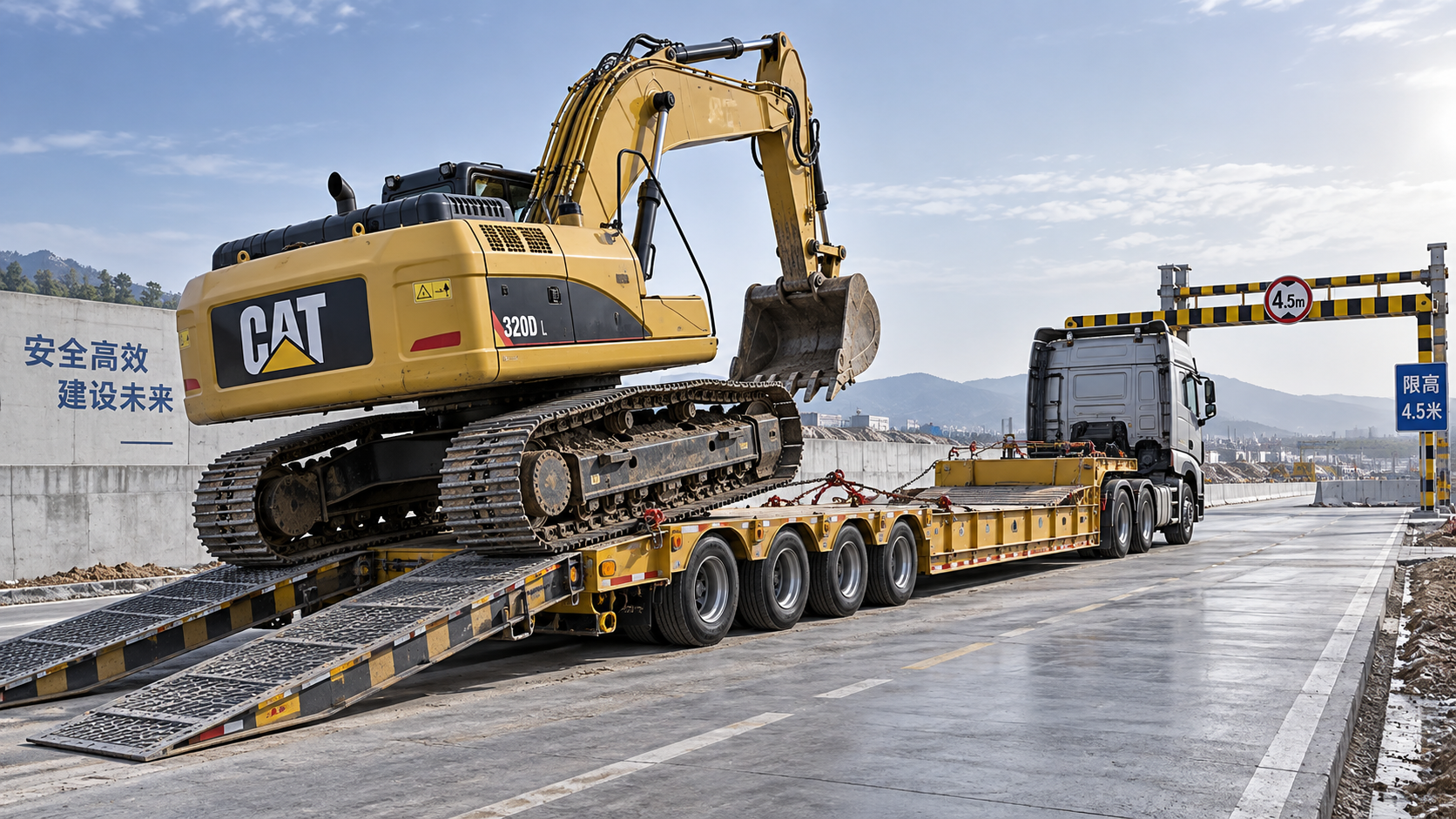
When a Low Plate Trailer Reduces Loading Risk for Tall Machinery
Moving tall machinery is rarely just a question of trailer payload. For many construction and infrastructure projects, the greater risk appears before the vehicle leaves the yard: during loading, ramp transition, securing, route clearance checks, and unloading at a site that may be uneven or congested.
Excavators with extended booms, drilling rigs, mobile cranes, lifting platforms, pavers, and specialized foundation equipment can present a difficult combination of height, weight distribution, low ground clearance, and non-standard loading geometry. A trailer that is adequate for general equipment may create an unnecessarily steep approach angle or leave too little margin beneath bridges, power lines, gates, and plant structures.
This is where a Low Plate trailer can be a practical risk-control decision rather than simply a transport preference. By placing the load deck closer to the ground than a conventional flat platform, the configuration can reduce the loading angle and lower the machinery’s overall travel height. It does not eliminate the need for engineering checks or route planning, but it can give a project team more usable margin where margin matters.
The loading problem is often geometry, not capacity
A common planning mistake is to begin with the machine’s operating weight and stop there. Payload is essential, but it does not answer whether the equipment can climb onto the trailer safely, sit within the permitted height envelope, or remain stable during braking and cornering.
Tall machinery creates several connected risks. A high center of gravity increases sensitivity to side slope, steering input, and abrupt lane changes. Long wheelbases or low undercarriage components can make ramp entry difficult. Attachments may project beyond the machine body, changing both the load footprint and the tie-down plan. When a machine is loaded high above the road, even a route that looks acceptable on paper can become unsuitable because of local structures or clearance restrictions.
A lower deck addresses part of this chain. The machine climbs less sharply, which may reduce the chance of underbody contact at the ramp breakover point. Once loaded, the machine sits closer to the road surface, helping reduce overall height and lowering the center of gravity of the combined load. Those advantages are especially relevant when the equipment must move repeatedly between construction zones rather than make a single controlled delivery.
Still, “low” is not a universal answer. Some machines require a detachable gooseneck, removable ramps, widened deck sections, wheel recesses, or specially positioned supports. The correct layout depends on the machine’s actual dimensions, travel configuration, axle loading, and the access conditions at both ends of the journey.
When a Low Plate configuration is the better fit
The strongest reason to choose a Low Plate trailer is usually not that the cargo is “large,” but that the project has limited tolerance for loading angle or transport height. This tends to arise in a few recurring situations.
- The machinery is tall in transport condition and route clearance is likely to be a planning constraint.
- The machine has low ground clearance, long tracks, a long chassis, or components that make steep ramps problematic.
- Loading must take place on a worksite rather than a paved logistics yard with a dock or controlled loading area.
- The equipment will be moved often enough that repeated ramp loading becomes a safety and scheduling concern.
- The project requires more stable transport behavior for machinery with a comparatively high center of gravity.
Consider a crawler excavator working on a road widening project. Its transport condition may require the boom to be positioned carefully, the upper structure secured, and track loading managed without damaging ramps or creating excessive approach angles. A lower trailer deck can simplify the entry path, but the team still needs to verify the machine’s travel position, attachment arrangement, track width, deck width, and securement points.
For crane-related equipment, the question is often more sensitive. Machine height, removable counterweights, boom sections, and axle distribution may require a multi-part transport plan. A low deck may reduce total height, yet it cannot compensate for improper dismantling decisions or an unsuitable route. In this context, trailer selection should be part of the lifting and transport method statement, not a last-minute logistics purchase.
What a lower deck changes—and what it does not
A Low Plate trailer changes the loading geometry in useful ways. The reduced deck height generally means a gentler ramp slope, less abrupt transition at the rear of the trailer, and a lower loaded profile. For wheeled equipment, that can make traction and controlled ascent easier. For tracked machinery, it may reduce stress caused by sharp ramp angles and lower the likelihood of contact between the trailer structure and the machine’s lower frame.
It can also make a practical difference at the unloading point. Construction sites are not always level, dry, or spacious. A trailer that demands a steep descent may be manageable on firm concrete but unsuitable on compacted soil or a temporary access road. Lower loading angles give operators more room to work carefully, although ground bearing capacity and site gradients still need independent assessment.
The distinction is important: lower deck height reduces exposure to certain risks, but it does not replace the load plan. It will not solve a trailer that is too short for the machine, a tractor unit that is incorrectly matched, weak tie-down points, or an unverified oversize route. Teams sometimes focus on the visible advantage of a low platform and overlook the less visible constraints around axle group loading, kingpin load, turning sweep, and local transport requirements.
The dimensions worth confirming before specifying the trailer
A useful trailer discussion begins with a machine data sheet, but the transport configuration must be just as clear as the operating configuration. The equipment may travel with an attachment removed, boom lowered, counterweight separated, tyres adjusted, or accessories stowed elsewhere. If that information is uncertain, the trailer specification is uncertain too.
Before selecting a Low Plate arrangement, confirm the machinery’s transport length, width, height, operating and transport weight, axle or track loading, ground clearance, and center-of-gravity information where available. Review the position of lifting points and approved lashing points. For a machine with removable parts, establish whether those parts travel on the same deck, on an extension, or on a separate vehicle.
The trailer itself needs more than a stated payload figure. The deck length and usable width must suit the machine; the ramp system must be appropriate for its travel path; and the deck construction must support concentrated loads rather than only a general distributed load. Suspension type, steering axles, extension requirements, wheel recesses, and neck design can all affect the practical fit.
The tractor-trailer combination should be reviewed as one system. A lower trailer does not automatically mean that every tractor unit is suitable. Coupling height, fifth-wheel compatibility, traction requirements, axle arrangement, engine performance for local terrain, and service support should all be considered before equipment is dispatched.
Loading practice remains the point where plans succeed or fail
Even a well-matched trailer can be used poorly. Loading should begin with an inspection of the parking surface, ramps, deck condition, locks, securing equipment, and clearance around the vehicle. The operator needs a clear travel path and reliable communication with the banksman or loading supervisor. People should not stand in potential crush zones beside ramps, tracks, tyres, or machine attachments.
The machine should be centered according to the approved load distribution plan rather than positioned by visual convenience. Once it is on deck, the transport height should be measured in its final secured condition. This is the measurement that matters for route planning—not the manufacturer’s general machine height, and not an estimate made before the suspension settles.
Securement must prevent movement in every relevant direction. The right method depends on the equipment, trailer design, and local rules, but the underlying discipline is consistent: use appropriate rated restraint equipment, attach only to suitable points, protect straps or chains from sharp edges, secure movable components, and recheck the load after the vehicle has started its journey. A low deck improves the geometry; it does not make inadequate securement acceptable.
Avoid specifying the trailer in isolation
For international projects, equipment transport often involves several handovers: manufacturer or dealer, export yard, port, inland carrier, destination customs process, and final project delivery. A trailer choice that looks correct in the country of purchase can become difficult to operate if spare parts, tractor compatibility, documentation, or local service arrangements have not been considered.
This is one reason an integrated vehicle export approach can be useful. Shandong Livol Truck International Trade Co., Ltd., based in Shandong, China, supports commercial vehicle exports with vehicle selection, customization coordination, documentation, customs clearance, and logistics services. As an authorized domestic and overseas dealer for FOTON, SHACMAN, and SINOTRUK, the company also works through authorized 4S store resources and available vehicle inventory when matching tractor units to transport requirements.
For a project team, the value is not simply access to a truck or trailer. It is the ability to review the equipment package together: the tall machinery being moved, the selected Low Plate trailer, the tractor configuration, destination-market documentation, delivery timing, and expected after-sales support. Details that appear administrative at the quotation stage can become operational problems once the machine reaches a remote site.
Make the decision early enough to protect the schedule
A Low Plate trailer is most valuable when it is selected before machinery mobilization has been fixed. Waiting until the equipment is ready to move can force compromises: unsuitable ramps, an avoidable dismantling process, a more restricted route, or last-minute changes to the tractor and permit plan.
The practical question is not whether a low deck is always safer. It is whether it creates meaningful clearance, loading-angle, and stability advantages for the specific machine and route. If the answer is yes, the trailer should be specified with the same care given to the machinery itself. Confirm the final transport dimensions, loading method, load distribution, route conditions, and applicable local requirements before committing to the configuration.
For tall machinery, a few centimeters of deck-height reduction can change the quality of the entire move. The benefit is not dramatic marketing language. It is a more controlled loading operation, a lower transport profile, and fewer assumptions left for the day the equipment must reach the site.
Search Starts Here