News
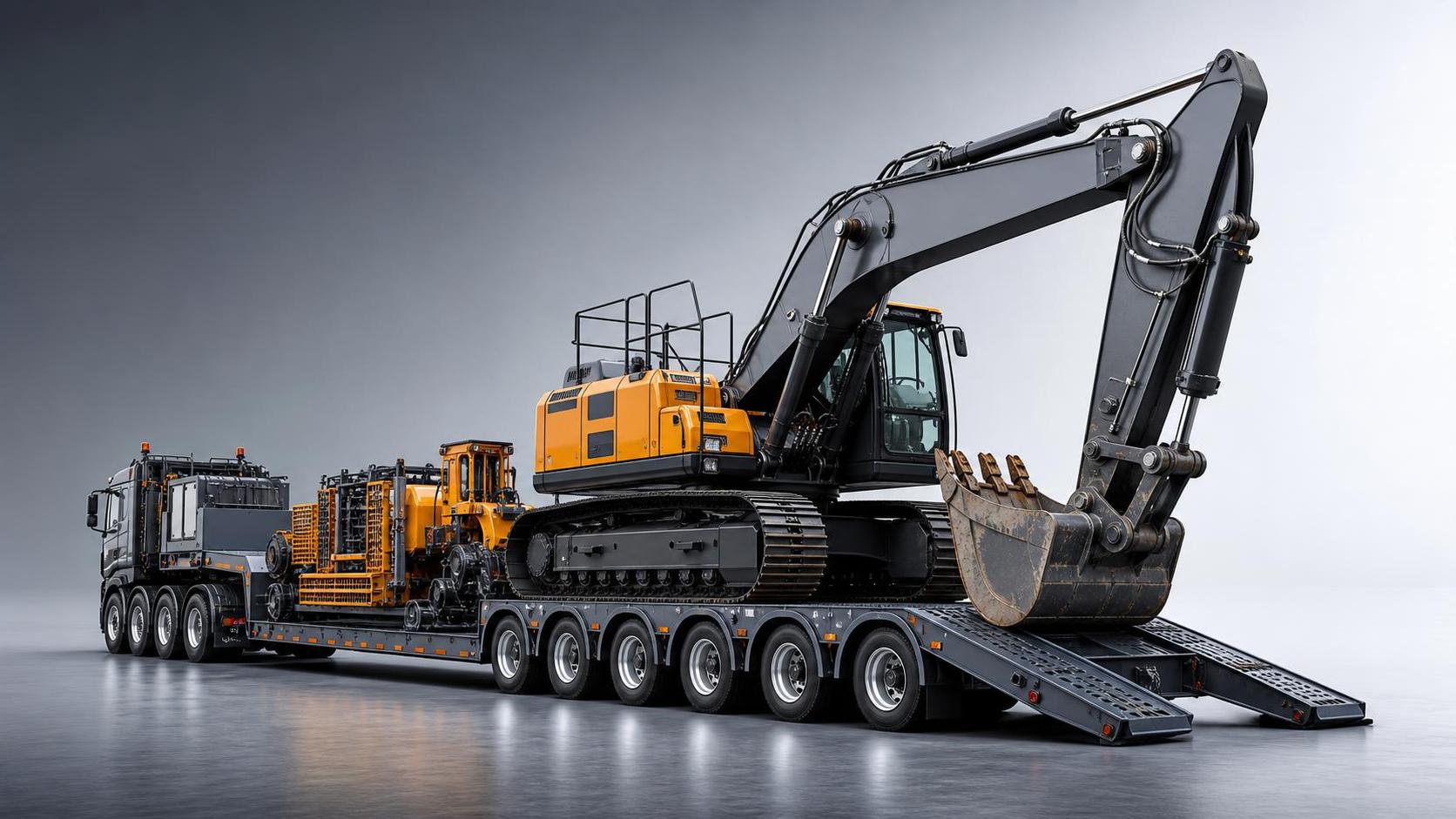
For quality control and safety managers, the value of a Low Plate trailer is practical: it lowers the center of gravity, reduces loading angle, and gives tall or heavy machinery a more stable transport position. In real operations, that directly helps cut rollover risk, reduce clearance problems, and improve loading consistency across different job sites and routes.
That means the decision is not simply about whether a trailer can carry the machine. It is about whether the trailer can support safer loading, easier inspection, and more predictable delivery without forcing crews to rely on workarounds that increase operational exposure.
Why Searchers Look for a Low Plate Trailer in This Context
When someone searches for a Low Plate solution for tall and heavy machinery, the core intent is usually evaluative and risk-focused. They are not just looking for a product definition. They want to know whether a lower deck trailer will materially reduce loading hazards, help meet transport constraints, and improve control over high-value equipment movements.
For safety managers, the concern is often incident prevention. For quality control personnel, the concern is repeatability, equipment protection, and whether the loading method introduces avoidable damage risks. In both cases, the search intent centers on practical decision support rather than broad promotional information.
What Quality and Safety Teams Care About Most
The first concern is stability during loading and transport. Tall machinery such as excavators, drilling rigs, construction lifts, and oversized industrial equipment can become difficult to manage when trailer deck height increases the center of gravity. Even small errors in alignment, ramp entry, or braking can become more serious under those conditions.
The second concern is clearance. Many heavy machines already sit near legal or route-specific height limits after loading. A standard trailer may create avoidable route restrictions, increase the need for permitting adjustments, or force last-minute logistics changes. A Low Plate trailer helps create more margin, which is critical for safer planning.
The third concern is load handling consistency. Safety performance often depends on whether loading can be repeated correctly by different teams, in different yards, and under changing surface conditions. Equipment that is easier to load and secure usually produces fewer deviations in actual field execution.
How a Low Plate Reduces Loading Risk in Real Operations
The most direct safety advantage comes from reduced deck height. A lower platform means the machine climbs a gentler angle during loading. That decreases the chance of undercarriage impact, wheel slip, track shock, or sudden balance shifts when heavy equipment transitions from ramp to deck.
For tall machinery, every reduction in loaded height matters. A lower carrying position improves overall stability by keeping mass closer to the road surface. This can reduce sway during turning, lane changes, and uneven road conditions, especially when the cargo has a high upper structure or uneven weight distribution.
Low Plate trailers also help operators make more controlled loading adjustments. When deck height is lower, the margin for visual alignment improves, and the machine enters the trailer with less aggressive climbing motion. That supports smoother handling, especially when loading takes place in confined yards or on imperfect ground.
Another practical benefit is reduced dependence on temporary measures. Teams sometimes compensate for unsuitable trailer height with extra blocking, altered ramp positioning, or improvised loading surfaces. Those adaptations increase variability and can introduce new hazards. A trailer designed for low-deck heavy transport reduces the need for those compromises.
Which Machinery Benefits Most from a Low Plate Configuration
Not every machine requires the same trailer setup, but Low Plate trailers are especially useful for cargo that is both heavy and tall, or heavy with a high center of gravity. This includes excavators with raised structures, wheel loaders, road rollers, pavers, cranes, and certain mining or industrial units.
They are also valuable for equipment with sensitive components that should not experience excessive loading angle or impact during boarding. Machines with long wheelbases, low ground clearance, or complex mounted assemblies often benefit from a gentler transition from ground to deck.
From a quality perspective, this matters because transport risk is not only about accidents. It is also about hidden equipment stress, structural vibration, attachment movement, and cosmetic or functional damage that may only become visible after delivery or commissioning.
Key Risk Factors to Evaluate Before Choosing a Trailer
Choosing a Low Plate trailer should start with machinery data, not just payload capacity. Safety and quality teams should verify transport weight, overall machine height, axle load distribution, track or tire width, ground clearance, and the position of the center of gravity. A trailer that carries the weight but poorly matches the machine profile may still create risk.
Ramp design is another critical factor. The loading angle, ramp traction, width, and structural strength all affect whether heavy machinery can board safely. For some machines, the difference between an acceptable and unsafe loading condition comes down to transition geometry rather than rated carrying capacity.
Deck structure and lashing points also deserve close review. A stable load position is only part of the solution. Teams also need secure and practical tie-down arrangements that match the machinery frame, axle, or track securing method. Poorly located lashing points can undermine the benefits of a lower deck.
Route conditions must be included early in the evaluation. Bridge restrictions, uneven access roads, sharp site entrances, and regional transport rules can all affect whether a trailer configuration truly reduces operational risk. A trailer should be assessed as part of the full transport system, not in isolation.
What a Good Loading Process Looks Like with a Low Plate Trailer
A safer trailer does not remove the need for disciplined loading procedures. Before loading, teams should confirm ground firmness, trailer levelness, ramp engagement, hydraulic condition if applicable, and the machine’s actual transport dimensions. These checks are essential because even a well-matched trailer can perform poorly in uncontrolled site conditions.
During loading, clear signaling and defined operator guidance are important. The machine should align centrally, move at controlled speed, and avoid sudden steering corrections. The lower loading angle of a Low Plate trailer helps, but it works best when operators follow a standardized process rather than relying on personal judgment alone.
After positioning, the machine should be secured according to its transport characteristics, not just basic habit. Attachment lowering, articulation locking, brake status, and tie-down tension all need verification. A lower deck improves the starting condition, but restraint quality determines whether that advantage is maintained on the road.
From a quality control standpoint, a documented inspection record is useful at both departure and arrival. It supports accountability, helps identify recurring loading issues, and creates evidence if damage claims or compliance questions arise later.
How Low Plate Trailers Support Compliance and Cost Control
For management teams, safety value should connect to measurable business outcomes. A Low Plate trailer can reduce the likelihood of clearance-related rerouting, loading delays, cargo instability, and transport damage. These improvements affect not only safety metrics but also project schedules, repair costs, and customer confidence.
In many markets, over-height cargo triggers added permit complexity, escort requirements, or route limitations. Lowering the loaded height can simplify planning and reduce the risk of non-compliance. That operational flexibility is often more valuable than the trailer specification alone suggests.
There is also a cost-of-failure perspective. One loading incident involving heavy machinery can result in equipment damage, injury exposure, investigation time, and disrupted delivery commitments. For companies moving expensive machines regularly, investing in a more suitable trailer profile is often easier to justify when viewed through avoided risk rather than unit purchase price.
How to Judge Supplier Capability, Not Just Trailer Specification
Quality and safety managers should evaluate suppliers on more than product brochures. A capable export and vehicle partner should be able to explain trailer configuration logic, provide dimensional guidance, support customization, and respond clearly to route and machinery-specific questions. That indicates whether they understand operational use instead of only sales language.
Inventory strength and delivery reliability also matter. Projects involving heavy machinery usually run on strict schedules, and transport equipment delays can affect installation or site mobilization. A supplier with stable stock, organized processing, and export experience is better positioned to support predictable execution.
Documentation quality is equally important for international buyers. Technical specifications, compliance documents, shipping coordination, and after-sales communication all affect whether the right trailer arrives ready for use. Weak execution in these areas can erase the operational advantage of choosing the right trailer type.
As an authorized dealer for FOTON, SHACMAN, and SINOTRUK, with broad domestic network support and export experience, Shandong Livol Truck International Trade Co., Ltd. works with customers that need not only commercial vehicles, but also coordinated selection, customization, logistics, and delivery support for demanding transport requirements.
When a Low Plate Trailer Is the Right Decision
A Low Plate trailer is the right choice when your machinery is tall, heavy, top-biased, clearance-sensitive, or difficult to load safely on a standard deck. It is especially valuable when loading conditions vary, route restrictions are tight, or equipment damage and handling consistency are major concerns.
It may not be necessary for every transport task, but for safety-critical machinery movement, the lower deck offers a clear operational advantage. It improves loading geometry, reduces instability exposure, and gives teams more room to maintain control through the entire transport cycle.
For quality control and safety managers, that is the real takeaway: the right trailer should reduce uncertainty, not just carry weight. When evaluating heavy equipment transport, a Low Plate configuration often becomes one of the most effective ways to lower loading risk while improving reliability across planning, handling, and delivery.
Search Starts Here