
News
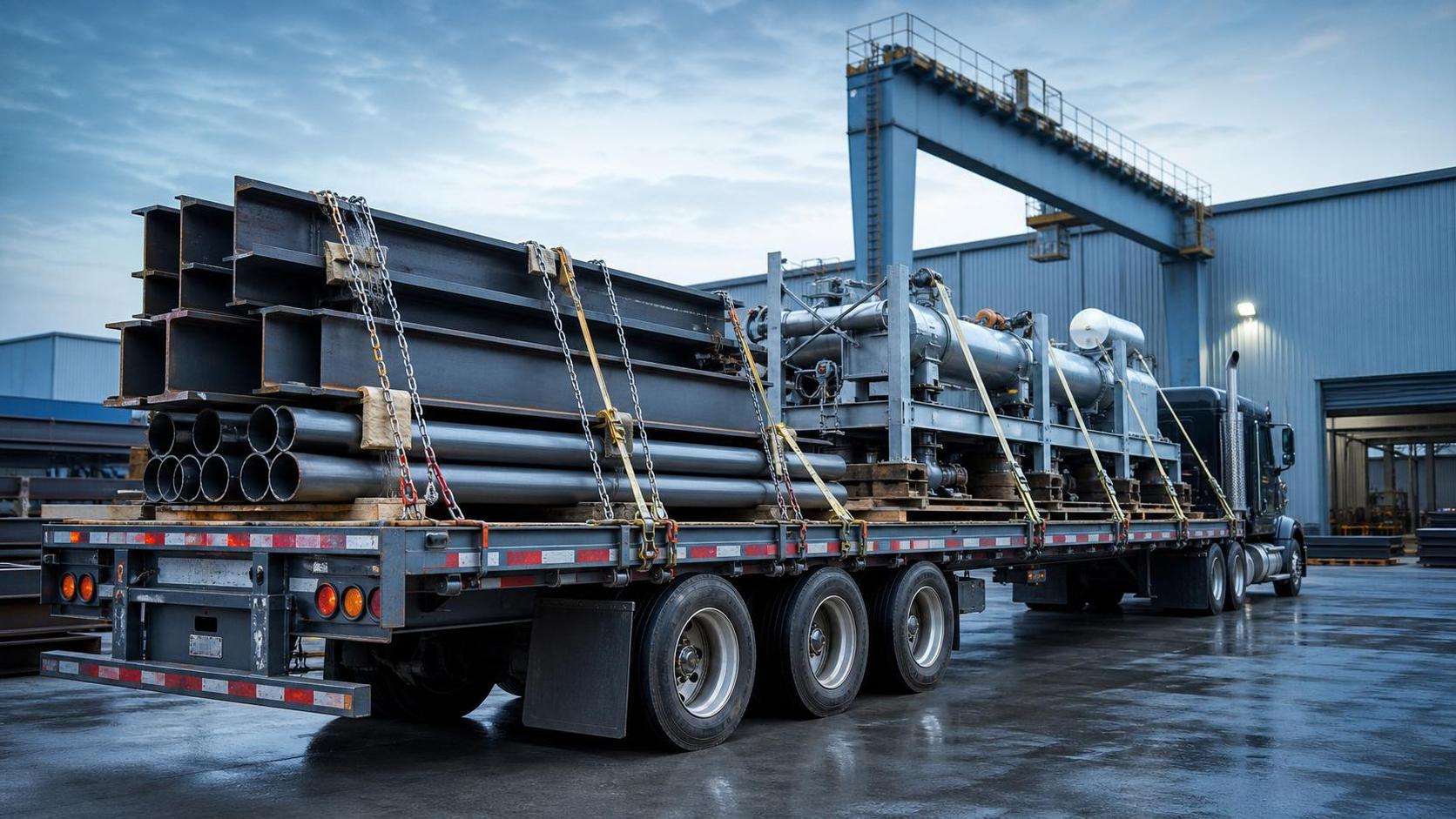
When a Flatbed Semi-Trailer Is the Better Choice for Steel and Machinery Loads
When transporting steel beams, heavy equipment, or oversized machinery, trailer choice shapes safety, loading speed, and total delivery cost.
A Flatbed Semi-Trailer often becomes the practical answer when cargo needs open access, flexible securing points, and fewer loading restrictions.
For engineering vehicle operations, that matters more than many buyers expect at the research stage.
The real question is not whether a Flatbed Semi-Trailer is popular.
The question is when it delivers better results than enclosed, low-bed, or sidewall alternatives.
That decision usually depends on cargo shape, loading method, route limits, and unloading conditions at the destination.
In actual transport work, steel and machinery loads rarely behave like standard pallet cargo.
They are heavier, longer, less uniform, and often harder to secure without open-deck access.
Why a Flatbed Semi-Trailer Fits Steel and Machinery Better
A Flatbed Semi-Trailer gives operators full access from both sides, the rear, and above.
That sounds simple, but it changes loading efficiency in a major way.
Steel coils, pipes, fabricated frames, presses, and construction machinery often require crane loading.
An open trailer deck makes that process faster and more predictable.
There is no roof obstruction, no side panel limitation, and no narrow door opening to work around.
This also means fewer handling adjustments during loading.
Fewer adjustments usually reduce loading time and lower the chance of cargo surface damage.
For long steel sections or irregular machine parts, a Flatbed Semi-Trailer also supports more flexible positioning.
That flexibility helps maintain axle balance and improves tie-down planning.
Core advantages in real operations
- Easy crane and forklift access from multiple directions.
- Better fit for overlength, overwidth, or irregular machinery loads.
- More options for chains, straps, blocks, and edge protection.
- Faster loading and unloading at steel yards and project sites.
- Lower structural restrictions compared with enclosed trailer bodies.
Typical Cargo Situations Where the Flatbed Semi-Trailer Performs Best
Not every heavy load needs the same trailer type.
Still, several cargo categories clearly favor a Flatbed Semi-Trailer.
1. Structural steel and fabricated metal products
Steel beams, channels, plates, and welded assemblies are often long and difficult to fit inside closed equipment.
A Flatbed Semi-Trailer handles these loads well because the deck remains open and accessible.
Loading teams can place bundles more precisely and secure them according to weight distribution.
2. Construction and industrial machinery
Excavator attachments, compressor units, generator sets, and workshop machines often have irregular dimensions.
They may not exceed legal limits, but they still need open securing points.
That is where a Flatbed Semi-Trailer becomes easier to use than a standard enclosed trailer.
3. Equipment requiring top loading
Some machinery can only be lifted from above because of its frame design or lifting points.
A Flatbed Semi-Trailer supports this loading method without extra dismantling.
That saves labor and reduces reassembly risk after delivery.
4. Mixed project cargo
Project shipments often combine steel parts, spare equipment, and large components in one movement.
A Flatbed Semi-Trailer offers layout freedom that supports mixed cargo planning.
That can improve trailer utilization when shipment schedules are tight.
When Another Trailer Type May Be Better
A Flatbed Semi-Trailer is not always the best answer.
That is an important part of making a sound transport decision.
If cargo is highly sensitive to weather, enclosed trailers may provide better protection.
If load height is a major concern, a low-bed trailer may be more suitable.
If cargo is loose bulk or bagged goods, sidewall or van solutions often make more sense.
The right comparison is not flatbed versus everything.
It is flatbed versus the actual handling and route demands of the shipment.
That shift in thinking usually leads to better fleet and procurement decisions.
Key Decision Factors Before Choosing a Flatbed Semi-Trailer
Before selecting a Flatbed Semi-Trailer, operators should review more than cargo weight alone.
Several practical factors directly affect operational value.
Load dimensions and center of gravity
Long steel or top-heavy machinery needs stable deck positioning and strong securing points.
Poor balance increases braking risk and tire wear.
Loading and unloading equipment
If sites rely on overhead cranes or side forklifts, a Flatbed Semi-Trailer is usually easier to handle.
This becomes even more important at busy terminals.
Route and compliance limits
Bridge restrictions, axle laws, and local over-dimension rules should be checked early.
A Flatbed Semi-Trailer works best when route planning matches the cargo profile.
Weather exposure
Open-deck transport means cargo may need tarpaulins, anti-rust treatment, or protective wrapping.
That cost should be included in the shipment plan.
Practical checklist for selection
- Measure cargo length, width, height, and lifting points.
- Confirm loading equipment at both origin and destination.
- Check local transport permits and route restrictions.
- Review tie-down requirements for steel or machinery type.
- Estimate weather protection needs before dispatch.
Risk Control and Securing Advice for Steel and Machinery Loads
Using a Flatbed Semi-Trailer effectively requires disciplined load securing.
This is where transport quality often separates reliable operators from risky ones.
Steel products can shift under braking if blocking and friction control are weak.
Machinery loads can suffer frame stress if chains are placed at the wrong points.
That is why the trailer deck, lashing rings, and support structure must match the cargo task.
- Use timber blocks, mats, or stoppers to prevent rolling and sliding.
- Match chain grade and strap rating to actual cargo weight.
- Protect sharp steel edges to avoid strap damage.
- Recheck tension after the first stage of transport.
- Keep documentation ready for inspections and cross-border checks.
A Flatbed Semi-Trailer delivers its full value only when these details are managed properly.
How Supplier Strength Affects Long-Term Value
Trailer performance is not only about design.
Supply stability, customization support, and export execution also matter.
For international buyers, delays in documentation or weak after-sales follow-up can create expensive downtime.
This is especially true when a Flatbed Semi-Trailer is part of a wider engineering vehicle purchasing plan.
Shandong Livol Truck International Trade Co., Ltd., based in Shandong, China, brings that supply-side support into the decision.
The company is an official authorized domestic and overseas dealer for FOTON, SHACMAN, and SINOTRUK.
Its authorized 4S store network and sufficient vehicle inventory support stable supply and faster delivery.
With a professional export team, it also provides vehicle selection, customization, documentation, customs clearance, and logistics coordination.
That full-process support can reduce uncertainty when selecting a Flatbed Semi-Trailer for steel and machinery transport.
Final Takeaway
A Flatbed Semi-Trailer is usually the better choice when cargo is heavy, long, irregular, or needs open loading access.
That includes many steel products, industrial machines, and project-based engineering loads.
The best results come from matching trailer type to cargo profile, securing method, route rules, and site handling conditions.
When those factors align, a Flatbed Semi-Trailer can improve loading efficiency, reduce handling limits, and support more reliable delivery.
For companies planning steel or machinery transport, that makes the Flatbed Semi-Trailer a practical solution worth evaluating with real operating conditions in mind.
Search Starts Here