
News
Start with the loading problem, not the trailer name
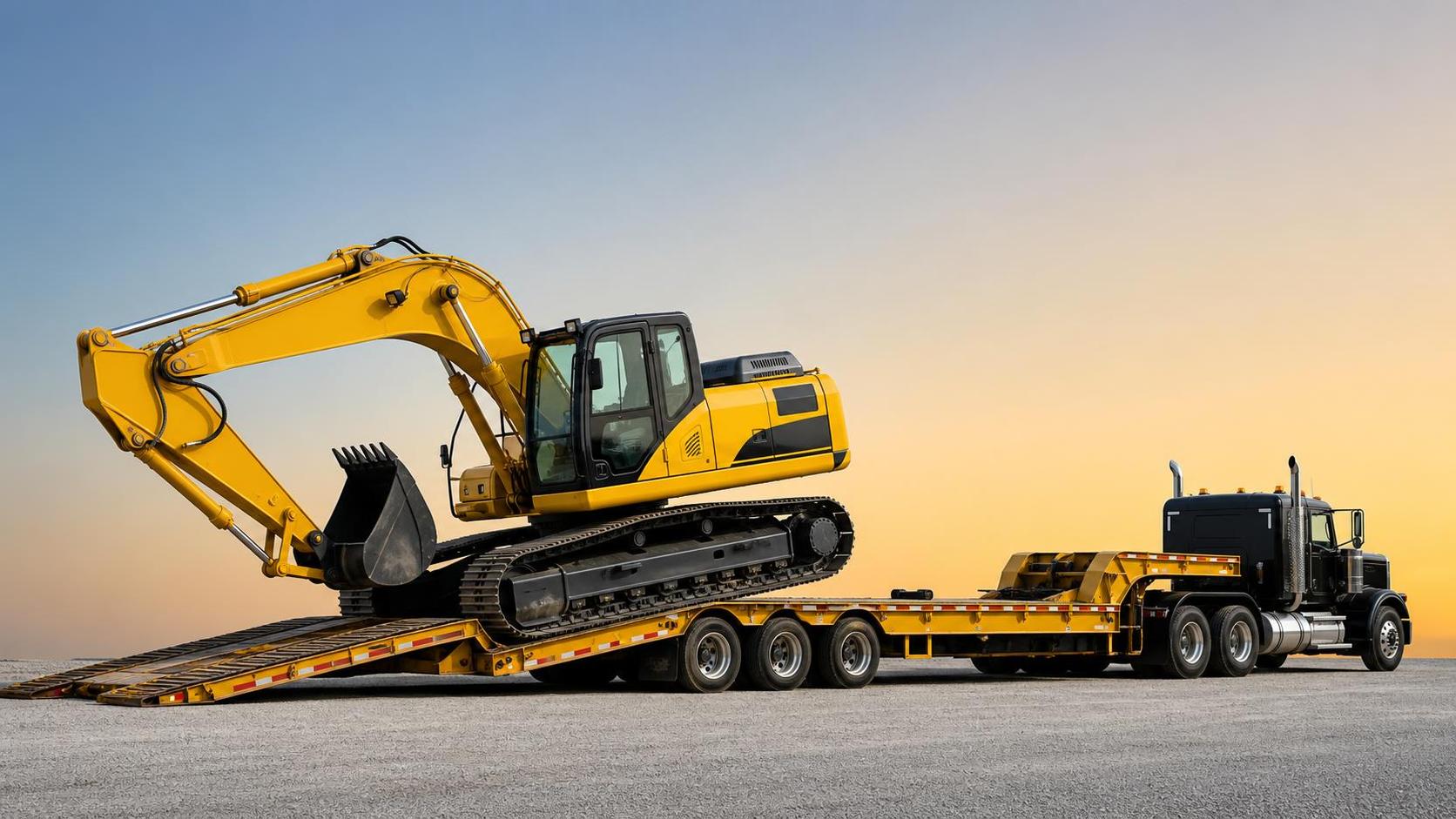
For heavy equipment moves, the real question is rarely “Do we need a Low Plate trailer?” It is usually “What loading risk are we trying to remove?” If your excavator, loader, roller, or similar machine is hard to climb onto a standard deck, sits too high once loaded, or becomes unstable on rough access roads, that is where a Low Plate setup starts making sense.
Project managers tend to feel the impact fast: loading takes longer, the operator needs extra repositioning, spotters become more involved, and transport windows get tighter. A Low Plate trailer is often the better choice when the job needs easier ramp approach, a lower center of gravity, and more predictable movement from site gate to unloading point. It is not automatically the answer for every machine, but in the right conditions it removes several small risks that usually become expensive when ignored.
Check the machine’s loading angle before you look at payload charts
This is one of the most common reasons a Low Plate trailer wins the selection. Some equipment loads poorly on a higher deck because the ramp angle is too steep. That creates three familiar problems:
- The undercarriage or attachment risks touching the ramp crest or deck edge.
- The operator must climb with more throttle than is comfortable or safe.
- Loading becomes highly dependent on ground flatness, which many sites do not have.
If your machine has low ground clearance, a long wheelbase, a front attachment that changes approach angle, or steel tracks that make ramp contact less forgiving, a lower deck usually gives you a cleaner loading path. That matters more than many buyers expect. A trailer that carries the load on paper is still the wrong tool if loading is awkward every single time.
A practical check: review the machine’s lowest points during ramp transition. Do not only measure transport weight. Look at track frame height, bucket or blade position during climb, and whether the machine needs timber, temporary embankment, or repeated ramp adjustment to get on deck. If those workarounds are becoming routine, a Low Plate option is usually justified.
Use a Low Plate when loaded height is starting to control the route
Many transport delays are not caused by the machine itself. They come from route restrictions once the machine is on the trailer. Bridges, overhead lines, temporary site structures, port handling limits, and urban access points all become harder to manage when the loaded combination rides high.
A Low Plate trailer helps when the transport envelope is tight. The benefit is simple: lower deck height gives you more room to work with. That extra margin may allow a machine to travel without disassembly, attachment removal, or route changes. For a project leader, that can save more time than the trailer decision itself.
The right way to judge this is by checking the full loaded height against the actual route file used for the movement, not a rough estimate from the yard. Include the machine in transport position, tire or track compression, deck height, ramp stow position if relevant, and any attachment that remains installed. When the route is already close to the allowable clearance, a Low Plate trailer often moves from “nice to have” to “necessary.”
Look at stability during transport, especially on imperfect roads
A lower center of gravity is not just a sales phrase. It matters most when the road is not ideal, which is common in mining access roads, temporary haul routes, rural project corridors, and partially completed infrastructure sections. Equipment with tall upper structures or uneven weight distribution behaves better when it rides lower.
This does not mean a Low Plate trailer fixes bad load planning. Poor weight distribution, weak lashing points, or incorrect axle loading can still create serious issues. But when you already know the route includes cambers, potholes, sharp turns, or repeated start-stop movement, lowering the loaded profile reduces sway and gives the transport team more margin.
If your machine has a relatively high house, boom transport arrangement, tank offset, or rear-heavy structure, this check deserves extra attention. The machine may be legally movable on different trailer types, yet one of them will clearly behave better over the whole trip.
Do not ignore unloading conditions at the destination
A trailer that loads well in the depot can still become a bad choice at the project site. Unloading is often done in less controlled conditions: softer ground, side slope, limited turning area, traffic around the gate, or rain-softened surfaces after site prep. This is where a Low Plate trailer can pay for itself.
Ask a few blunt questions before locking the trailer type:
- Will the unit unload onto compacted level ground, or onto a temporary working surface?
- Is there enough straight approach distance for a calm ramp descent?
- Will the operator need to turn immediately after leaving the deck?
- Is the site entrance already causing problems for low-clearance attachments or long machines?
When the destination is tight or uneven, the lower deck reduces the drama. Less climbing angle and less height usually mean less abrupt machine movement and fewer improvised adjustments by the crew.
Match the trailer to the machine type, not just the weight class
Two machines with similar operating weight can behave very differently during loading. A wheeled loader, a tracked excavator, and a road roller do not ask the same thing from a trailer deck. That is why “tonnage only” decisions often go wrong.
In practice, a Low Plate trailer tends to make more sense when the machine geometry creates loading difficulty before weight becomes the main constraint. That distinction matters. A standard trailer may still be acceptable for some compact or better-balanced machines even if they are heavy, while a lighter but awkward machine may strongly benefit from the lower deck.
Review tie-down and deck positioning before approving the move
This is where many selection discussions become too simplistic. A Low Plate trailer can improve loading and transport behavior, but only if the machine can be positioned correctly on the deck and secured through proper tie-down points. You need enough usable deck space for axle load distribution, attachment placement, and lashing geometry.
Check these items in one review, not as separate afterthoughts:
- Machine transport dimensions in the exact configuration being moved.
- Available deck length and usable loading area, not just advertised overall length.
- Location and rating of tie-down points on both the machine and trailer.
- Required weight distribution over the trailer axles and tractor.
- Any attachment, counterweight, or accessory that changes balance or lashing access.
If the machine only fits by being parked too far forward, too far back, or with compromised lashing angles, the trailer is not actually suitable, even if the loading height looks perfect.
Factor in how often the equipment will move
For one isolated move, teams sometimes tolerate awkward loading. That is not a good habit, but it happens. On multi-site projects, repeated transfers change the economics. If the same machine will be loaded and unloaded weekly, or even several times in a month, small inefficiencies turn into real operating cost and safety exposure.
A Low Plate trailer tends to be the better decision when transport is part of the operating rhythm, not an exception. Faster setup, fewer loading corrections, and less dependence on perfect site conditions reduce delays that are otherwise hard to see in procurement spreadsheets.
Watch for the usual selection mistakes
The same errors show up again and again in equipment transport planning:
- Choosing by payload only. Weight capacity is essential, but it does not tell you whether the machine will load cleanly or travel stably.
- Ignoring the route until after the trailer is booked. Loaded height and turning constraints should be checked early, especially for urban delivery or port-related moves.
- Using depot conditions as the only reference. Destination unloading conditions often decide whether the trailer works in the real world.
- Treating all heavy equipment as similar cargo. Track type, attachment position, and machine geometry matter as much as the gross mass.
- Leaving securement planning too late. Tie-down access and load distribution should be part of trailer selection, not just dispatch paperwork.
A practical decision sequence for project teams
If you need a fast internal check before approving transport, use this order:
- Confirm the machine’s actual transport configuration, including attachment position and anything removed or left installed.
- Check whether the machine has loading angle issues, low clearance points, or long overhang that make a higher deck problematic.
- Calculate the full loaded height and compare it with the planned route constraints.
- Review destination unloading conditions, not just origin yard conditions.
- Verify deck fit, axle load distribution, and tie-down layout before dispatch.
If two or three of those checks point in the same direction, the answer is usually clear. A Low Plate trailer is better when the move is limited by loading geometry, loaded height, or transport stability rather than by raw carrying capacity alone.
That is the most useful way to make the call: not by trailer category, but by where the transport plan is most likely to fail. When easier loading, lower ride height, and better control on rough project routes solve the real bottleneck, the Low Plate option is usually the right one.
Search Starts Here