
News
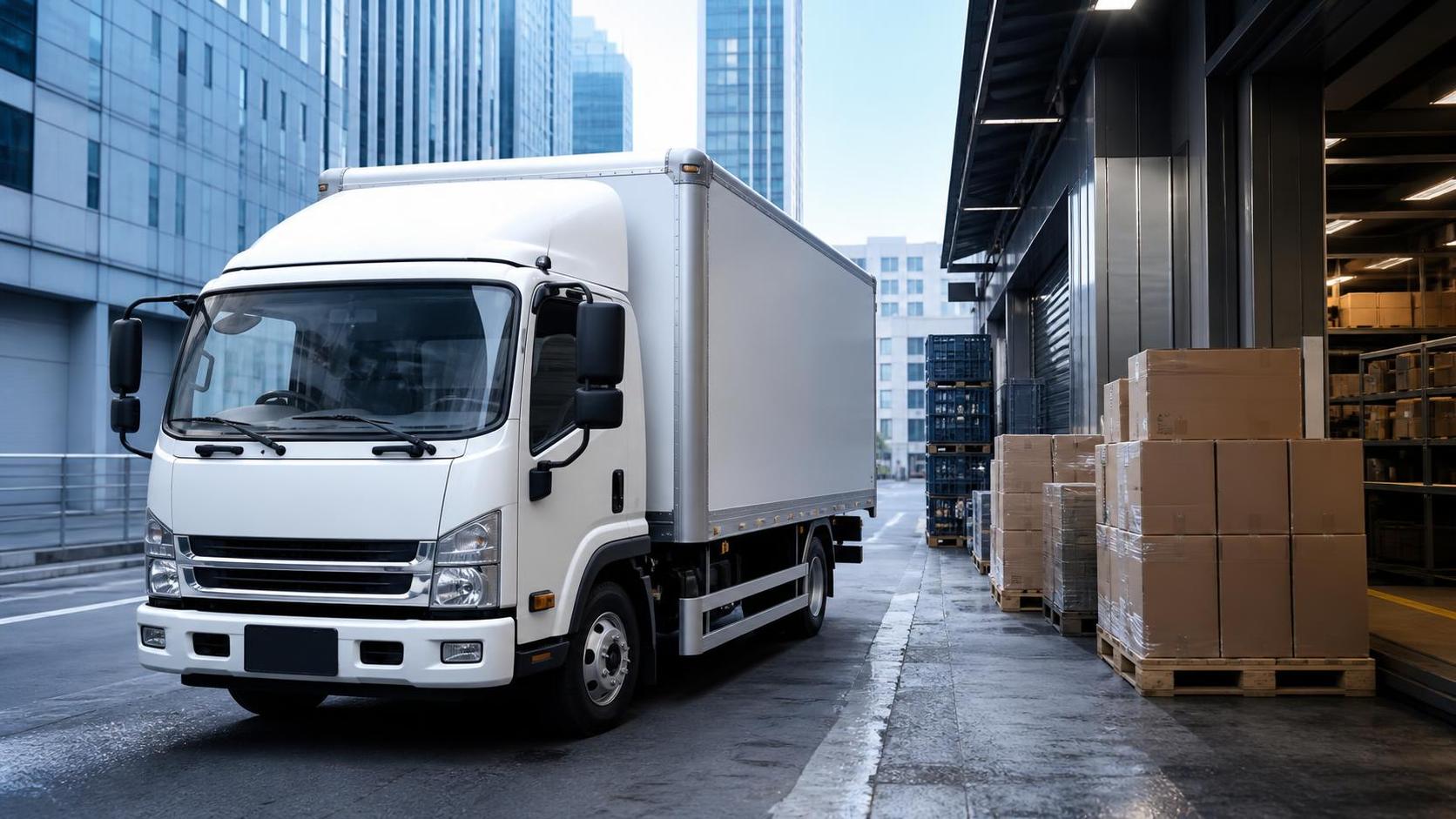
When Is a 4_2 Cargo Truck a Better Choice Than a Low Plate for Urban Deliveries?
If your urban delivery work involves frequent stops, narrow streets, mixed loading points, and time-sensitive schedules, a 4_2 Cargo Truck is often the better choice than a low plate. The reason is practical, not theoretical: city logistics usually rewards maneuverability, faster turnaround, easier loading management, and lower operating complexity more than it rewards oversized carrying capacity. For many business decision-makers, the real question is not which vehicle looks more capable on paper, but which one keeps daily distribution moving with fewer delays and less wasted cost.
A lot of buyers get stuck on load size alone. That is where poor fleet decisions usually begin. In urban deliveries, the better vehicle is the one that matches road conditions, unloading frequency, route density, driver workload, and compliance requirements. In many of those situations, a low plate trailer is simply solving the wrong problem.
Where a 4_2 Cargo Truck fits better in city delivery work
A low plate is built for heavy or oversized cargo, equipment transport, and special load scenarios where deck height and load accessibility matter more than speed through dense city routes. That makes sense for machinery relocation, construction equipment movement, or abnormal cargo. It does not automatically make sense for daily urban distribution.
A 4_2 Cargo Truck becomes the smarter option when cargo is moderate in weight, deliveries are frequent, and routes are fragmented. That is common in retail replenishment, food and beverage distribution, hardware supply, packaged industrial goods, spare parts, building materials in controlled volumes, and regional branch delivery.
Here is the short answer many decision-makers are actually looking for: choose a 4_2 Cargo Truck when you need a vehicle that can enter city zones more easily, turn faster at crowded loading points, keep unloading simple, and complete more stops per day without carrying oversized transport cost into every trip.
This is especially true when your loads are palletized, boxed, bagged, or arranged for repeated short-haul movement rather than one-piece heavy equipment transport.
The decision usually comes down to route reality, not maximum capacity
On paper, some buyers compare vehicles by asking a simple question: which one can carry more? In practice, urban transport is constrained by a different set of factors. Tight corners, basement ramps, side-lane unloading, market congestion, daytime access rules, and driver fatigue often have more impact on delivery performance than headline load capacity.
A 4_2 Cargo Truck is usually the better fit when your routes include:
- High stop frequency across multiple customer locations
- Deliveries into older city districts with limited road width
- Mixed warehouse-to-store or warehouse-to-branch distribution
- Customers with limited unloading space
- Fast turnaround expectations on the same day
In those cases, a low plate can become inefficient. It may offer capacity you rarely use, while creating access limitations you deal with every day.
That is a common mistake in vehicle procurement: buying for the largest possible load instead of buying for the most common operating day.
Why low plates often lose efficiency in urban use
Low plate vehicles have a clear role, but city delivery is not usually their strongest environment. They tend to be more suitable where the cargo itself dictates the transport method. If you are moving forklifts, compact excavators, generators, road equipment, or other heavy units that need low deck access, then the low plate earns its place.
But urban distribution rarely looks like that.
When the load is standard cargo rather than machinery, a low plate can introduce unnecessary operational friction. Parking and unloading may take longer. Driver handling becomes more demanding. Route planning gets tighter because not every destination can accommodate the vehicle comfortably. In busy urban zones, even a small reduction in maneuverability can affect how many drops a vehicle completes in one shift.
That matters more than many buyers expect. One missed stop is not just one missed stop. It can mean redelivery cost, customer dissatisfaction, warehouse rescheduling, and lower vehicle utilization across the fleet.
A 4_2 Cargo Truck often wins on total working efficiency
Fleet decisions should be based on delivered output, not just transport potential. A 4_2 Cargo Truck often performs better in urban deliveries because it supports the full cycle of work more efficiently: loading, road movement, access, unloading, and return scheduling.
Its value shows up in several practical ways.
First, it is generally easier to route through mixed urban roads. That gives dispatch teams more flexibility and reduces dependence on only a few suitable delivery windows.
Second, loading bodies for cargo trucks are more aligned with common city distribution formats. If your operation uses cartons, cages, pallets, consumer goods, packaged materials, or branch replenishment stock, the truck body layout is usually easier to standardize for that job.
Third, driver adaptation is often smoother. This should not be underestimated. A vehicle that is easier to position, reverse, and unload tends to deliver more stable day-to-day performance across different drivers.
Fourth, operating cost is easier to control when the vehicle is closely matched to the actual job. Fuel consumption, tire wear, loading time, and idle time all need to be assessed based on your own routes and payload pattern, but in many medium-load city applications, oversized transport equipment simply adds cost without adding useful productivity.
When a low plate still makes more sense
It would be a mistake to present this as a universal rule. There are urban and near-urban jobs where a low plate is still the right answer.
If your cargo is heavy, self-propelled, oversized, or difficult to load into a conventional cargo body, a low plate remains the more practical tool. The same applies if your delivery model includes equipment transfer to project sites, municipal works, plant maintenance jobs, or construction support where the transported unit is the main issue, not route density.
There is also a mixed-use scenario that procurement teams sometimes miss: some companies are doing both city distribution and machinery transport with the same fleet. In that case, forcing one vehicle type to do both jobs often leads to compromise on both sides. A split fleet can be more efficient than a “one vehicle handles everything” mindset.
Common decision errors buyers make
One of the most common misunderstandings is assuming that a more specialized heavy-duty transport solution is automatically more professional. It is not. A professional fleet is one where vehicle specification matches transport reality.
Another mistake is evaluating only purchase price. Urban logistics cost is shaped by utilization rate, turnaround speed, maintenance support, body configuration, driver familiarity, and delivery success rate. A cheaper vehicle that creates routing friction can become the more expensive decision over time.
Some buyers also forget to check local operating restrictions early enough. Urban access rules, loading-hour limits, axle restrictions, emissions requirements, and parking constraints vary by market. Those details need to be verified locally and against official regulations before finalizing a fleet purchase.
Then there is the body configuration issue. Even if a 4_2 Cargo Truck is the right platform, the wrong body can still reduce efficiency. Side curtain, box body, stake body, refrigerated body, or tail-lift configuration should match how your goods are loaded and delivered. The chassis decision is only part of the job.
What business decision-makers should confirm before choosing
If you are comparing a 4_2 Cargo Truck with a low plate for urban work, start with these questions:
- What does a normal delivery day look like, not the occasional extreme day?
- How many stops does one vehicle make per route?
- How often does the vehicle enter tight commercial or residential streets?
- Is the cargo standard freight or equipment-based freight?
- How much unloading space do customers actually have?
- Does speed of turnaround matter more than peak load flexibility?
- Do local rules make larger or specialized vehicles harder to operate in the city?
If your answers point to repeatable, medium-load, high-frequency urban distribution, the decision usually leans toward a 4_2 Cargo Truck.
If your answers point to irregular but very heavy, oversized, or equipment-focused transport, the low plate remains the better tool.
Procurement is easier when the supplier understands application, not just inventory
This is where supplier quality starts to matter. Many buyers do not just need a truck. They need help selecting the right configuration, body type, and brand platform for the actual job.
Shandong Livol Truck International Trade Co., Ltd., based in Shandong, China, works in that part of the process. As an authorized domestic and overseas dealer for FOTON, SHACMAN, and SINOTRUK, with a wide authorized 4S network, available stock, and export support covering vehicle selection, customization, documentation, customs clearance, and logistics, the company is more relevant for buyers who need a workable commercial vehicle sourcing process rather than a simple price quote.
That matters most when the decision is not “buy a truck” but “buy the right urban delivery vehicle with the right body and support plan.” For overseas fleet buyers, that kind of selection support can reduce specification mistakes early.
So when is a 4_2 Cargo Truck the better choice?
In plain terms, a 4_2 Cargo Truck is the better choice than a low plate for urban deliveries when your operation is built around frequency, accessibility, and predictable cargo rather than oversized load handling. It works better when your revenue depends on finishing routes cleanly, entering city zones without drama, and unloading quickly at customer sites that were never designed for specialized transport equipment.
That is why many experienced operators choose it for branch distribution, store replenishment, local wholesale movement, and regional city logistics. It is not because the vehicle is universally better. It is because it is better matched to how urban delivery actually works.
Before making the final decision, review your real payload pattern, route density, unloading conditions, and local regulations. If most of your transport days involve standard goods moving through crowded city environments, a 4_2 Cargo Truck will usually serve the business better than a low plate.
FAQ
Is a 4_2 Cargo Truck cheaper to operate than a low plate?
Often yes in urban distribution, but it depends on route type, payload, and local operating conditions. The key point is that the lower-complexity vehicle often delivers better daily efficiency when the cargo does not require a low plate.
Can a low plate be used for normal city cargo delivery?
It can, but that does not mean it is efficient. If the cargo is standard freight rather than machinery or oversized equipment, a conventional cargo truck is usually the more practical choice.
What type of cargo is best suited to a 4_2 Cargo Truck in the city?
Palletized goods, boxed products, bagged materials, retail stock, spare parts, packaged industrial goods, and similar medium-load freight are typical fits.
Should I choose based on the biggest load I might carry?
Usually no. Base the decision on your most frequent operating condition. Buying for rare extreme loads can reduce efficiency on ordinary working days.
What should I confirm before ordering from an exporter?
Confirm chassis suitability, body configuration, parts support, documentation process, delivery lead time, and whether the supplier understands your local urban delivery use case.
Internal Link Anchor Text Suggestions
- Anchor text: 4_2 cargo truck for city logistics - Suggested page: product category or urban delivery truck collection
- Anchor text: how to choose a commercial truck body - Suggested page: guide on box body, stake body, and tail-lift options
- Anchor text: FOTON SHACMAN SINOTRUK truck exporter - Suggested page: brand or exporter introduction page
- Anchor text: urban delivery fleet procurement checklist - Suggested page: blog or resource article
- Anchor text: cargo truck customization for overseas buyers - Suggested page: customization or export service page
External Source Directions Worth Referencing
- Government transport or road access regulation pages for city vehicle restrictions and compliance requirements
- Official technical documents from truck manufacturers for chassis and body configuration guidance
- Industry association reports on urban logistics efficiency, fleet utilization, and last-mile delivery operations
Search Starts Here