
News
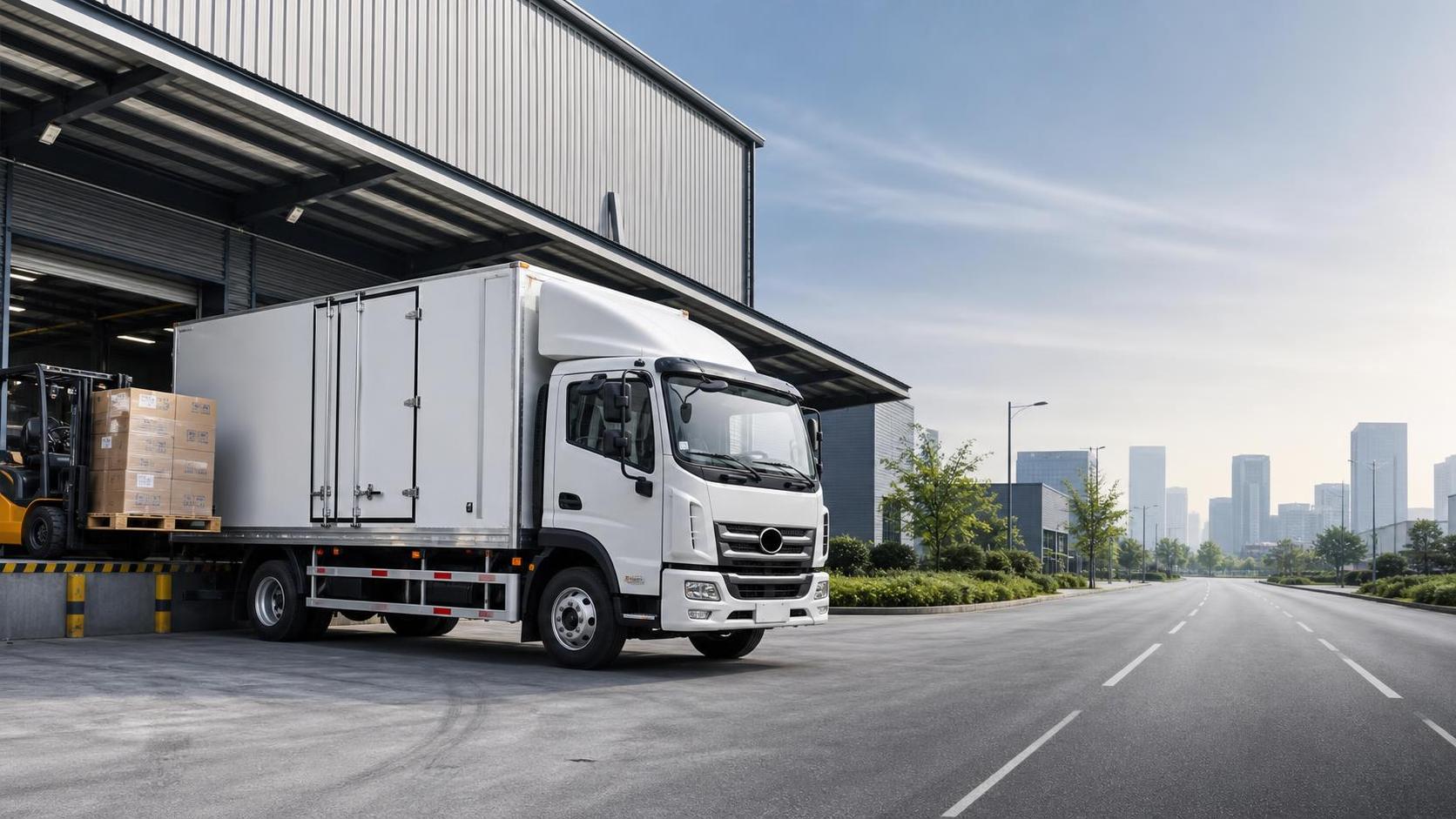
When a 4_2 Cargo Truck Starts to Beat a Low Plate on Local Delivery Cost
The comparison is often framed the wrong way. Many buyers look first at body style and purchase price, then decide that a low plate is the cheaper answer for local delivery because it looks simpler and is sometimes easier to load. In practice, the real cost question is narrower and more commercial: which vehicle moves the required cargo through a short-haul route with the lowest total cost per completed delivery cycle?
That is where a 4_2 Cargo Truck can become the better choice. Not in every city run, and not for every load, but in a large share of distribution work where cargo protection, route frequency, loading discipline and daily utilization matter more than a low deck alone.
In fleet discussions, “4_2” usually refers to a two-axle truck with one driven axle. For local delivery, this configuration sits in a practical middle ground: more carrying structure and body flexibility than very light vehicles, but still manageable for urban and peri-urban work. A low plate, by contrast, is usually chosen because its deck height simplifies loading of heavy, bulky or irregular goods. That advantage is real, but it does not automatically mean lower operating cost.
The cost turning point is operational, not theoretical
A 4_2 Cargo Truck becomes more cost-effective when delivery economics depend on repeatable daily cycles rather than occasional loading convenience. If the vehicle is dispatched on fixed or semi-fixed routes, carries palletized or packaged cargo, and returns to base quickly enough to complete multiple trips, body efficiency starts to matter more than deck height.
Why? Because local delivery cost is usually shaped by five linked items: usable payload within legal limits, fuel use under stop-and-go conditions, loading and unloading time, cargo loss or damage exposure, and maintenance downtime. A low plate can reduce loading effort for certain cargo types, but it may give back that savings elsewhere if the route does not actually require its format.
This is especially true when goods are cartonized, bagged, crated, or stacked on standard handling equipment. In those conditions, a cargo truck body often works better with forklifts, side access planning, weather protection and route sequencing. The vehicle spends less time being adapted to the load, and more time moving revenue cargo.
Where a low plate still has the advantage
There are local delivery jobs where choosing a low plate is entirely rational. Construction materials, machinery, oversized fabricated parts, equipment with awkward centers of gravity, or freight that must be loaded by crane or rolled on and off can make deck height the controlling factor. In these cases, the truck is not being judged mainly on delivery frequency. It is being judged on whether loading is even feasible, safe and compliant.
That distinction matters. If the load profile is irregular enough that every shipment needs manual adjustment, special lashing, or site-specific handling, then the lower platform may save enough labor and reduce enough handling risk to justify itself. But that is not most urban replenishment work, retail distribution, beverage runs, food ingredient movement, spare parts circulation, or factory-to-warehouse shuttles.
The strongest case for a 4_2 Cargo Truck
A 4_2 Cargo Truck usually becomes the stronger commercial option when the cargo has three characteristics: it is standardized, it benefits from enclosure or organized side access, and it moves in relatively high weekly frequency. That combination shifts the focus from “easy to put on the truck” to “cheap to move every day.”
Consider what happens in local distribution networks that serve supermarkets, distributors, industrial customers or mixed retail channels. Deliveries are often time-bounded, unloading points are numerous, and partial loads are common. Under those conditions, a cargo truck body can improve load separation, reduce cargo shifting, and make route planning more disciplined. It also tends to protect freight better from rain, dust and road contamination, which matters more than many first-time buyers expect. Damage, repacking and claim handling are hidden costs, but they are still costs.
Another factor is turnaround consistency. A low plate may look efficient during loading at origin, yet local delivery profitability is determined across the full round trip. If unloading at several stops involves hand sorting, re-securing freight, or dealing with exposure-sensitive cargo, the time benefit from the lower deck can disappear quickly. The 4_2 Cargo Truck often wins by being easier to operate consistently across many average jobs, not by being the absolute best at one difficult job.
What evaluators should compare before deciding
This kind of comparison is more useful than asking which vehicle is “better.” Procurement teams should look at trip completion cost, not simply acquisition cost or nominal payload. A truck that costs less to buy can still be the more expensive asset once route inefficiency, extra labor and underutilized body design are counted.
One common mistake: treating local delivery as a simplified version of line-haul
Local delivery is its own operating environment. Speeds are lower, stops are more frequent, driver behavior has a larger effect on fuel use, and loading discipline matters every day. In that environment, a 4_2 Cargo Truck can be more cost-effective simply because it matches the rhythm of the work better. It is often easier to assign across multiple delivery patterns, easier to standardize in a fleet, and easier to support with body configurations already common in commercial distribution.
That flexibility matters for exporters and fleet planners as well. Companies working across different markets often find that customer needs are not limited to one body format. Shandong Livol Truck International Trade Co., Ltd., as an authorized dealer for FOTON, SHACMAN and SINOTRUK with established domestic 4S resources and export experience, operates in a part of the market where this practical matching matters. Buyers are not just choosing a brand badge; they are usually balancing availability, chassis suitability, body options, after-sales access and documentation support for the destination market. Those details affect real cost just as much as the initial vehicle category does.
The hidden value of standardization
A 4_2 Cargo Truck often fits better into a standardized fleet model. That reduces complexity in driver training, maintenance planning, spare parts stocking and dispatch allocation. Even where the per-vehicle difference looks small, standardization can lower administrative friction across the life of the fleet.
This point is easy to miss during procurement because it does not appear clearly on a quotation sheet. Yet for business evaluators, it should be part of the decision. If one truck type can cover a wider share of local delivery tasks without special handling arrangements, that broader usability has value. It means fewer idle assets, fewer exceptions in route planning, and fewer situations where a vehicle is technically available but commercially unsuitable.
Where the numbers usually move, even without fixed benchmarks
Without route-specific operating data, it would be careless to claim a universal cost gap. Still, experienced buyers usually test the same pressure points:
- How many deliveries are completed per day, not just how much cargo fits on paper.
- How often the load needs re-handling during the route.
- Whether cargo exposure creates shrinkage, damage or cleaning issues.
- Whether the vehicle can be redeployed to similar routes when demand shifts.
- Whether maintenance and parts support are straightforward in the target market.
When the answers point toward predictable route work, standard freight handling and multi-purpose fleet use, the 4_2 Cargo Truck often comes out ahead. Its cost-effectiveness is not based on one dramatic advantage. It comes from a series of smaller operational gains that accumulate over months of dispatch.
A practical way to make the choice
For local delivery planning, the better question is not “Which vehicle is cheaper?” It is “Which vehicle wastes less money in our actual delivery pattern?” If the business moves standardized goods, needs dependable multi-stop performance, values cargo protection, and wants a truck that can be used broadly across local routes, a 4_2 Cargo Truck is often the more cost-effective asset than a low plate.
If the freight is difficult, oversized, site-loaded under non-standard conditions, or heavily dependent on low deck access, the low plate may still be the right answer. But for routine local distribution, cost usually follows operating fit. And that is exactly where the 4_2 format tends to prove its value.
Search Starts Here