
News
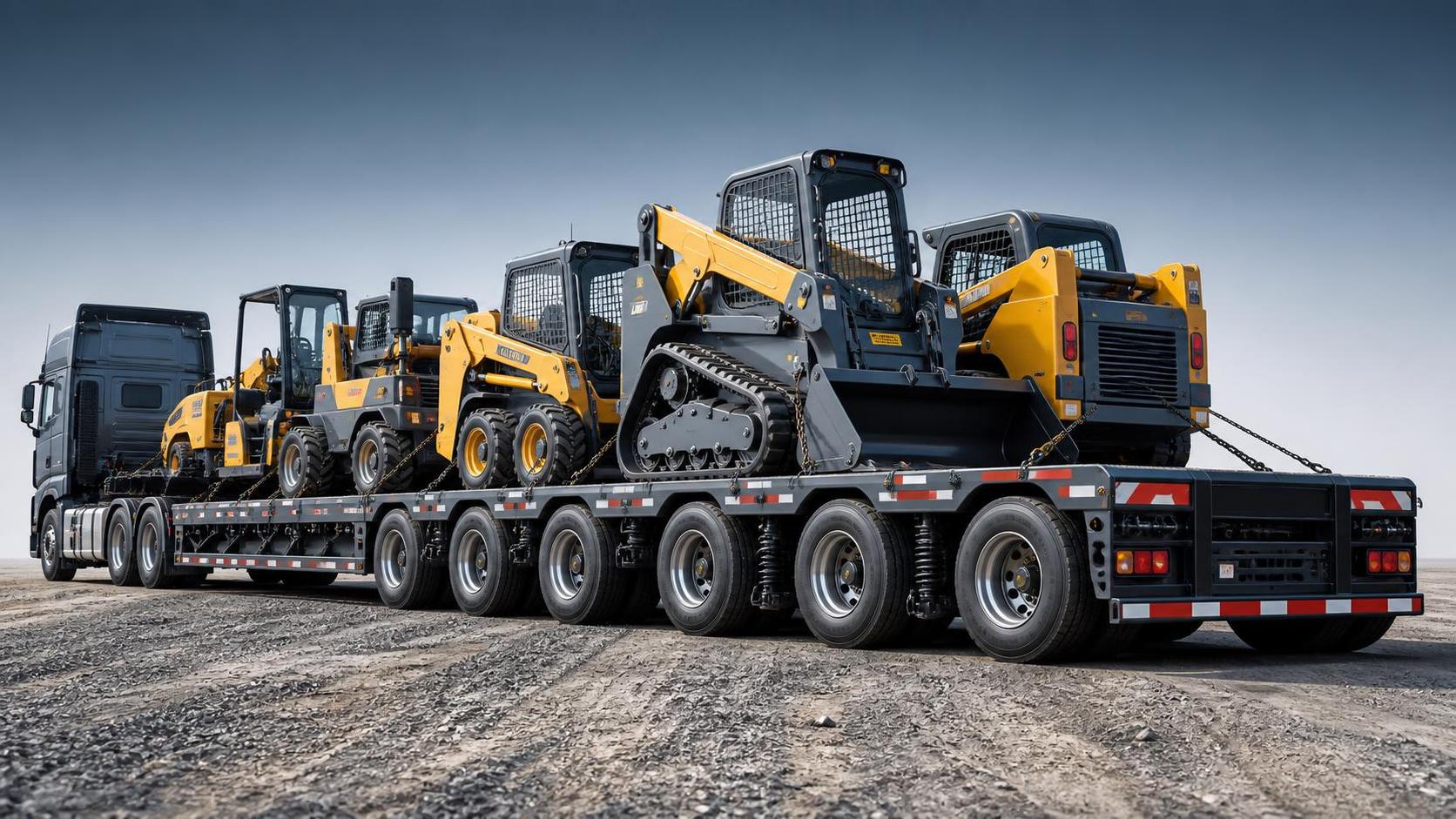
Start with the running gear before looking at the deck, ramps, or cargo restraints. When a low plate trailer begins to drag, hop, steer poorly, or lean more than expected on uneven roads, the earliest clues are usually in the suspension, axle position, tires, and load distribution. These parts absorb road input first. If one of them is out of condition, the trailer may appear to have a structural problem when the real fault is much simpler and less expensive to correct.
The first useful observation is whether the problem happens empty, lightly loaded, or only under a certain cargo weight. A trailer that behaves normally when empty but becomes unstable with equipment on the deck often points to suspension travel limits, weak equalization, or poor load placement. If the same behavior appears regardless of load, tire condition, axle geometry, or a bent component should move higher on the inspection order. That distinction saves time because it separates dynamic load response from basic rolling alignment.
Look at ride height before touching any adjustment point
Park the trailer on level ground and compare left-to-right ride height at consistent measuring points near the suspension hangers or frame rail. A visible difference may indicate a fatigued spring pack, seized equalizer, worn air suspension control, twisted hanger bracket, or previous impact damage. On low-deck equipment trailers, even a small height imbalance can become obvious on broken pavement because deck clearance is limited and axle articulation must work through a narrow margin.
Do not begin by re-shimming or re-aligning anything until ride height is known. Alignment measurements taken on a sagging corner can mislead the entire diagnosis. If one side sits lower, inspect for flattened leaf spring camber, cracked leaves near the center bolt, shifted spring seats, worn bushings, or air bags that do not inflate evenly. On air suspension units, check airlines for abrasion, valve linkage movement, and signs that one side is compensating late. A delayed correction can feel like trailer sway or rear steer on uneven roads.
Suspension movement tells more than a static visual check
Many uneven-road complaints come from suspension parts that look acceptable while parked but bind once the axles articulate. Equalizer pins, torque rod bushes, spring eyes, and hanger pivots should move smoothly under load. If rust tracks, polished metal, or displaced rubber appear around these joints, the part may be reaching the end of its travel unevenly. That creates a momentary load spike on one axle, which can cause wheel hop, deck shake, or repeated tire scrub over corrugations and patched surfaces.
Pay attention to signs of metal-to-metal contact. Fresh witness marks on bump stops, axle seats, frame undersides, or cross-member edges suggest the trailer is using up suspension travel too early. On a low plate configuration, this can happen after spring fatigue, after an axle has been replaced with a different beam profile, or after the deck has been modified and weight distribution changed. A common misjudgment is to blame the road surface alone when the trailer has actually lost articulation margin.
If the trailer uses mechanical suspension, inspect U-bolt torque retention and the seating condition between axle and spring pack. A slightly shifted axle seat can introduce both alignment error and irregular suspension response. If it uses air suspension, check whether height control responds consistently after the trailer is rolled forward and backward a short distance. A static reading is not always enough because sticky valves may settle into position only after movement.
Axle alignment should be verified early, not after tire damage becomes obvious
When a trailer struggles on rough roads, operators often report that it “pulls,” “walks,” or “pushes” the tractor during lane corrections. Those descriptions can come from axle misalignment long before tires show severe wear. Measure axle squareness from fixed chassis reference points rather than relying on visual judgment. Compare diagonal measurements across the axle group and confirm that each axle is perpendicular to the frame centerline within the tolerance used in your workshop practice.
Uneven roads magnify a small alignment problem because each axle is already moving vertically at a different moment. If one axle is skewed, the suspension no longer shares side loads naturally. The result may be a sharper reaction when crossing potholes, bridge joints, quarry access roads, or jobsite approaches with one wheel climbing first. This can also increase stress on spring hangers and torque rods, especially if the trailer spends long periods carrying concentrated machine weight.
Look closely at hanger weld zones and bolt holes before finalizing any alignment conclusion. If a hanger has shifted because of elongation, cracking, or previous repair distortion, setting the axle by measurement alone may not hold. The same applies to wear in locating holes, worn suspension beams, or replacement parts with stacked tolerances. Correcting alignment without addressing the reason it moved will only delay the same complaint.
Tires often reveal the timeline of the fault
Tire inspection should focus less on general wear and more on wear pattern logic. Feathering across tread ribs may suggest scrub from alignment error. Localized cupping may point to poor damping, loose wheel bearings, or intermittent loss of contact on rough surfaces. Shoulder wear on one side of one axle can develop when a suspension joint binds and forces that wheel to carry side load during articulation. If the complaint started recently but the wear is old and rounded, the current problem may lie elsewhere.
Check inflation only when the tires are at a comparable temperature condition and use the pressure standard appropriate for the actual axle load. Overinflation on a lightly loaded axle can make a trailer feel harsher and less planted on broken roads, while underinflation increases carcass flex and heat, especially when the trailer crawls over uneven jobsite terrain. Neither condition should be judged in isolation from loading, because a tire that looks visually acceptable may still be wrong for the applied load and speed pattern.
Also inspect whether mixed tire rolling radii exist across an axle set. Different tread depths, different casing construction, or mixed brands with different effective diameters can disturb load sharing. On a low-deck trailer, that imbalance can reduce effective ground clearance at one wheel path and aggravate deck strike risk at transition points.
Load position can imitate a chassis fault
Before deeper disassembly, confirm where the cargo weight sits relative to the axle group, gooseneck, and main beam centers. A machine loaded slightly off the intended center of gravity can overload one suspension zone and unload another without creating an obvious visual warning. On uneven roads, the lightly loaded axle may skip while the overloaded side runs near the limit of suspension compression. The complaint then sounds mechanical even though the core issue is distribution.
Watch for concentrated loads placed over timber dunnage or contact points that do not spread force as intended. If the deck has wear plates, recessed sections, or previous repairs, the practical load path may differ from the drawing assumption. This matters when transporting tracked machines, rollers, or attachments with narrow contact patches. A trailer can remain within nominal payload while still reacting poorly because the mass is too far rearward, too high, or biased to one side.
Where available, compare current loading position with known stable setups for similar equipment dimensions. If a loading sequence recently changed because of ramp use, accessory fitment, or route restrictions, treat that as part of the fault history. Uneven-road behavior often starts after a small operational change rather than after a component failure.
Do not ignore wheel ends and braking drag
A binding brake or overheated wheel bearing can make a trailer feel heavy, resistant, or unstable on poor surfaces. After a short road movement, compare wheel-end temperature by touch-free method if your workshop process allows it. A hotter drum, hub, or disc corner may indicate brake drag, bearing preload issues, or contamination. On rough roads, that extra resistance can be mistaken for suspension harshness because the affected wheel does not recover speed smoothly after impact.
Inspect slack adjuster function, caliper return, and air delivery consistency if the trailer uses pneumatic braking. A chamber that releases late can create intermittent steering influence through the axle set, especially at low speed on broken ground. If the trailer has recently had brake work, verify that replacement friction parts, drum dimensions, and bearing settings match side to side. Small assembly differences become more obvious once the trailer is working off level.
Frame and deck checks should be targeted, not speculative
Structural inspection matters, but it should follow the running-gear basics unless there is visible damage. Look for cracks around suspension hangers, gooseneck transitions, cross-member ends, and areas where deck plates meet concentrated support points. On low plate trailers, repeated grounding can deform local sections without producing a dramatic visible bend across the whole frame. Fresh paint fracture, flaking rust lines, or misaligned bolt holes may reveal movement better than a broad visual scan.
Measure deck-to-ground clearance at several loaded and unloaded points. If one section has lost clearance relative to historical service records or comparable units, determine whether the cause is frame set, suspension collapse, tire radius change, or a combination. A common mistake is to call any low-clearance complaint a “bent frame” without first separating these variables.
Road-surface complaints sometimes begin with coupling geometry
If the trailer pitches sharply when entering uneven sections, inspect kingpin area condition, fifth-wheel height match, and coupling level. A tractor-trailer combination that runs nose-high or nose-low changes axle loading and suspension working range. That can reduce steering stability and worsen rear strike risk. The trailer may be mechanically sound, yet its geometry in service is wrong enough to trigger repeated problems on ramps, culverts, and unpaved transitions.
Check for wear in the coupling interface, looseness around mounting plates, and any sign that the trailer attitude has changed after tire replacement or suspension repair on the tractor. These details are easy to miss because the complaint is felt through the trailer, but the source can be the combination height relationship.
When parts have been replaced, compare specification rather than appearance
Service history matters most when the problem appeared after repair. Spring packs that look similar may have different rates or free camber. Bushings may fit physically but allow different movement under side load. Air bags, shock absorbers, equalizers, and axle seats from mixed sources can alter ride behavior without creating an obvious installation fault. If the trailer began struggling after maintenance, verify part numbers, dimensions, and mounting orientation before assuming the road conditions simply became more severe.
This is especially important on components that control axle location. A slight difference in bushing hardness, torque rod length, or hanger spacing can change how the axle group tracks through uneven articulation. The trailer may pass a simple yard check yet still react badly at working speed on patched or crowned roads.
Sequence matters during diagnosis
Begin with ride height, visible suspension condition, tire state, and wheel-end drag. Then confirm axle alignment and only after that move into deck clearance, frame geometry, and historical repair comparison. That order reduces false conclusions because it starts with the components most likely to distort how the trailer sits and moves. On a trailer used in construction and heavy transport work, uneven-road complaints rarely come from a single isolated symptom. They usually come from one primary fault that has started to affect neighboring parts.
If the first inspection does not produce a clear answer, a short controlled road evaluation over a known uneven section can help, provided load condition and safety controls are properly managed. The useful aim is not to recreate the complaint dramatically. It is to identify whether the trailer is hopping, dragging, steering, or bottoming, and at which axle or corner the behavior begins. That keeps the next repair step tied to evidence instead of guesswork.
Search Starts Here