News
Low Plate Trailer for Heavy Equipment: When It Reduces Transport Risk
For heavy equipment transport, trailer choice directly affects safety, quality, cost, and delivery reliability.
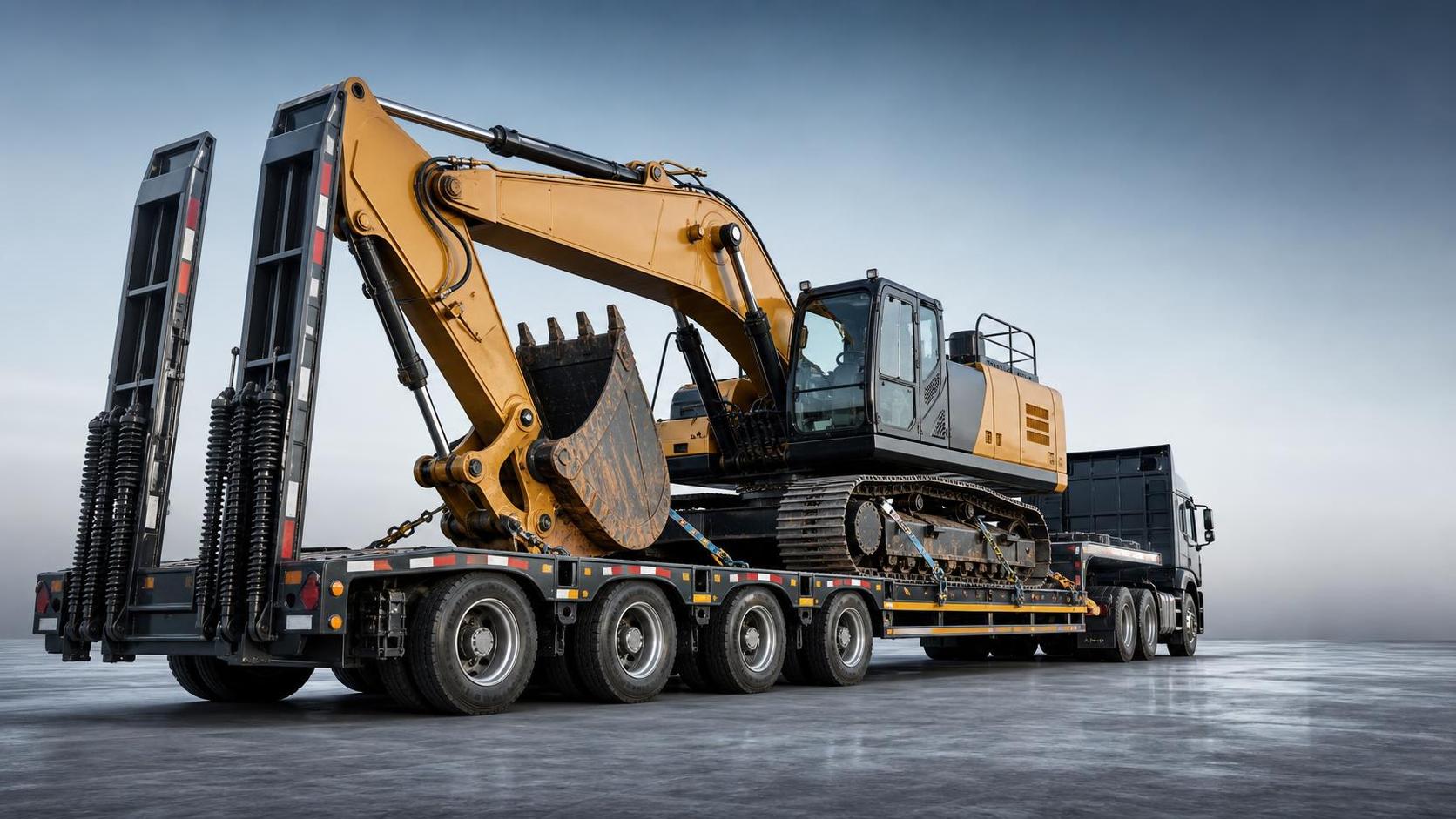
A Low Plate trailer is not simply a loading platform.
It is a practical risk-control tool when moving excavators, rollers, loaders, cranes, and other high-mass machines.
The main value of a Low Plate design is clear.
It lowers the cargo position, improves stability, and gives operators more room to manage height, balance, and road conditions.
That matters more as projects become faster, routes become more complex, and compliance pressure increases across borders and regions.
In real transport work, many incidents start before the truck even leaves the yard.
Incorrect deck height, poor load fit, weak lashing points, and unstable axle distribution all increase exposure.
A properly selected Low Plate setup helps reduce these problems early, not after a failure happens on the road.
Why Low Plate Matters in Heavy Equipment Transport
Heavy equipment usually brings three transport challenges: weight, height, and shifting force.
A standard trailer may carry the load, but not always with enough margin for dynamic safety.
A Low Plate trailer addresses that margin.
By lowering deck height, the Low Plate reduces the center of gravity of the full transport combination.
This improves resistance to roll during cornering, braking, lane adjustment, and uneven road movement.
It also improves route flexibility.
When cargo sits lower, there is more clearance under bridges, wires, gantries, and site entrances.
That reduces the chance of last-minute rerouting, permit mismatch, or forced unloading.
Another benefit is loading compatibility.
Tracked and wheeled equipment often climbs onto a Low Plate more smoothly, with less approach-angle stress and better positioning control.
When a Low Plate Reduces Risk Most Clearly
Not every cargo movement needs a Low Plate trailer.
The risk-reduction value becomes strongest in specific operating conditions.
1. High-profile equipment
Machines with tall booms, cabins, tanks, or mounted structures face height-control pressure.
A Low Plate gives more usable clearance without changing the equipment itself.
2. Loads with uneven weight distribution
Excavators and similar equipment rarely have perfectly centered mass.
A Low Plate supports better placement for axle balance and lashing geometry.
3. Long-distance or mixed-road routes
The longer the route, the more transport stress accumulates.
Road camber, sudden braking, potholes, and weather can amplify load instability.
The lower stance of a Low Plate helps manage these repeated forces more safely.
4. Cross-border and permit-sensitive projects
Transport regulations often focus on total dimensions, axle loads, and securement quality.
A Low Plate can make the difference between a compliant load plan and a costly exception.
Key Risk Points a Low Plate Helps Control
The best transport decisions come from matching equipment risk to trailer structure.
A Low Plate is especially useful because it controls several risks at once.
- Rollover risk: A lower center of gravity improves lateral stability.
- Load shift risk: Better deck geometry supports stronger securing angles.
- Height violation risk: Reduced cargo elevation helps meet route limits.
- Loading damage risk: Lower approach height reduces entry shock and scraping.
- Axle overload risk: Smarter positioning helps distribute mass more evenly.
- Operational delay risk: Better fit reduces last-minute adjustments and inspection failures.
These are not theoretical gains.
They affect insurance exposure, site acceptance, driver confidence, and delivery consistency in day-to-day heavy equipment logistics.
How to Evaluate the Right Low Plate Configuration
Choosing a Low Plate should start with the equipment profile, not the trailer catalog.
A practical evaluation usually covers the following points.
- Confirm transport weight, operating weight, and any attachments left installed.
- Measure total height, track or tire width, wheelbase, and ground clearance.
- Review route limits for bridges, slopes, turning radius, and legal dimensions.
- Check deck length, gooseneck structure, ramp type, and lashing-point quantity.
- Assess axle arrangement against local regulations and real road conditions.
- Verify material strength, weld quality, braking response, and suspension performance.
This process often reveals hidden mismatches.
For example, a Low Plate with enough nominal capacity may still be unsuitable if ramp strength is weak.
The same is true when tie-down points do not match the machine’s securing zones.
In other words, Low Plate selection is a system decision, not a single-number decision.
A Practical Selection Framework for Safer Operations
A useful way to select a Low Plate is to combine risk level with operating frequency.
This framework helps teams avoid overbuying and under-specifying at the same time.
More importantly, it connects Low Plate investment to measurable transport risk reduction.
Supplier Capability Also Affects Transport Safety
Even a well-designed Low Plate loses value if supply, documentation, or service support is weak.
This is where exporter capability becomes part of the safety equation.
Shandong Livol Truck International Trade Co., Ltd., based in Shandong, China, provides integrated commercial vehicle export support backed by practical industry resources.
As the official authorized domestic and overseas dealer for FOTON, SHACMAN, and SINOTRUK, the company works with strong brand access and stable supply channels.
Its nationwide authorized 4S store network and sufficient inventory help shorten delivery cycles for transport projects with tight schedules.
Just as important, the export team supports vehicle selection, customization, documents, customs clearance, and logistics coordination.
That reduces handover gaps which often create errors in international heavy equipment transport.
When Low Plate solutions are matched with disciplined quality control and after-sales support, transport risk becomes easier to predict and manage.
What to Check Before Final Approval
Before confirming a Low Plate trailer, a final review should focus on execution details.
- Does the Low Plate match actual equipment dimensions, not brochure dimensions?
- Are axle loads compliant under real loading positions?
- Are ramps and deck surfaces suitable for tracked or wheeled entry?
- Do lashing points support the planned securing method?
- Is documentation complete for export, route approval, and customs handling?
- Is service support available after delivery and during operation?
These checks are simple, but they prevent expensive mistakes.
In many cases, the safest Low Plate choice is the one that fits the route and machine with the fewest compromises.
That is the real decision standard.
When heavy equipment transport involves height pressure, stability concerns, or compliance risk, a Low Plate trailer often becomes the most practical way to reduce exposure and keep operations moving with control.
Search Starts Here