
News
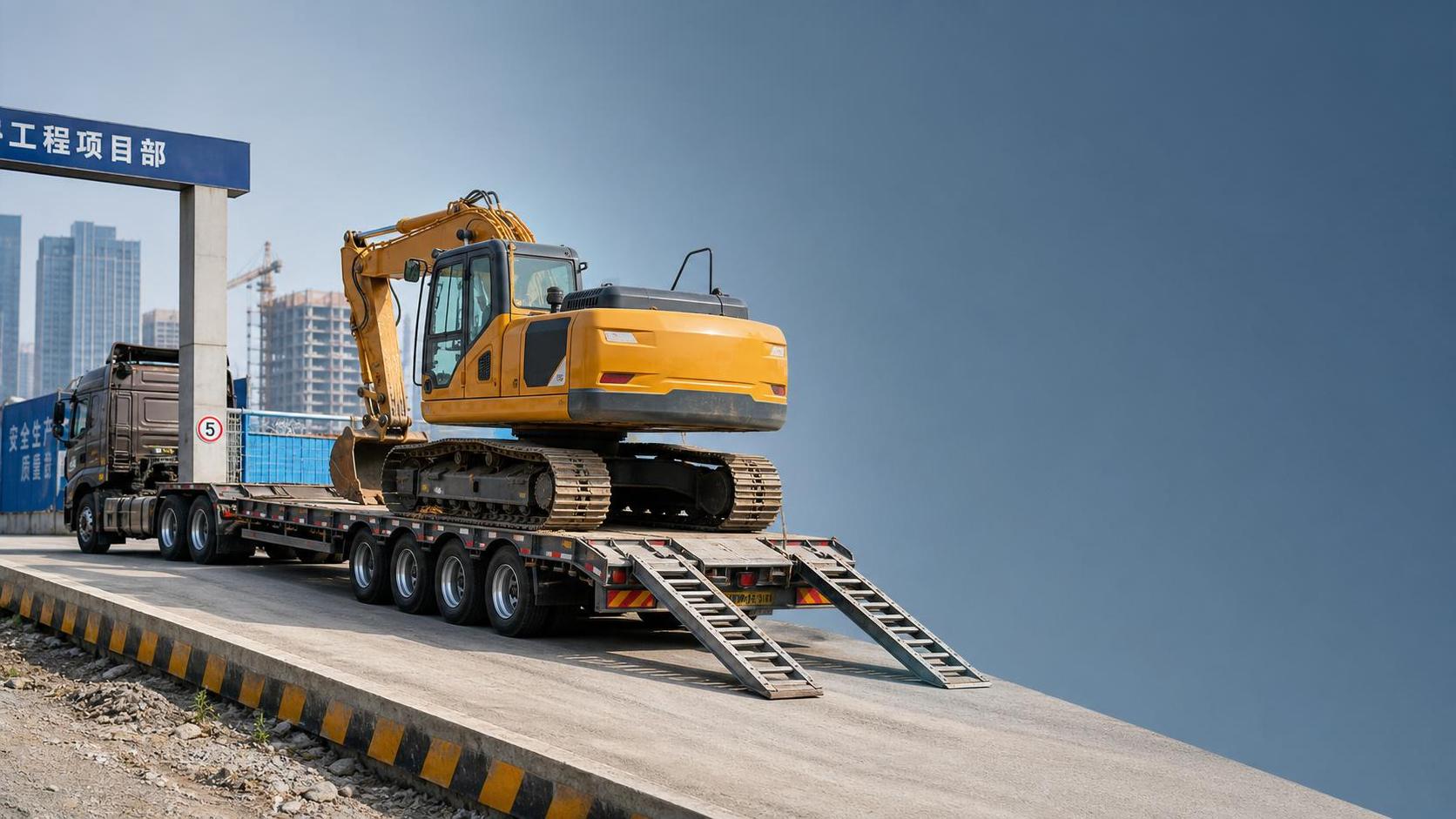
Deck Height Matters Long Before the Excavator Moves
Selecting a Low Plate trailer for excavator transport often begins with axle count or payload. In practice, deck height usually decides whether the move stays routine or becomes difficult.
A few centimeters can change ramp angle, bridge clearance, loading stability, and entry into tight jobsites. That is why Low Plate selection should start from access conditions, not from catalog figures alone.
The same excavator may travel safely on different trailer layouts, yet the best match depends on road approach, gate restrictions, haul distance, and the machine’s working attachment.
In heavy equipment export and cross-border delivery, this judgment becomes even more important. Vehicle availability, document accuracy, and route planning need to support the chosen Low Plate configuration from the beginning.
Why Access Conditions Change the Right Low Plate Choice
Jobsite access is rarely uniform. One site may have a paved entrance with wide turning space. Another may involve a steep village road, soft shoulders, and temporary steel plates at the gate.
That difference affects how a Low Plate trailer performs during loading and unloading. A lower deck reduces overall transport height, but it can also change breakover angle and underbody clearance.
In urban utility work, overhead restrictions often shape the decision. In quarry or mining access, the more common concern is uneven terrain and trailer contact at grade transitions.
More experienced planners usually compare three dimensions together: excavator height after positioning, Low Plate deck height, and the real route profile from yard to final unloading point.
What changes from one site to another
- Gate width and the need for tight turning during reverse loading.
- Slope at the site entrance, especially where pavement meets gravel.
- Temporary obstructions such as cables, scaffolding, or drainage humps.
- Surface bearing condition during loading after rain or repeated traffic.
On Highway Transfers, Lower Height Helps but Clearance Is Not the Only Story
For long-distance road transfer, a Low Plate trailer is often selected to keep total transport height within legal or practical limits. This is especially useful when moving medium and large excavators with booms repositioned.
Still, a very low deck does not automatically mean a better result. Highway ramps, toll approaches, and service-road transitions can create belly contact if the trailer’s geometry is too aggressive for the route.
In these cases, the right judgment is usually a balance. The Low Plate should reduce overall height enough to simplify permits and route choices, while keeping structural clearance for ordinary road transitions.
This is where specification support matters. Exporters with stable stock and experience across FOTON, SHACMAN, and SINOTRUK transport combinations can align tractor selection with trailer height and legal load distribution more efficiently.
At Confined Urban Sites, Ramp Angle Often Decides Loading Safety
Urban excavator delivery is usually less about extreme weight and more about control. Narrow access roads, curbs, short unloading zones, and nearby traffic make loading geometry more sensitive.
A Low Plate trailer with an appropriate deck height can reduce ramp angle and improve track contact during loading. That becomes important when the excavator must climb slowly without swinging wide.
However, lower is not always simpler in city work. If the unloading point has a sharp crown or drainage channel, the trailer tail may strike the ground before the machine clears the ramp.
The more reliable approach is to inspect the final twenty meters, not only the route permit. Many Low Plate mistakes happen at the last access point, where site conditions differ from public road conditions.
On Rough Access Roads, Deck Height Must Be Judged with Suspension and Breakover Angle
Earthwork, quarry, and remote infrastructure sites create a different problem. The route may technically allow a low trailer, yet the road profile changes continuously under load.
In this environment, a Low Plate trailer must be evaluated as a moving system. Deck height interacts with suspension travel, gooseneck design, axle placement, and the distance between support points.
A lower deck can improve machine stability on the road. But if the trailer frequently bottoms out on uneven grades, downtime and structural wear quickly erase that advantage.
Where access roads are temporary or seasonally damaged, a slightly higher Low Plate often performs better over time. It may add height margin pressure, but it reduces contact risk and supports more predictable unloading.
Typical differences by operating condition
Machine Dimensions Need More Than a Basic Height Check
Excavator transport planning often stops at operating weight and maximum height. That is incomplete. The real loading position changes with boom rest point, bucket placement, track width, and counterweight balance.
A Low Plate trailer that looks suitable on paper may still create a poor center of gravity if the excavator must sit too far forward or too high over the axle group.
Machines with quick couplers, breakers, or long arms deserve separate review. Attachments can change transport height and shift the practical value of a low deck.
When moves are arranged across countries or ports, consistent technical checking is essential. Full-process support, including configuration review, paperwork, customs handling, and logistics coordination, reduces the chance of misdeclared dimensions.
Checks worth confirming before final selection
- Transport height after boom, stick, and bucket are secured.
- Ramp angle with the actual excavator track length.
- Load position needed for legal kingpin and axle distribution.
- Ground contact risk at ramps, tail, and center section.
- Attachment removal time compared with route savings.
Where Low Plate Decisions Are Commonly Misjudged
One frequent mistake is choosing a Low Plate only by the lowest advertised deck. That can work for one route, then fail at a new site with steeper access or softer ground.
Another weak assumption is treating similar excavators as identical loads. Two machines in the same tonnage class may require different placement because of attachments or different upper structure geometry.
Some operators focus on trailer purchase cost and ignore operational friction. Repeated delays at permits, escort planning, or difficult unloading can make the cheaper setup more expensive in practice.
There is also a planning gap between trailer choice and tractor availability. A Low Plate is only part of the transport system. Matching with suitable prime movers and confirmed inventory improves delivery reliability.
A Practical Way to Match Low Plate Height to Real Work
A useful process starts with the route’s hardest point, not the average road. Identify the lowest overhead limit, the steepest transition, and the tightest unloading area.
Then compare those constraints with the excavator’s transport posture. If route height is the dominant issue, prioritize a lower Low Plate deck. If terrain transition is harsher, keep more structural clearance.
For fleets handling mixed assignments, a mid-range Low Plate specification often gives the best operating flexibility. It may not be optimized for every task, but it avoids severe limitations on common jobs.
When supply timing matters, it also helps to work with teams that can connect trailer choice, tractor configuration, and export execution in one process. That reduces handoff errors and shortens decision cycles.
Next Step: Build a Site-Based Selection Standard
The most effective Low Plate decision is rarely the lowest deck available. It is the deck height that fits the machine, the route, and the final site approach without creating avoidable loading risk.
A practical next step is to record repeated access conditions across actual projects. Include route clearance, ramp contact points, unloading space, and attachment-related height changes.
From there, compare Low Plate options against those recurring conditions instead of making each choice from scratch. That approach usually leads to better compliance, fewer on-site adjustments, and more predictable excavator delivery.
Where international supply, customization, and transport coordination are involved, aligning these checks early helps turn a suitable Low Plate from a specification item into a dependable working solution.
Search Starts Here