
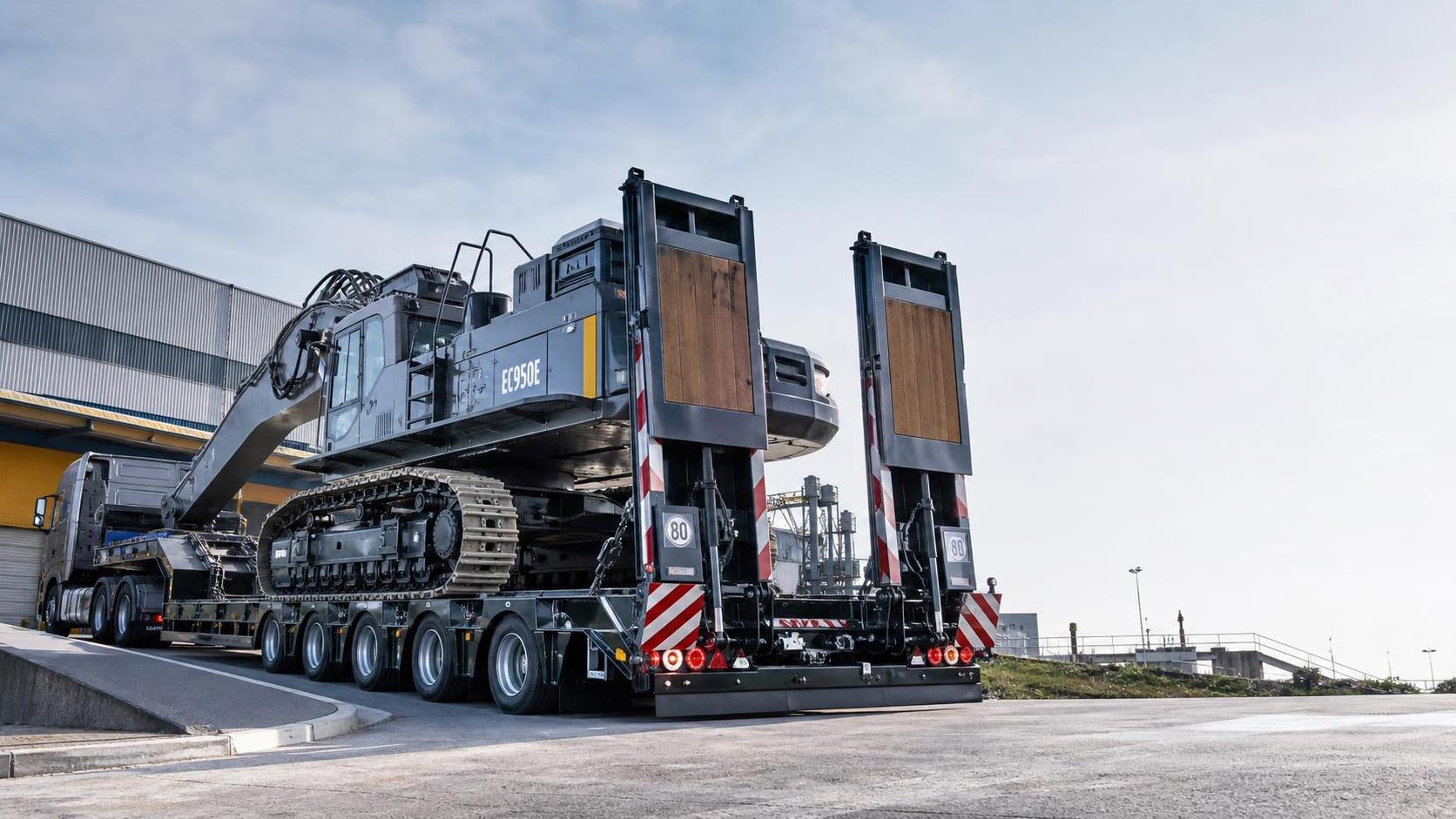
Low Plate Trailer Ground Clearance: How It Affects Loading Safety and Route Planning
A Low Plate trailer is often chosen because it makes it easier to transport tall, heavy, or irregular equipment. But many loading and safety problems do not start with the cargo itself. They start with ground clearance that looks acceptable on paper yet becomes risky once the trailer meets a steep ramp, a rough yard entrance, a speed bump, or a road with uneven shoulders.
If you are responsible for equipment transport, fleet safety, dispatch planning, or trailer selection, this is one of those details that can quietly affect the whole job. Low Plate ground clearance influences loading angle, underbody strike risk, deck stability during movement, and whether the planned route is practical at all. Getting it right usually comes down to better judgment before the vehicle moves, not after a problem appears on site.
Why Low Plate ground clearance becomes a problem in real operations
On a normal workday, the issue usually appears in a very ordinary way. A machine is ready to load, the trailer is in position, and everything seems routine until the rear approach angle is tighter than expected or the underside of the trailer sits too close to the ground at a transition point. In that moment, what looked like a simple transport task becomes a safety decision.
Low Plate trailers are designed for low deck height, which is useful for carrying high equipment without exceeding transport height limits. The tradeoff is that less space remains between the trailer structure and the road surface. That reduced clearance can create several operational concerns at once: the trailer may scrape when entering a site, the machine may bottom out while climbing onto the deck, and the route itself may include dips or obstacles that increase the risk of contact underneath.
Many teams first notice the problem only when loading takes longer, drivers hesitate at access points, or equipment operators need repeated adjustments to get onto the trailer safely. None of these signs should be treated as minor inconvenience. They are usually early warnings that the chosen clearance, deck layout, or route assumptions need a closer check.
What ground clearance changes during loading safety checks
Ground clearance on a Low Plate trailer does not only matter while driving. It matters before the cargo is even secured. During loading, the relationship between trailer height, ramp angle, cargo wheelbase or track length, and the machine's own ground clearance determines whether loading will be smooth or risky.
A common misunderstanding is to focus only on deck height. A lower deck sounds better because it can reduce overall transport height, but that does not automatically make loading safer. If the trailer sits too low in the wrong places, the breakover angle can become a problem. Equipment with a long wheelbase, low belly, or attachment hanging underneath may contact the ramp crest or trailer transition before it is fully on deck.
This is especially relevant for construction and engineering vehicles. Machines with steel tracks, low-mounted components, or uneven weight distribution do not react the same way as a standard wheeled unit. Even when the trailer can legally carry the load, the loading path itself may still be unsuitable if the Low Plate clearance is too tight for the machine geometry.
From a safety standpoint, the check should include more than whether the machine fits on the trailer. It should also cover whether the machine can climb, settle, and be positioned without sudden contact, unstable angle shifts, or repeated repositioning. Ground clearance is one of the first indicators in that assessment.
Common signs that the trailer clearance and route plan do not match
In many cases, problems can be anticipated before damage or delay occurs. The challenge is that operators sometimes normalize small warning signs because they happen often in heavy transport. A more disciplined review can prevent that.
- The trailer tail or underframe regularly scrapes when entering worksites, yards, or temporary access roads.
- Loading requires repeated ramp adjustments or extra blocking just to avoid machine contact.
- Drivers avoid certain turns, fuel stations, or service roads because of drainage dips or raised entries.
- The cargo position has to be changed mainly to compensate for clearance concerns rather than proper weight distribution.
- Dispatch plans work in theory but become difficult once real road surfaces, junction transitions, or site conditions are seen.
When these signs appear, the issue is usually not one isolated mistake. It is often a mismatch between trailer specification, cargo characteristics, and route assumptions. Treating it as only a driving issue or only a loading issue tends to leave the underlying risk in place.
How to evaluate Low Plate clearance before choosing a trailer or route
A practical review usually starts with asking the right questions in the right order. Instead of asking only, "Can this trailer carry the weight?" it is more useful to ask, "Can this Low Plate trailer load the equipment safely, move through the actual route, and unload without underbody contact?" That broader question leads to better decisions.
- Check the equipment shape, not just its total dimensions. Look at wheelbase, track configuration, ground contact points, overhang, attachments, and any low-mounted components. Machines with similar weight may behave very differently during loading.
- Review deck height together with clearance points. Pay attention to the lowest parts of the trailer, including the transition area, side structure, rear section, and support zones that may approach the ground during angle changes.
- Assess the loading environment. A flat paved yard and a soft, uneven worksite do not create the same approach conditions. Temporary ramps, sloped entrances, and compacted dirt surfaces can all change the real loading angle.
- Map the route by obstacle type. Do not treat the route as a single distance. Break it into access road entries, bridges, intersections, toll approaches, construction detours, speed-control features, and site gates.
- Confirm the trailer attitude under load. A trailer's clearance condition can change once the load is applied. Suspension behavior, axle distribution, and loading position may alter the space available underneath.
This kind of review does not require guesswork if the people involved share the right details early. Dispatch, loading supervisors, procurement teams, and suppliers should be working from the same transport conditions, not from separate assumptions.
A practical process for reducing clearance-related loading risk
When teams want a repeatable method instead of relying on operator experience alone, the most useful approach is to build a simple pre-transport check around loading geometry and route obstacles. That makes the decision less subjective and easier to defend when schedules are tight.
- Start with the cargo profile. Record the machine's loading characteristics, including underbody low points, entry angle sensitivity, and whether attachments change the balance or breakover behavior.
- Match the profile to the Low Plate trailer structure. Compare the equipment's movement path onto the deck with the trailer's ramp transition and lowest underframe areas.
- Inspect the loading surface. If the site is uneven, soft, or sloped, note that the real loading angle may be worse than the trailer specification suggests.
- Walk the route for critical transition points. Focus on places where the trailer can pitch, twist, or drag, such as entrances, culverts, temporary bypasses, and urban road joins.
- Plan mitigation before movement. That can include selecting a more suitable trailer configuration, adjusting load position within safe limits, changing the route, improving the loading area, or scheduling assistance on difficult site entries.
- Recheck after loading. Once the cargo is on deck, confirm clearance at practical risk points rather than assuming the unloaded condition still applies.
What usually makes this process effective is not complexity. It is consistency. A short but disciplined checklist often prevents the kind of last-minute improvisation that creates most clearance-related incidents.
Where people often misjudge Low Plate trailer suitability
One frequent mistake is assuming that lower is always better. For some loads, a lower deck is exactly what makes transport possible. For others, especially machines with low underside clearance or difficult loading geometry, an extremely low trailer can create avoidable loading stress and route limitations.
Another mistake is evaluating the trailer in isolation. Clearance should not be judged only from the trailer brochure or basic drawing. It has to be judged as part of a moving combination: trailer, tractor, loaded condition, road surface, and site environment. A specification that works well on standard logistics routes may become troublesome on mixed infrastructure with irregular site access.
There is also a tendency to focus on legal height and weight first, then assume the rest can be handled in the field. In practice, underbody contact risk deserves attention at the same planning stage. Once the trailer arrives on site, your options are narrower, and schedule pressure makes poor decisions more likely.
When supplier support helps solve the problem faster
Sometimes the issue is not whether your team understands clearance risk. It is whether the right trailer information and configuration advice are available early enough. If you are sourcing engineering transport vehicles or comparing trailer options for export projects, it helps to work with a supplier that can coordinate vehicle selection and documentation without separating technical discussion from delivery planning.
For companies handling mixed heavy-duty transport requirements, support can be useful in areas such as matching trailer type to cargo category, confirming available vehicle configurations, and organizing the logistics steps around procurement and deployment. Shandong Livol Truck International Trade Co., Ltd. works as an authorized dealer for FOTON, SHACMAN, and SINOTRUK and provides export support covering vehicle selection, customization, documentation, customs clearance, and logistics. In a case like Low Plate selection, that kind of process support is most helpful when it is used to clarify fit-for-purpose choices rather than to push a generic model recommendation.
The key point is straightforward: if the transport task includes site constraints, route variability, or unusual equipment geometry, supplier discussion should happen before finalizing the trailer plan. That reduces the chance of choosing a unit that meets headline specifications but causes practical loading difficulties later.
Frequently Asked Questions
Is lower ground clearance always better for a Low Plate trailer?
No. Lower deck height can help with overall transport height, but too little ground clearance may increase the risk of scraping, poor ramp transition, and route limitations. The right choice depends on both cargo geometry and road conditions.
What should I check first if loading feels unsafe?
Check the loading angle, the machine's low contact points, and the trailer transition areas. Unsafe loading often comes from the interaction between machine geometry and trailer design, not from weight alone.
Can route planning really change because of Low Plate clearance?
Yes. Entrances, road dips, uneven junctions, temporary detours, and site access roads can all affect whether the trailer can pass without contact underneath. Route planning should include these transition points, not only distance and legal restrictions.
How do I know whether the problem is the trailer or the site?
Usually it is the combination of both. A trailer that works well on one route may struggle at another site with sharper grade changes. Reviewing the trailer structure, cargo profile, and loading environment together gives a more reliable answer.
Should procurement teams be involved in this kind of technical check?
Yes. If trailer selection happens without input from operations, loading supervisors, or route planners, the chosen equipment may meet commercial requirements while missing practical clearance needs. Early coordination prevents that gap.
Conclusion
Low Plate trailer ground clearance affects much more than how low the deck sits. It shapes whether equipment can be loaded without contact, whether the trailer can move through real road transitions, and whether the transport plan remains safe under site conditions instead of only on paper.
The most reliable way to handle it is to treat clearance as a planning issue from the start. Check the machine profile, review the trailer's critical low points, inspect the loading environment, and examine the route by obstacle type. That sequence usually reveals problems early enough to adjust the trailer choice, route, or loading method before they become expensive delays or safety incidents.