
News
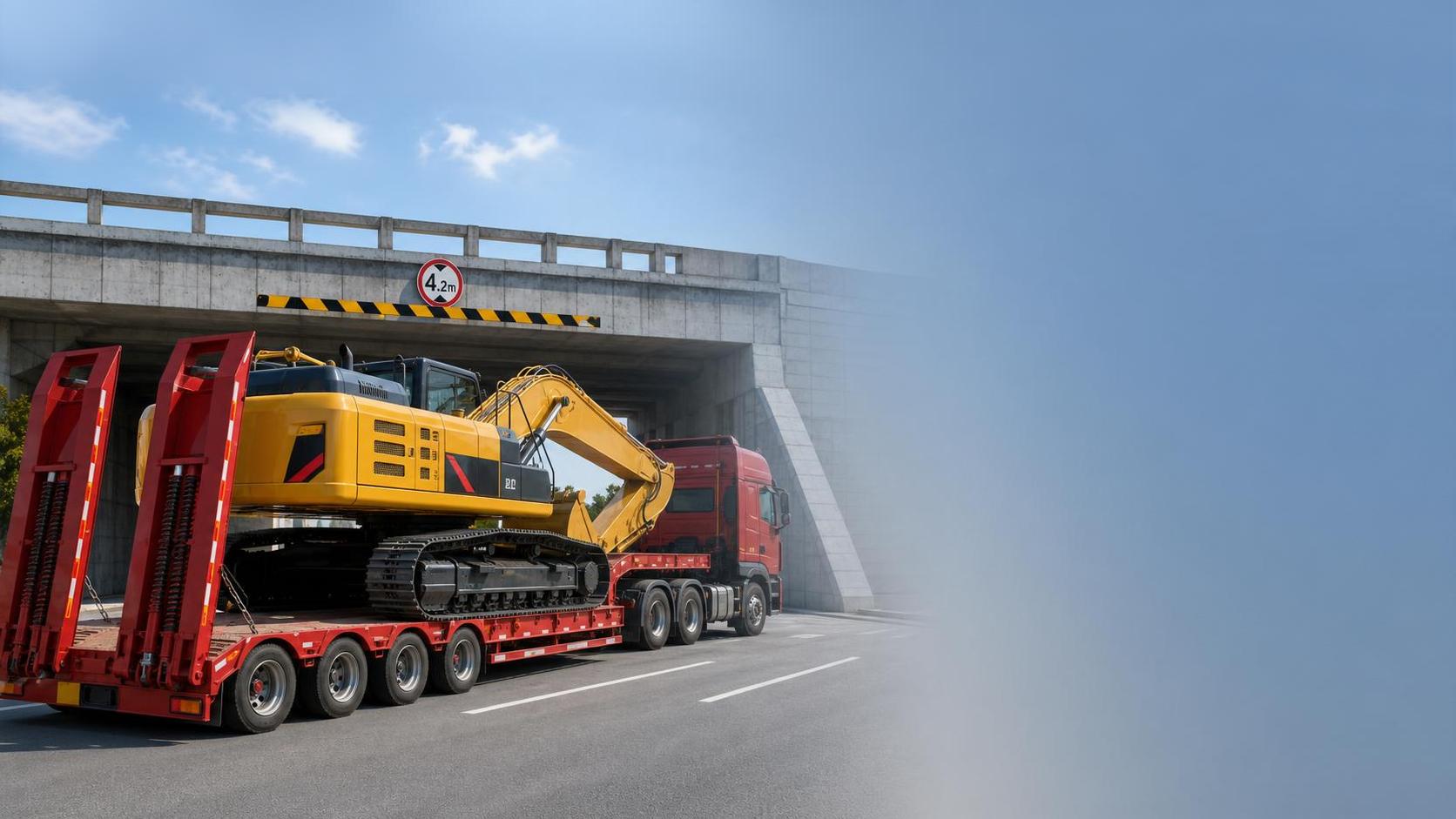
Why Low Plate Transport Matters When Height Limits Become the Real Constraint
A Low Plate trailer is rarely chosen just for payload.
It is usually selected when cargo height creates route risk before weight becomes the main issue.
That situation appears often in engineering vehicle operations, especially with excavators, pavers, rollers, cranes, and modular equipment.
In practical transport planning, the lower deck height of a Low Plate reduces total loaded height and expands legal route options.
This can prevent detours, escort changes, permit delays, and unnecessary on-site disassembly.
The value is not only operational.
It also affects delivery timing, crane scheduling, labor coordination, and customs-linked handover windows in cross-border projects.
For companies handling integrated vehicle export and project logistics, such as Shandong Livol Truck International Trade Co., Ltd., Low Plate selection often sits between equipment matching and route execution.
That is why understanding Low Plate applications requires more than reading a brochure or checking deck dimensions.
In Real Projects, Similar Loads Can Need Very Different Low Plate Decisions
Two machines may have close weights and still need different Low Plate setups.
The reason usually comes from route geometry, loading method, axle distribution, and unloading conditions.
A machine moving between urban job sites faces overpasses, traffic controls, and tighter turning space.
A unit going to a mining area may face rough access roads, uneven ramps, and longer empty return cycles.
The more useful judgment method is to start with operational limits, not with the trailer label alone.
Low Plate suitability depends on total loaded height, center of gravity, approach angle, suspension behavior, and local road rules.
In export-oriented supply chains, timing matters too.
Available stock, documentation speed, and parts support can influence whether a Low Plate solution remains practical over repeated projects.
A quick way to compare conditions before choosing
Construction Machinery Moves Often Need Low Plate for Height, Not Just Weight
One of the most common Low Plate applications is moving tall construction equipment between active sites.
Tracked excavators, drilling rigs, and compact cranes often fit the weight envelope of several trailer types.
The real problem appears after loading, when booms, cabins, or fixed upper structures push total height above route limits.
In these cases, a Low Plate makes the transport plan more realistic.
It can avoid removing attachments every time the machine changes location.
That matters on projects where machine uptime is more valuable than small savings on trailer hire.
Another detail is site access.
Urban projects may require night entry, quick unloading, and minimal traffic disruption.
A Low Plate with suitable ramp geometry helps complete that transfer faster, especially when the machine drives on and off by itself.
Roadbuilding Equipment Brings a Different Set of Priorities
Road rollers, asphalt pavers, and milling machines are not handled exactly like excavators.
These loads may be less extreme in height, yet they place more emphasis on deck stability and loading position.
A Low Plate is useful here when transport routes cross city overpasses or temporary diversions with tight vertical clearance.
However, the decision should also consider machine length, drum placement, and tie-down points.
Improper axle balance can create braking instability even if the machine technically fits the deck.
In actual roadbuilding work, repeated short-distance moves are common.
That means loading efficiency becomes nearly as important as road legality.
A Low Plate that reduces reconfiguration time can improve daily productivity across multiple paving sections.
Mining and Remote Infrastructure Jobs Need More Than a Low Deck
Remote transport creates a more demanding Low Plate application.
The lower deck solves height restrictions on highways or access checkpoints, but remote routes add surface irregularity and slope transitions.
This is where many transport plans become too optimistic.
A very low trailer may be perfect for clearance, yet vulnerable at drainage channels, temporary ramps, or ungraded entrances.
The better approach is to treat Low Plate selection as a balance between deck height and terrain tolerance.
For heavy engineering cargo heading to mines, quarries, or dam projects, suspension robustness and frame strength deserve equal attention.
Service support also matters more in these environments.
Reliable stock availability and after-sales coordination can reduce downtime if wear parts or inspections are needed during prolonged project cycles.
Where scenario priorities usually change
- Urban transfers focus on clearance, turning radius, and quick unloading windows.
- Roadbuilding transfers focus on repeated loading efficiency and axle balance.
- Remote projects focus on frame durability, slope handling, and parts continuity.
- Port or cross-border routes focus on documentation accuracy and compliance consistency.
Cross-Border Delivery Adds Another Layer to Low Plate Planning
Some Low Plate decisions fail not on the road, but at the handover stage.
When equipment is supplied through international channels, transport planning must connect with export documentation and delivery scheduling.
This is especially relevant when commercial vehicles, tractors, and specialized trailers are arranged together for complete engineering transport solutions.
A practical advantage of working with an exporter that manages authorized inventory, customization, customs documents, and logistics is consistency.
That consistency helps when trailer configuration must match route permits, destination standards, and delivery deadlines.
In this setting, a Low Plate is not an isolated asset.
It is part of a wider transport chain that may include tractor matching, spare parts planning, and after-sales coordination.
Common Misjudgments Before Choosing a Low Plate
One frequent mistake is focusing only on rated capacity.
That ignores the original reason many Low Plate units are needed, which is height control under real operating conditions.
Another misjudgment is measuring the machine in parking condition but not in transport condition.
Tire compression, suspension travel, attachment position, and fuel load all affect final height.
It is also common to assume similar projects need the same Low Plate specification.
But a municipal bridge job and a remote wind foundation job may share machine types while requiring very different deck and axle strategies.
Cost comparison can be misleading as well.
A lower upfront price may lead to higher route complexity, more loading adjustments, or repeated permit problems.
What to Confirm Before Finalizing a Low Plate Solution
A useful Low Plate decision usually starts with five checks.
- Verify loaded height with attachments, tire condition, and real securing position.
- Review route details, not just destination distance, including bridges, slopes, and site entrances.
- Match ramp and deck geometry to the equipment’s clearance and loading method.
- Check whether repeated transfers or one-time delivery better defines the trailer setup.
- Confirm supply continuity, documents, and after-sales support for the operating region.
This process keeps Low Plate selection tied to real application needs rather than generic specifications.
Where transport programs involve FOTON, SHACMAN, or SINOTRUK tractor matching, the trailer decision should also consider compatibility across the full combination.
A Practical Next Step for Low Plate Evaluation
The most reliable way to evaluate a Low Plate is to map the full movement path.
Start with cargo height and route restrictions, then move to loading angles, axle loads, road surface, and support requirements.
That sequence usually reveals whether a Low Plate truly solves the transport limit or only shifts risk to another stage.
For engineering vehicle operations, the right answer is rarely the lowest deck alone.
It is the Low Plate configuration that fits the route, the machine, the project rhythm, and the delivery system behind it.
Before moving forward, it is worth comparing actual scenarios, confirming key limits, and aligning transport details with long-term operating conditions.
Search Starts Here