
News
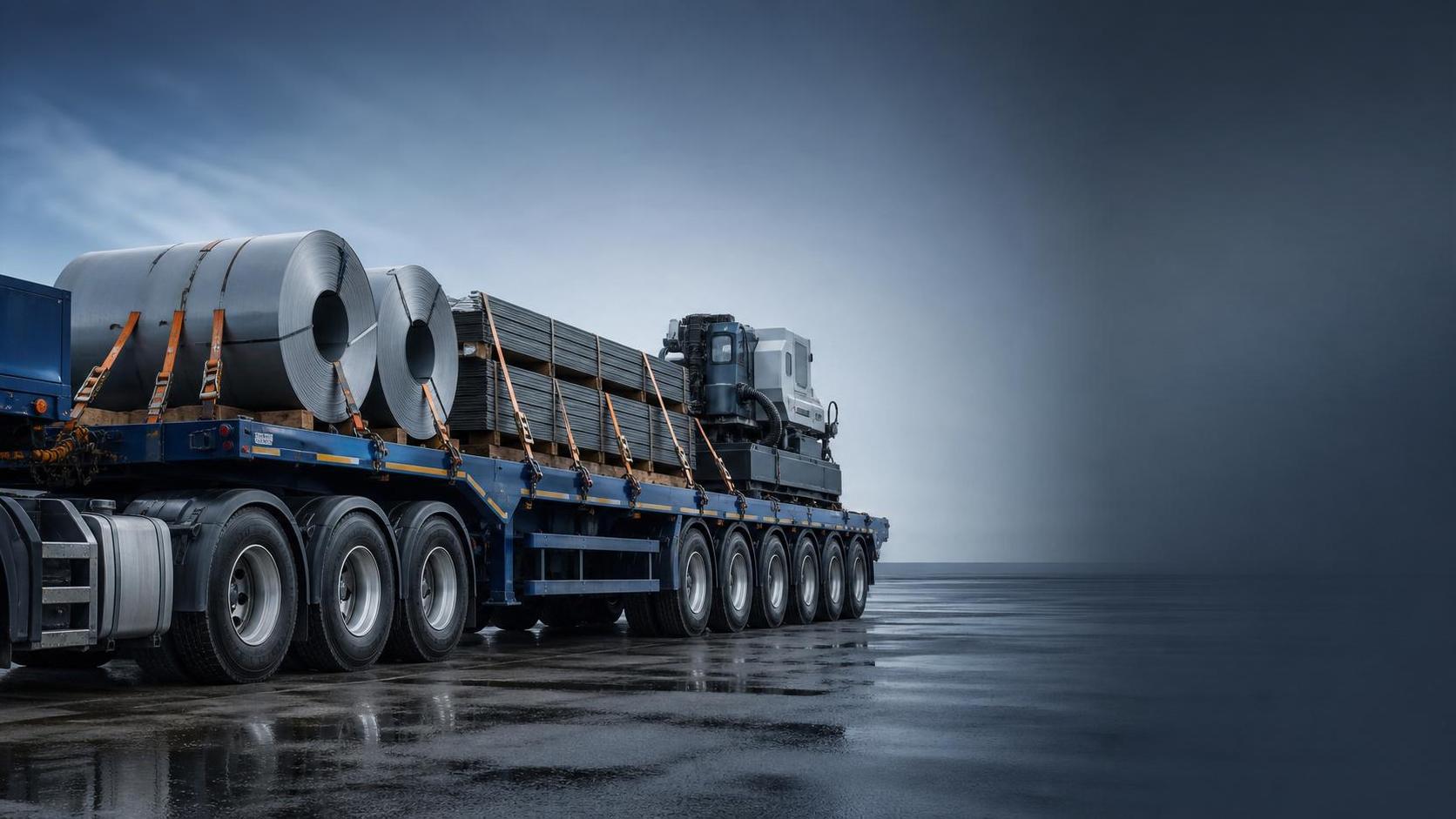
Why load capacity decisions change in real transport work
Choosing a Flatbed Semi-Trailer for steel and machinery transport starts with more than a rated payload figure. In engineering vehicle operations, the real question is how that capacity performs under actual loading conditions.
Steel coils, plate bundles, fabricated sections and industrial machinery do not stress a trailer in the same way. Weight concentration, cargo footprint, tie-down points and axle placement can change the safety margin quickly.
A Flatbed Semi-Trailer that works well for evenly distributed steel products may become a poor match for compact machine loads with a high center of gravity. That difference matters in braking, cornering and road compliance.
In practice, transport planning often sits between technical limits and delivery realities. Loading speed, route restrictions, port handling and customs timing also affect which trailer specification makes sense.
This is why experienced exporters and vehicle suppliers pay attention to full-process matching. Companies such as Shandong Livol Truck International Trade Co., Ltd. work across selection, customization, documentation and logistics because trailer capacity only becomes useful when it fits the transport task end to end.
A rated number is only the starting point
When evaluating a Flatbed Semi-Trailer, the advertised load capacity should be treated as a baseline. Real capacity depends on axle configuration, suspension type, deck length, frame strength and legal road limits.
Gross vehicle weight rules differ across markets. The same trailer body may be acceptable in one region, but require a different axle setup in another. That is especially relevant in cross-border engineering transport.
More important, legal compliance and mechanical capacity are not always identical. A trailer may structurally carry a load, yet still create overload risks on individual axles or tractor coupling points.
Key checks before loading
- Actual cargo weight, including packaging, cradles and lifting frames
- Load concentration by square meter, not only total tonnage
- Axle load distribution after positioning on the deck
- Cargo height, width and overhang restrictions on the route
- Compatibility with the tractor head, fifth wheel and braking system
A Flatbed Semi-Trailer used in heavy engineering transport should be assessed as part of the tractor-trailer combination. FOTON, SHACMAN and SINOTRUK tractor options, for example, may support different hauling patterns depending on terrain and regulatory conditions.
Steel transport usually rewards stability and even distribution
In steel transport, the cargo often appears simple because the shape is regular. The real issue is that steel can produce extreme localized weight, especially with coils or dense plate stacks.
For rebar, pipes and structural sections, deck length and side access matter more. These loads are usually long rather than tall, so operators focus on support spacing, lashing points and front-rear balance.
Steel coils create a different requirement. A Flatbed Semi-Trailer must handle concentrated downward force and rolling risk at the same time. Coil wells or properly designed saddles may be more important than headline payload.
Where judgment often changes for steel
For short-haul mill deliveries, loading frequency and deck durability usually drive the decision. For export movement to ports, corrosion resistance, tire reliability and document-ready specifications become more important.
In these cases, a Flatbed Semi-Trailer with sufficient inventory support and parts access reduces downtime. That is one reason established export networks and authorized service coverage matter beyond the trailer itself.
Machinery transport puts more pressure on dimensions and axle balance
Machinery transport is less predictable than steel transport. Two machines with similar weight can require very different trailer choices because footprint, center of gravity and loading method are rarely the same.
Compact generators, crushers, drilling equipment and workshop machines often place heavy mass into a short deck area. That can overload a section of the Flatbed Semi-Trailer even when total payload remains within rating.
Machines with protruding arms, control boxes or mounted attachments create another issue. Width and height may become the main limiting factors, forcing route review before the capacity decision is finished.
Common machinery loading priorities
- Frame reinforcement under concentrated load points
- Adequate deck length for safe weight positioning
- Reliable ramps or crane-loading compatibility
- Secure tie-down angles for non-standard shapes
- Suspension suited to rough roads or mixed terrain
In actual engineering transport, machinery moves often involve changing destinations. A Flatbed Semi-Trailer selected for one plant route may later face poor road surfaces, temporary worksites or stricter bridge limits.
Different jobs, different capacity priorities
The differences become clearer when capacity is compared by transport pattern rather than by product category alone.
This kind of comparison helps avoid a familiar mistake. A trailer that performs well in one heavy-duty job is not automatically the best Flatbed Semi-Trailer for every engineering vehicle application.
Where misjudgment usually happens
One common error is relying on payload rating without checking load position. A 40-ton machine placed too far forward or too far back can create unsafe axle loads even when the total weight looks acceptable.
Another mistake is treating similar cargo as identical. Steel plate bundles, steel pipes and steel coils may all travel on a Flatbed Semi-Trailer, but their securing and deck pressure patterns differ significantly.
Cost-only decisions also create problems. A lower initial trailer price can lead to more tire wear, frame fatigue or slower loading if the specification does not match the route and cargo cycle.
Export operations add one more layer. Documentation, customs compliance and delivery schedules can be delayed when trailer specifications do not align with destination rules. That is why integrated vehicle export support has practical value, not just administrative convenience.
Practical matching advice before final selection
A better selection process starts with cargo reality. List the heaviest load, the most concentrated load and the most dimensionally difficult load. They are not always the same shipment.
Then compare route conditions. Highway transport, plant delivery, mine access roads and port transfer work place different demands on suspension, braking and frame fatigue resistance.
- Confirm legal gross weight and axle limits in the operating market
- Measure cargo length, width, height and support points
- Check whether frequent loading needs ramps, crane access or side clearance
- Match the Flatbed Semi-Trailer with the planned tractor configuration
- Review spare parts access and after-sales support for long-term uptime
Where supply stability matters, it also helps to work with exporters that hold inventory and handle customization. That shortens delivery cycles and reduces the risk of receiving a standard trailer that needs major changes later.
What to confirm next for a better Flatbed Semi-Trailer fit
The right Flatbed Semi-Trailer for steel and machinery transport is rarely defined by one capacity number. The stronger approach is to match weight distribution, cargo dimensions, route conditions and service requirements together.
In practical engineering vehicle use, the best decisions usually come from reviewing real loading cases, not just catalog data. A trailer that aligns with the heaviest and most complex operating scenario will usually deliver better reliability over time.
Before moving forward, organize the main transport scenarios, compare axle and deck requirements, and verify compliance for the target market. That gives a clearer basis for selecting a Flatbed Semi-Trailer that works safely, efficiently and consistently in demanding field conditions.
Search Starts Here