
News
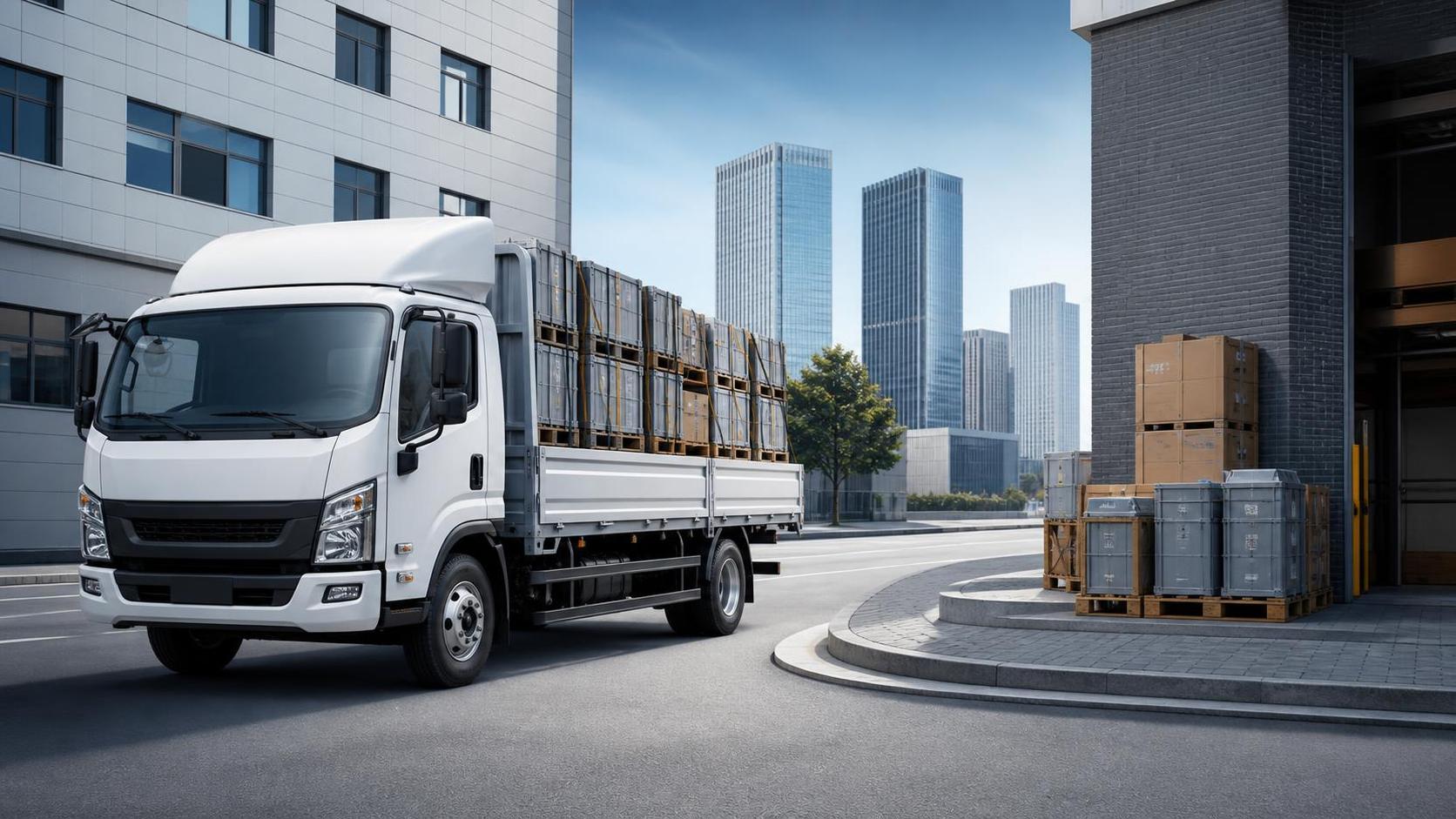
Can a 4_2 Cargo Truck Handle Mixed Urban Delivery Routes Efficiently?
For project managers and engineering teams, the real question is not whether a 4_2 Cargo Truck can move freight through a city. It is whether it can do that with enough agility, payload discipline, and operating reliability to stay efficient when routes are mixed, stops are frequent, and conditions change by the hour. In that sense, the answer is usually yes, but only under the right route profile and only if the truck is matched to the job instead of treated as a universal solution.
Mixed urban delivery routes are demanding because they combine different operating patterns in one day: dense traffic, short transfer distances, curbside loading, narrow access roads, time windows, and cargo types that vary in size, weight, and handling sensitivity. A 4_2 Cargo Truck can be practical here because it often sits in a useful middle ground. It is typically more capable than a light-duty vehicle when payload and box length matter, yet less cumbersome than larger rigid trucks that can struggle with maneuvering and parking in constrained urban environments.
Why the 4_2 layout matters in city logistics
The value of a 4_2 Cargo Truck is usually tied to balance. In urban delivery work, balance matters more than maximum size. A truck that is too small may require more trips, increase driver workload, and raise unit delivery cost. A truck that is too large may waste time at every turn, delay unloading, and limit route flexibility. The 4_2 configuration often helps reduce that tradeoff by providing enough chassis capacity for practical cargo volumes while keeping the vehicle manageable in built-up areas.
For mixed routes, this matters in at least three ways. First, the truck needs to handle repeated starts and stops without excessive stress on the powertrain and brakes. Second, it needs a body and wheelbase combination that can still access loading points close to the destination. Third, it needs to carry enough load to avoid underutilization, because an empty or lightly loaded truck on urban work quickly becomes a cost problem rather than a logistics asset.
Where it works well
A 4_2 Cargo Truck is usually a good fit when the route includes a combination of retail replenishment, equipment transfer, packaged goods, building materials, or general project support cargo. These are jobs where the payload is meaningful but not extreme, and where the route design rewards flexibility more than pure volume.
- City-to-site transport for materials and tools
- Branch replenishment and distribution center shuttle work
- Short-haul deliveries with multiple drop points
- Mixed cargo operations where load types change frequently
In project environments, this can be especially relevant when delivery points are spread across a city but still need a dependable truck that can keep to schedule. Construction support, utility maintenance, and infrastructure projects often need exactly this kind of vehicle profile: not the biggest truck available, but the one that can complete varied tasks consistently.
What efficiency really depends on
Efficiency in mixed urban delivery is not just about fuel consumption. It is a combined result of route fit, uptime, loading speed, driver workload, and cargo utilization. A 4_2 Cargo Truck performs well when those pieces are aligned.
For a project manager, the key point is that a truck can look suitable on paper and still perform poorly in practice if any one of these elements is mismatched to the route.
Common assumptions that do not always hold
One common assumption is that a larger cargo truck automatically improves productivity because it carries more per trip. That is only true when the route can consistently fill the truck and when the delivery environment can absorb the size of the vehicle. In dense urban networks, loading capacity alone does not guarantee efficiency if the truck spends extra time searching for access, waiting for space, or making difficult turns.
Another assumption is that a more compact truck is always better for city work. That is also incomplete. If the cargo mix is heavy, bulky, or unpredictable, a smaller vehicle may create too many trips and undermine delivery economics. The right answer is usually somewhere in the middle, which is why the 4_2 Cargo Truck format is often discussed in this context.
A third assumption is that urban routes are mostly about driving skill. Driver behavior matters, but route efficiency is usually determined by the vehicle spec, cargo discipline, and operational planning before the truck even leaves the yard. A good driver can improve a poor setup, but not erase a bad one.
What project teams should review before choosing one
If the truck is being evaluated for a delivery or support fleet, the selection process should focus on actual route data rather than generic brochure claims. The most useful questions are practical:
- What is the typical and peak payload per trip?
- How many stops are made in one route cycle?
- Are loading bays, curb access, or site entrances constrained?
- Does the route involve frequent idling, congestion, or short-distance movement?
- How much downtime can the operation tolerate if a truck needs repair?
These questions help determine whether a 4_2 Cargo Truck is a sensible match or whether the operation needs a different chassis class, different cargo body, or a split fleet approach. In many cases, the better solution is not a single vehicle type for every route, but a fleet mix tuned to route density and cargo profile.
Procurement and supply considerations
For buyers, especially those sourcing cross-border or through export channels, the truck itself is only part of the decision. Supply stability, documentation, customization, and after-sales service matter because city logistics fleets are schedule-sensitive. A truck that arrives late, arrives in the wrong specification, or cannot be supported with parts can create more disruption than the purchase price suggests.
In practice, this is where working with an experienced commercial vehicle exporter can matter. Firms such as Shandong Livol Truck International Trade Co., Ltd., based in Shandong, China, supply commercial vehicles through authorized distribution channels and support customers with selection, customization, documentation, customs clearance, and logistics. For project-driven users, that kind of process support can reduce execution risk, provided the truck specification is still defined by route reality rather than by availability alone.
That said, procurement teams should still verify key items directly: compliance requirements in the destination market, axle and GVW configuration, local service access, spare parts continuity, and whether the build spec matches the intended urban duty cycle. These are not secondary details. They decide whether the truck will operate efficiently after delivery, not just whether it can be delivered.
Bottom line for mixed urban routes
A 4_2 Cargo Truck can handle mixed urban delivery routes efficiently when the work combines moderate payloads, frequent stops, and constrained access, and when the vehicle is specified for maneuverability and uptime rather than only for capacity. It becomes less attractive when the route is either too light to justify the chassis or too heavy and specialized for its operating envelope.
For project managers, the practical decision is not whether this truck class is good in the abstract. It is whether the route structure, cargo profile, and support system make it the most efficient tool for the job. That is the point where vehicle selection stops being a specification exercise and becomes an operating decision.
Search Starts Here