
News
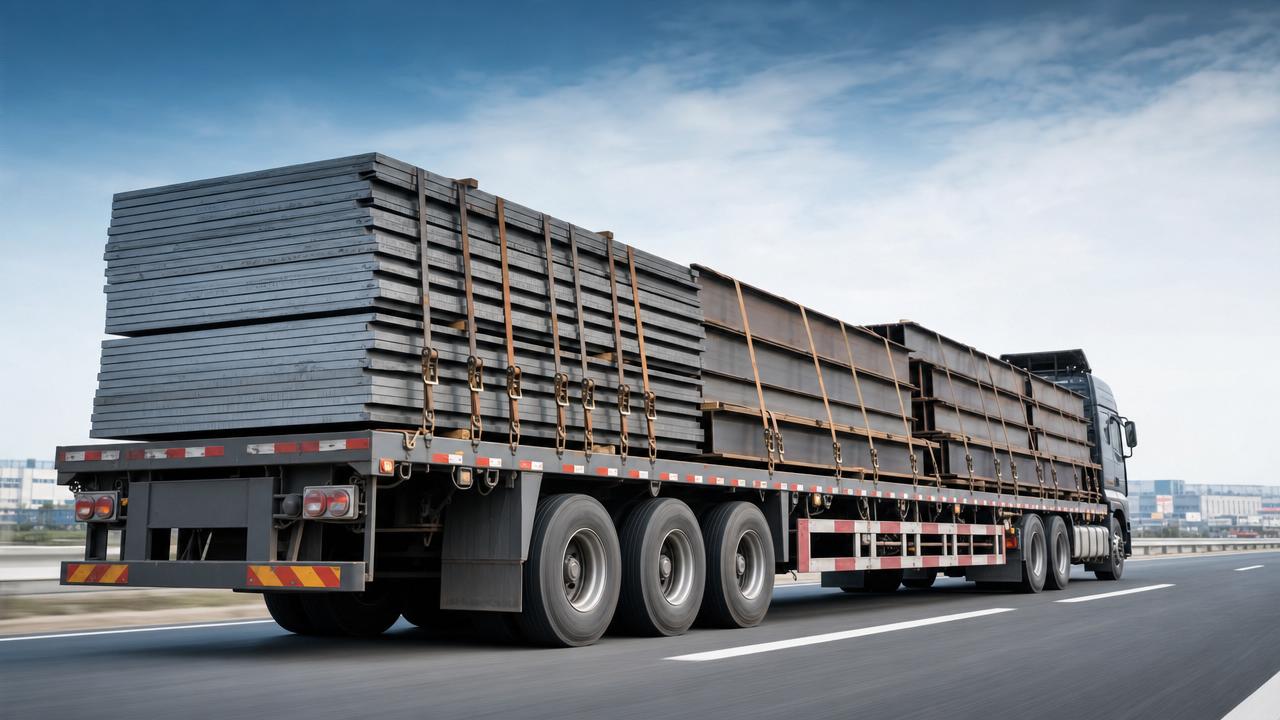
How does a Flatbed Semi-Trailer perform in demanding long-distance steel transport? This real delivery case offers business evaluators a clear look at load stability, route efficiency, operating reliability, and delivery safety in actual working conditions. It also reflects how Shandong Livol Truck International Trade Co., Ltd. supports global customers with dependable vehicle supply, professional export services, and practical transport solutions.
Why does a Flatbed Semi-Trailer matter in long-distance steel transport?
For business evaluators in the engineering vehicle sector, steel transport is not a simple point-to-point task. It combines heavy payload pressure, high safety expectations, route variability, unloading coordination, and commercial timing. A Flatbed Semi-Trailer becomes a practical asset in this context because it can carry irregular steel cargo, simplify loading with cranes or forklifts, and support efficient dispatch across regional and cross-border routes.
Unlike enclosed transport, a flatbed configuration gives operators more flexibility for steel coils, beams, plates, structural sections, and fabricated components. That flexibility, however, also creates evaluation pressure. Buyers must assess deck strength, cargo securing points, axle load distribution, suspension performance, tire suitability, and compatibility with the tractor head. If any one of these areas is weak, the transport plan may suffer from unstable loads, excessive tire wear, route restrictions, or delayed delivery.
This is why a real delivery case is useful. It moves the discussion beyond catalog claims and into field performance. For procurement teams, project owners, and fleet decision-makers, the relevant question is not only whether a Flatbed Semi-Trailer can carry steel, but whether it can do so consistently over long distance with acceptable operating cost and manageable risk.
- Load security must remain stable during acceleration, braking, lane changes, and uneven road surfaces.
- The trailer structure must tolerate concentrated steel weight without obvious deck deformation or stress concentration.
- The transport plan must support efficient loading, route compliance, and predictable unloading at the destination.
A real delivery case: what was evaluated on the road?
Transport scenario and cargo profile
In this delivery case, the Flatbed Semi-Trailer was used for long-distance transport of steel materials requiring open-deck loading and reliable securing. The route included expressway segments, standard trunk roads, and terminal access roads with mixed surface conditions. The key business concern was not speed alone, but safe arrival with cargo condition preserved and unloading completed without complication.
For steel cargo, weight distribution often changes by cargo type. Steel plates may create broad, relatively even load pressure. Beams and sections may create concentrated contact points. Bundled bars may shift if restraint is insufficient. Because of this, evaluating trailer performance requires attention to both static carrying capacity and dynamic behavior during travel.
Core evaluation indicators
The following table summarizes the practical indicators that matter most when a Flatbed Semi-Trailer is assigned to long-distance steel transport. These indicators are useful for business evaluators comparing suppliers, configurations, or procurement plans.
From an evaluation standpoint, the strongest Flatbed Semi-Trailer solution is rarely defined by one headline specification. It is usually defined by balance: adequate payload support, stable road manners, practical loading design, and a service network capable of supporting the trailer over time.
How did the Flatbed Semi-Trailer perform under steel transport pressure?
Load stability during long-distance movement
In long-haul steel transport, stability is tested not in the loading yard, but after hundreds of kilometers of braking cycles, lane corrections, pavement vibration, and gradient changes. A properly configured Flatbed Semi-Trailer helps distribute the load through its frame design, axle arrangement, and securing points. This reduces cargo shift risk and helps keep the trailer behavior predictable for the driver.
For steel loads, securing strategy matters as much as chassis capability. The trailer must provide practical tie-down locations, enough deck usability, and a layout that allows crews to restrain heavy cargo without creating unstable tension angles. When this is done well, operational benefits are visible: fewer mid-route checks, less cargo correction, and smoother delivery acceptance at the destination.
Road adaptability and operating confidence
A long-distance route usually includes more than highways. Industrial access roads, port approaches, plant entry lanes, and temporary construction surfaces can all expose weaknesses in suspension behavior and deck robustness. A Flatbed Semi-Trailer intended for engineering vehicle applications should therefore be judged on full-route adaptability, not ideal-road performance only.
This is one reason business evaluators often prefer suppliers that understand actual export and usage scenarios. Shandong Livol Truck International Trade Co., Ltd. works in commercial vehicle export with practical knowledge of customer route diversity, loading demands, and delivery schedules. That matters when buyers need not just a trailer, but a workable transport solution aligned with real operating conditions.
What should business evaluators check before procurement?
When reviewing a Flatbed Semi-Trailer for steel transport, many procurement teams focus heavily on price and nominal payload. Those are important, but they are not enough. The better method is to compare operational fit, maintenance exposure, supply certainty, and export service capability together.
The table below provides a practical selection checklist for business evaluators who need a structured basis for procurement discussions, supplier screening, or internal approval review.
This checklist shows why a procurement decision should not be based on product appearance alone. In engineering vehicle projects, the true cost of a poor trailer choice often appears later through delays, rework, cargo incidents, or unexpected service needs.
A practical procurement review process
- Define the steel cargo type clearly, including shape, density, loading method, and unloading requirement.
- Match the Flatbed Semi-Trailer configuration to route conditions, not only to theoretical payload.
- Assess the exporter’s ability to support documentation, customs clearance, and shipping coordination.
- Review after-sales communication channels and spare support assumptions before order confirmation.
Flatbed Semi-Trailer versus other transport options: which is more practical?
Not every steel delivery should use the same transport body. Business evaluators often compare a Flatbed Semi-Trailer with side wall trailers or other platform-based solutions. The right choice depends on cargo geometry, loading equipment, route limitations, and unloading environment.
The comparison below helps clarify where a Flatbed Semi-Trailer is usually the more practical option and where another body style may be considered.
For most routine and project-based steel transport needs, a Flatbed Semi-Trailer remains attractive because it balances payload usability, loading convenience, and route practicality. It is especially relevant when freight dimensions vary from load to load.
Where does exporter capability affect transport success?
Supply reliability and brand access
A good trailer specification is only part of the purchase equation. For international buyers, supply continuity and exporter coordination often have equal weight. Shandong Livol Truck International Trade Co., Ltd. is an authorized domestic and overseas dealer for FOTON, SHACMAN, and SINOTRUK, and operates multiple authorized 4S stores across China with sufficient vehicle inventory. For business evaluators, this suggests stronger supply stability and a more practical response to delivery timing requirements.
In project procurement, delay risk often starts before the vehicle is shipped. Inventory shortages, slow documentation, and weak communication can disrupt downstream planning. An exporter with organized stock management and export experience helps reduce those risks, especially when the buyer needs coordination between vehicle supply, technical confirmation, and logistics scheduling.
Full-process export support
For overseas customers, the commercial value of a Flatbed Semi-Trailer also depends on how smoothly the export process is managed. Shandong Livol Truck International Trade Co., Ltd. provides support across vehicle selection, customization, documentation, customs clearance, and logistics. This reduces the burden on procurement teams that may not want to coordinate multiple disconnected service providers.
- Vehicle selection support helps buyers align trailer configuration with steel cargo and route conditions.
- Customization support can address practical needs such as deck layout, securing arrangements, and compatibility requirements.
- Documentation and customs assistance helps reduce administrative delays that affect project timelines.
- Logistics coordination improves shipment visibility and supports more predictable delivery planning.
What compliance and risk points should not be ignored?
Business evaluators should treat compliance as an operating requirement, not a final paperwork step. In steel transport, the main concerns typically include axle load compliance, cargo securing practice, visibility and lighting requirements, and destination market import documentation. The exact requirements vary by country and route, so early confirmation is essential.
It is also wise to review how the Flatbed Semi-Trailer will be used after arrival. Will it run mainly on paved highways or mixed industrial roads? Will it carry bundled sections, plate steel, or fabricated structural members? Will local maintenance teams need common service parts quickly? These questions directly affect procurement suitability.
Common risks in evaluation
- Choosing by headline price only, while underestimating operating cost and service exposure over time.
- Ignoring cargo securing practicality, especially for mixed steel loads with different geometries.
- Assuming all long-distance routes are highway-friendly and overlooking difficult plant-access sections.
- Leaving export documentation review too late, which can slow dispatch and increase uncertainty.
FAQ: what do buyers ask most about Flatbed Semi-Trailer selection?
How do I know whether a Flatbed Semi-Trailer is suitable for my steel cargo?
Start with cargo form and loading method. If your steel is loaded by crane from above, includes long beams or large plates, or varies by shipment, a Flatbed Semi-Trailer is often the more flexible choice. Then review route condition, local axle regulations, and unloading environment. Suitability is strongest when the trailer structure, securing layout, and operating route are evaluated together.
What are the most important procurement factors besides price?
Look at structural design, suspension match, supply timing, export support, and service responsiveness. For engineering vehicle procurement, the cheapest option can become expensive if it causes delivery delay, maintenance interruption, or mismatch with the cargo profile. Procurement teams should compare the total business effect, not invoice value alone.
Can one Flatbed Semi-Trailer handle different steel transport tasks?
In many cases, yes, especially when the transport program includes mixed loads such as sections, plates, and fabricated components. However, flexibility depends on deck usability, securing point arrangement, and weight distribution design. If the cargo program includes highly specialized oversize loads, a more specialized platform may still be needed for some tasks.
Why does exporter experience matter if the trailer itself is acceptable?
Because the commercial result depends on more than the product. Export coordination affects schedule reliability, document accuracy, customs handling, configuration confirmation, and shipment visibility. An experienced exporter can reduce process friction and help business evaluators move from product review to actual deployment more smoothly.
Why choose us for Flatbed Semi-Trailer evaluation and export support?
If you are assessing a Flatbed Semi-Trailer for long-distance steel transport, the decision should combine product suitability with supply assurance and export execution. Shandong Livol Truck International Trade Co., Ltd. offers a strong base for that evaluation through authorized brand resources, broad domestic sales coverage, sufficient inventory, and a professional export team familiar with international transaction requirements.
You can consult us on specific issues that matter in procurement review, including parameter confirmation for steel transport use, trailer and tractor matching, customization direction, estimated delivery cycle, documentation support, logistics planning, certification-related questions, and quotation communication. This helps your team move from general interest to a concrete and workable purchasing decision.
For buyers who need dependable engineering vehicle export support, practical supply coordination, and clear communication around Flatbed Semi-Trailer selection, contacting our team is a direct next step toward a safer and more efficient steel transport solution.
Search Starts Here