
News
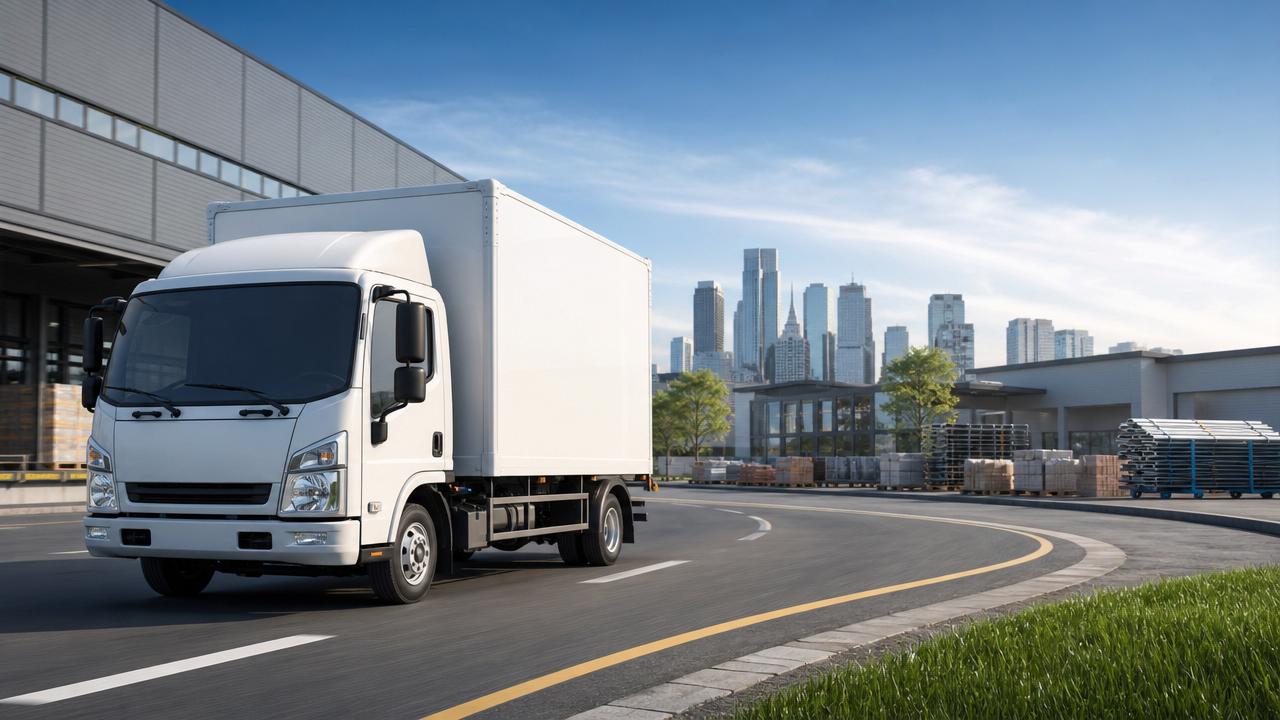
Urban delivery pressure makes the 4_2 Cargo Truck a practical fleet choice
For dealers, distributors, and agents serving dense city routes, the 4_2 Cargo Truck offers a practical balance of payload, maneuverability, and operating efficiency.
In urban delivery fleets, this vehicle type reduces transport pressure while supporting daily distribution across retail, logistics, and engineering-related supply chains.
Its value is not only technical. It is commercial.
A well-matched 4_2 Cargo Truck can improve route frequency, loading flexibility, and fleet uptime in busy urban environments.
That makes it relevant for construction support transport, spare parts movement, packaged materials delivery, and municipal project supply distribution.
Shandong Livol Truck International Trade Co., Ltd., based in Shandong, China, supports these market needs through strong supply capability and export execution.
As an authorized dealer for FOTON, SHACMAN, and SINOTRUK, the company combines inventory strength, customization support, and global delivery experience.
For urban fleet planning, understanding where the 4_2 Cargo Truck performs best helps build a more competitive commercial vehicle offering.
Different city routes create different demand signals
Not every urban route needs the same vehicle configuration.
Some routes prioritize frequent stops, narrow streets, and time-sensitive unloading. Others require better payload support for engineering materials and equipment supplies.
This is why the 4_2 Cargo Truck should be judged by use case, not by simple size classification.
In practical fleet operation, route density, cargo type, distance, road access, and loading method all affect suitability.
A city delivery fleet serving supermarkets may need fast turnover and box-body protection.
A fleet serving engineering projects may need stronger suspension matching, easy side loading, and stable performance under mixed road conditions.
The 4_2 Cargo Truck stands out when the operation needs medium-duty carrying capacity without the access limitations of larger trucks.
Scenario one: retail and parcel distribution in dense urban zones
In dense city districts, delivery vehicles face stop-and-go traffic, restricted parking space, and repeated loading cycles.
Here, the 4_2 Cargo Truck fits operations that need more volume than light trucks but still require practical road flexibility.
Its turning ability, manageable chassis size, and balanced payload make it useful for retail replenishment and parcel network trunk distribution inside urban rings.
The key judgment point is route intensity.
If daily movement includes many short stops and tight delivery windows, a 4_2 Cargo Truck often delivers better overall efficiency than larger rigid trucks.
It can also support body options such as van, wing body, or refrigerated format, depending on the supply chain requirement.
Scenario two: engineering material supply within urban construction support routes
Engineering vehicle demand is not limited to heavy dump transport.
Many city projects need medium-load distribution of packaged cement, tools, fittings, pipes, electrical components, and maintenance materials.
In this setting, the 4_2 Cargo Truck plays a practical support role between warehouse stock points and project access gates.
The main judgment point is cargo form and unloading method.
When materials are palletized, boxed, or bundled, a 4_2 Cargo Truck with suitable body design can improve loading speed and route utilization.
Compared with oversized vehicles, it is easier to schedule into city projects with access control, limited staging space, or temporary road diversions.
This makes it especially relevant in engineering-related supply chains where timing affects worksite continuity.
Scenario three: municipal maintenance and public service logistics
Municipal operations often combine irregular routes with varied cargo needs.
Vehicles may deliver barriers, repair parts, drainage supplies, lighting components, or seasonal maintenance materials across multiple city districts.
The 4_2 Cargo Truck suits this environment because it handles mixed-use scheduling well.
The core judgment point is versatility.
If one fleet must cover routine supply, urgent dispatch, and moderate-load transport, this configuration provides a useful compromise.
Body adaptability also matters. Flatbed, stake, and enclosed options can be matched to seasonal or contract-based service tasks.
Scenario four: inter-warehouse transfer at the city edge
Another strong use case appears between suburban depots and urban distribution points.
These routes are usually longer than inner-city retail loops but still demand frequent turnaround and controlled operating cost.
A 4_2 Cargo Truck can bridge this gap efficiently.
It carries enough cargo for meaningful replenishment while remaining practical for final urban access.
The key judgment point is transport rhythm.
If a fleet needs several daily cycles between storage hubs and city outlets, right-sized capacity becomes more valuable than maximum theoretical payload.
How demand differs by urban delivery scenario
Practical selection advice for matching a 4_2 Cargo Truck to the route
Choosing the right 4_2 Cargo Truck starts with route evidence, not catalog comparison alone.
- Check average stop frequency, road width, and loading point restrictions.
- Define whether cargo is volumetric, heavy, fragile, palletized, or weather-sensitive.
- Match body style to unloading practice, including side access or rear forklift handling.
- Review engine and drivetrain selection against urban fuel efficiency targets.
- Consider cabin comfort and visibility for repeated city driving cycles.
- Plan spare parts and after-sales response before scaling fleet volume.
This is where supply capability matters as much as the truck itself.
Shandong Livol Truck International Trade Co., Ltd. supports full-process export service, from vehicle selection to customization, documentation, customs clearance, and logistics.
That helps reduce transaction friction when a 4_2 Cargo Truck must be configured for specific urban delivery tasks.
Common mistakes when judging urban fleet suitability
A common mistake is focusing only on rated payload.
In city work, route access, unloading speed, and scheduling flexibility often matter more than peak carrying figures.
Another mistake is ignoring body application.
The same 4_2 Cargo Truck chassis can perform very differently depending on whether it uses a van box, flatbed, stake body, or wing body.
Some operations also underestimate after-sales readiness.
When urban routes run daily, downtime quickly damages fleet economics.
Stable supply, authorized sourcing, and professional support become part of the value equation.
A final oversight is treating all city demand as general logistics.
Engineering vehicle applications inside cities often require stronger adaptation to jobsite timing, mixed cargo, and restricted entry conditions.
Turning route analysis into a stronger commercial vehicle offering
The 4_2 Cargo Truck is not just a standard city truck.
It is a route-sensitive solution that performs best when matched to actual delivery patterns, cargo behavior, and urban access conditions.
For retail supply, engineering distribution, municipal support, and depot transfer, it delivers a practical balance between mobility and useful carrying capability.
With authorized resources for FOTON, SHACMAN, and SINOTRUK, Shandong Livol Truck International Trade Co., Ltd. can support stable sourcing for this segment.
Its strong inventory, export experience, and integrated service process help convert route requirements into workable vehicle solutions.
If urban delivery demand is growing in your market, reviewing real operating scenarios is the right next step.
A properly specified 4_2 Cargo Truck can open stronger fleet value, faster deployment, and more relevant engineering vehicle coverage.
Search Starts Here