
News
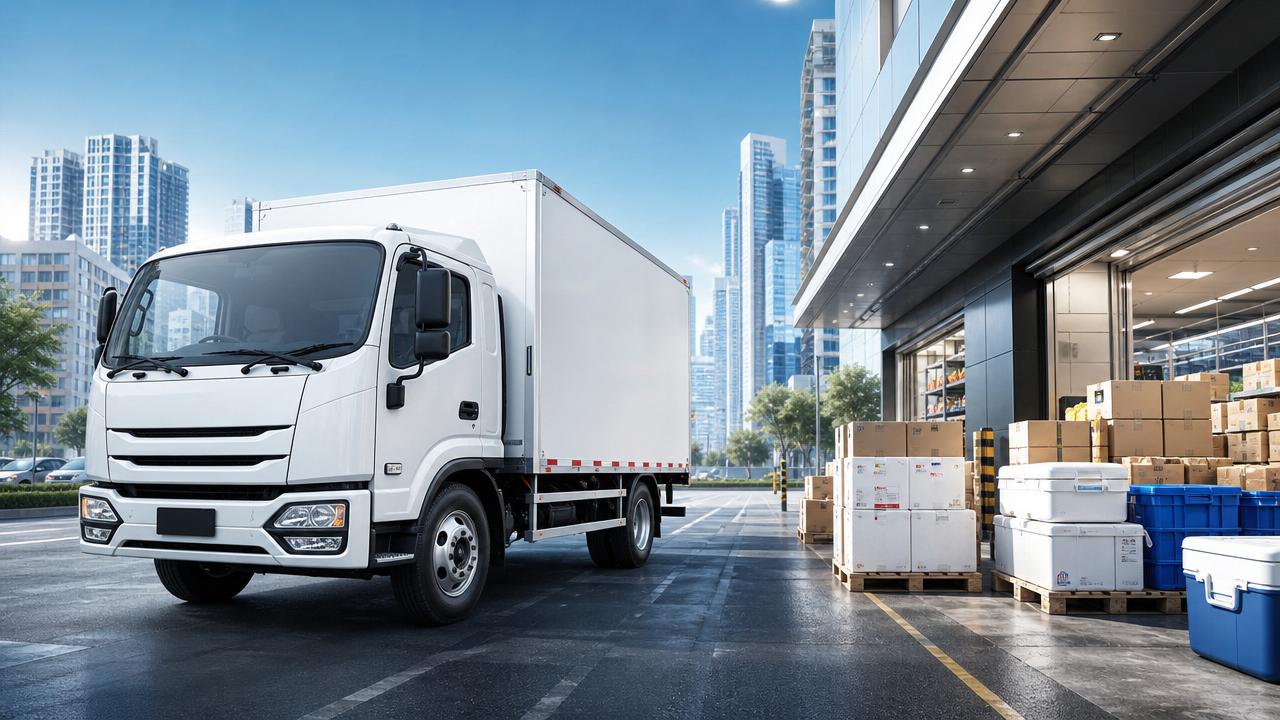
4_2 Cargo Truck Use Cases in Urban Delivery
For time-sensitive urban logistics, vehicle selection directly affects delivery speed, operating cost, site access, and service reliability.
A 4_2 Cargo Truck offers a practical balance of payload capacity, maneuverability, and fuel economy for dense city operations.
It supports retail replenishment, construction material delivery, parcel distribution, food logistics, and multi-stop transport with stable daily performance.
Shandong Livol Truck International Trade Co., Ltd. supplies reliable FOTON, SHACMAN, and SINOTRUK solutions for demanding urban delivery tasks.
Why Urban Delivery Scenarios Need Different Vehicle Judgement
Urban delivery is not only about moving goods from one point to another.
Road width, unloading space, delivery frequency, payload type, and access restrictions all influence vehicle suitability.
A 4_2 Cargo Truck is often selected when light trucks are too limited and heavy trucks are too large.
This middle-position advantage makes it valuable in cities where speed and capacity must work together.
The right configuration depends on route length, cargo density, body type, loading method, and local road regulations.
A properly matched 4_2 Cargo Truck can reduce unnecessary trips while keeping access to narrow streets and business zones.
Retail Replenishment: Frequent Stops and Predictable Loads
Retail replenishment usually involves supermarkets, convenience stores, markets, malls, and neighborhood distribution points.
The key demand is not maximum payload alone, but stable loading volume and efficient unloading.
A 4_2 Cargo Truck with a box body protects packaged goods from rain, dust, and road contamination.
Side doors, rear doors, or tail lifts can improve unloading speed in busy commercial areas.
For this scenario, wheelbase, turning radius, cabin comfort, and fuel consumption should be checked together.
A 4_2 Cargo Truck becomes more efficient when daily routes include many stores but moderate cargo weight.
Construction Material Delivery: Payload Strength and Site Access
Urban construction delivery often includes cement bags, tiles, steel parts, insulation boards, tools, and prefabricated materials.
These goods may be heavy, irregular, or loaded by forklift, crane, or manual teams.
A flatbed or stake-body 4_2 Cargo Truck is suitable when loading flexibility is more important than full enclosure.
The main judgement points are chassis strength, axle capacity, suspension type, tire specification, and braking performance.
In city construction zones, large trucks may face access limits, while smaller trucks may require too many trips.
A 4_2 Cargo Truck helps bridge that gap, especially for medium-volume delivery to scattered project sites.
Parcel and E-Commerce Distribution: Speed, Volume, and Route Density
Parcel distribution depends on volume utilization, quick loading, route density, and return-trip planning.
Cargo is usually lighter than construction materials, but it occupies more space and requires careful sorting.
A high-cube van-body 4_2 Cargo Truck can increase usable cargo volume without sacrificing urban maneuverability.
Shelving, partitions, lighting, and anti-slip flooring can support faster package identification and safer handling.
For e-commerce routes, the best 4_2 Cargo Truck configuration should match peak-season volume, not only average demand.
This prevents overload during promotion periods and avoids excessive idle capacity during normal weeks.
Food, Beverage, and Cold Chain Delivery: Temperature and Hygiene Control
Food and beverage logistics requires strict attention to cleanliness, cargo protection, and unloading time.
For dry groceries and bottled drinks, a closed box 4_2 Cargo Truck often provides enough protection.
For frozen or chilled goods, refrigerated body design, insulation thickness, and cooling unit capacity become critical.
Urban food delivery may involve early-morning market access, hotel delivery windows, and strict noise requirements.
A 4_2 Cargo Truck should be evaluated for idle fuel use, door opening frequency, and temperature recovery speed.
Reliable chassis brands such as FOTON, SHACMAN, and SINOTRUK help support stable cold chain operations.
Municipal and Engineering Support: Daily Tools, Parts, and Maintenance Materials
Engineering vehicle applications also include urban maintenance, road repair, landscaping, and public facility service.
These tasks require transport for tools, small machines, barriers, pipes, cables, and repair materials.
A 4_2 Cargo Truck can be adapted with toolboxes, crane options, side guards, or open cargo bodies.
The core judgement is whether the truck supports both transport and field work convenience.
For municipal routes, visibility, braking stability, emission compliance, and easy maintenance are especially important.
A durable 4_2 Cargo Truck reduces downtime when work orders are dispersed across multiple city districts.
Scenario Differences: What Each Use Case Really Requires
This comparison shows why one 4_2 Cargo Truck specification cannot fit every urban delivery operation.
Body structure, axle capacity, engine output, and loading method must follow the actual scene.
Practical Adaptation Advice Before Choosing a 4_2 Cargo Truck
The first step is to define the daily operating pattern clearly.
- Measure average cargo weight, cargo volume, and peak-season fluctuation.
- Confirm whether routes include narrow roads, low bridges, or restricted zones.
- Check unloading conditions, including forklift access and parking time limits.
- Choose body type according to cargo protection and loading efficiency.
- Review local registration, emission, and road-use requirements before ordering.
A 4_2 Cargo Truck should not be chosen only by rated payload or purchase price.
Total cost includes fuel, maintenance, tire wear, driver comfort, downtime, and resale value.
For export projects, documentation, customs clearance, shipping schedule, and spare parts planning also affect delivery success.
Common Misjudgements in Urban 4_2 Cargo Truck Applications
One frequent mistake is selecting a truck that is too large for daily access conditions.
This can cause parking delays, route detours, higher fuel consumption, and missed delivery windows.
Another mistake is focusing only on maximum load while ignoring cargo volume and loading frequency.
A 4_2 Cargo Truck with the wrong body height may waste space or create unloading difficulty.
Cold chain users may underestimate door-opening frequency, which directly affects cooling stability and product safety.
Construction users may ignore suspension durability, tire selection, and braking needs on uneven site roads.
Urban delivery planning should also consider maintenance availability and spare parts supply after the truck enters service.
How Shandong Livol Truck Supports Better Scenario Matching
Shandong Livol Truck International Trade Co., Ltd. is based in Shandong, China.
The company is a professional commercial vehicle exporter with strong supply capacity and global trade experience.
As an authorized dealer for FOTON, SHACMAN, and SINOTRUK, it offers reliable vehicle sources and stable inventory.
Its team supports vehicle selection, customization, documentation, customs clearance, logistics, and after-sales coordination.
For a 4_2 Cargo Truck project, this full-process service helps reduce matching errors and delivery risk.
Available configurations can be discussed according to cargo type, road environment, climate, and operational intensity.
Next Step: Turn the Delivery Scenario into a Truck Specification
A successful urban delivery solution starts with clear working conditions, not only a truck model name.
Define cargo, route, loading method, road limits, operating hours, and service expectations before confirming specifications.
Then compare suitable FOTON, SHACMAN, or SINOTRUK options with body design and export requirements.
A well-matched 4_2 Cargo Truck can improve route efficiency, protect goods, and control long-term operating costs.
Contact Shandong Livol Truck International Trade Co., Ltd. to discuss a 4_2 Cargo Truck solution for urban delivery applications.
Search Starts Here