
News
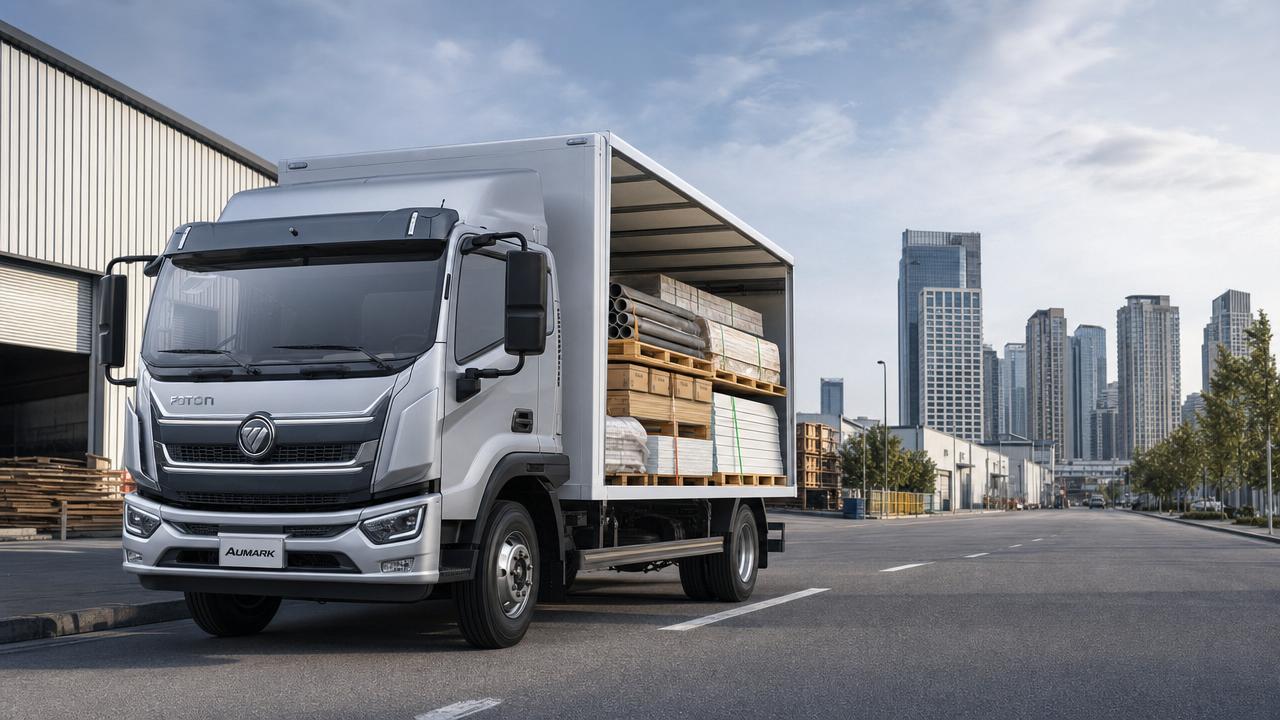
For tight urban delivery schedules, vehicle choice affects cost control, route efficiency, and on-time performance.
The 4_2 Cargo Truck is a practical solution for city logistics, offering load strength, maneuverability, and dependable operation in congested streets.
Backed by Shandong Livol Truck’s authorized access to FOTON, SHACMAN, and SINOTRUK, it supports reliable supply, customization, export service, and after-sales assistance.
What Is a 4_2 Cargo Truck in Urban Delivery?
A 4_2 Cargo Truck usually refers to a two-axle truck with four wheel positions and one driven axle.
This layout balances payload, fuel use, and turning performance, making it suitable for city distribution and light engineering logistics.
Compared with larger heavy-duty trucks, a 4_2 Cargo Truck is easier to operate on narrow roads, loading zones, and crowded delivery routes.
Compared with small vans, it carries more cargo and handles heavier engineering materials with better structural strength.
This combination makes the 4_2 Cargo Truck popular in construction supply, municipal maintenance, equipment transport, and regional commercial delivery.
Why does the configuration matter?
Urban delivery is rarely about distance alone. Frequent stops, road limits, parking pressure, and mixed cargo are more important.
The 4_2 Cargo Truck answers these challenges with a manageable size and a useful loading platform.
For engineering vehicle applications, it can move tools, pipes, parts, packaged materials, and small machinery between worksites.
Where Does a 4_2 Cargo Truck Perform Best?
The 4_2 Cargo Truck performs best when daily work requires medium payloads, repeated delivery points, and flexible access.
It is especially valuable in city and suburban environments where oversized vehicles increase waiting time and access restrictions.
Common uses include building material delivery, spare parts distribution, electrical equipment transport, and facility maintenance supply.
It can also support warehouse-to-site transfer when cargo volume exceeds van capacity but does not justify a heavy truck.
- Urban construction material delivery to small or medium jobsites.
- Municipal engineering support for tools, barriers, and maintenance parts.
- Retail and wholesale distribution with mixed palletized goods.
- Industrial park transport between workshops, depots, and customer sites.
- Last-mile heavy cargo movement where vans are overloaded.
For many delivery operations, the 4_2 Cargo Truck becomes the daily workhorse because it handles varied tasks without excessive operating cost.
How Should a 4_2 Cargo Truck Be Selected?
Selection should begin with the real cargo profile, not only the advertised payload figure.
Cargo weight, cargo length, loading method, road conditions, and delivery frequency should all influence the specification.
A 4_2 Cargo Truck for boxed goods may need a van body, side door, and anti-slip flooring.
A 4_2 Cargo Truck for engineering materials may require a flatbed, reinforced frame, or crane-ready design.
Engine power should match both city driving and occasional regional transfer, especially when the vehicle climbs ramps or carries dense loads.
Key decision points
- Choose body length according to pallet size, cargo shape, and loading equipment.
- Check turning radius for narrow streets, warehouses, and jobsite entrances.
- Confirm axle capacity, suspension type, and frame strength for repeated loading.
- Match tire specification with road surface, load weight, and climate conditions.
- Review cabin comfort if the route includes long working hours.
Shandong Livol Truck can support model comparison, body customization, documentation, customs clearance, and logistics planning for export customers.
With authorized FOTON, SHACMAN, and SINOTRUK resources, suitable 4_2 Cargo Truck options can be matched to different markets.
How Does It Compare with Vans and Larger Trucks?
A van is easier to park, but its payload and body strength are limited for engineering cargo.
A heavy truck carries more, but it may face higher fuel cost, road limits, and reduced flexibility.
The 4_2 Cargo Truck sits between these choices and often provides the best balance for urban delivery.
This comparison explains why the 4_2 Cargo Truck is often selected for city logistics and compact engineering transport.
It reduces the risk of overusing light vehicles while avoiding the inefficiency of oversized trucks.
What Mistakes Should Be Avoided?
One common mistake is choosing the lowest initial price without checking long-term service conditions.
A low-priced truck can become costly if parts access, documentation, or body suitability is weak.
Another mistake is ignoring local road rules, emission requirements, and registration conditions before shipment.
Export projects should confirm compliance documents, chassis specifications, and destination regulations before final confirmation.
Overloading is also a serious risk for any 4_2 Cargo Truck used in engineering delivery.
It increases tire wear, braking distance, suspension damage, and safety risk during city operation.
Practical risk reminders
- Do not select body size without mapping normal delivery routes.
- Do not ignore spare parts availability and after-sales support.
- Do not overload the cargo platform to reduce trip numbers.
- Do not skip pre-shipment inspection or export documentation review.
A well-specified 4_2 Cargo Truck should reduce operational pressure, not create hidden maintenance and compliance problems.
What Affects Cost, Delivery Cycle, and Export Success?
Total cost includes vehicle price, body customization, inland transport, port charges, insurance, taxes, and destination clearance.
A 4_2 Cargo Truck with special body requirements may need additional production time and technical confirmation.
Inventory availability is another major factor. Ready-stock vehicles can shorten delivery time when specifications are suitable.
Shandong Livol Truck maintains strong inventory channels through authorized 4S stores and official brand cooperation.
This improves supply stability for FOTON, SHACMAN, and SINOTRUK commercial vehicles, including 4_2 Cargo Truck solutions.
For export projects, preparation quality often determines whether delivery is smooth after the truck leaves China.
Professional support reduces communication gaps between vehicle selection, modification, customs documents, and final logistics.
Final Takeaway: When Is a 4_2 Cargo Truck the Right Choice?
The 4_2 Cargo Truck is the right choice when urban work needs more capacity than a van and more flexibility than a heavy truck.
It fits dense delivery routes, construction supply, municipal service, spare parts movement, and short-distance engineering logistics.
The best results come from matching chassis, body, payload, route, and compliance requirements before purchase.
Shandong Livol Truck International Trade Co., Ltd. provides authorized brand resources, stable inventory, customization support, and full export service.
For a dependable 4_2 Cargo Truck solution, share cargo details, destination market, body preference, and delivery timeline.
A suitable model recommendation can then be prepared with practical specifications, export guidance, and professional after-sales support.
Search Starts Here